
Last updated: November 18, 2026
Spring Festival is the biggest moment of China’s year, and visiting during it is a different experience from any other week. Cities empty out as migrant workers go home, family reunion dinners fill every living room, and the streets glow red. For visitors it can be magical or miserable depending on planning. This guide covers the 2027 dates, what is open, how to get around, where to go and where to avoid, and a realistic budget.
Chinese New Year 2027 dates at a glance
| Date | What happens |
|---|---|
| Sun, Jan 31 | Official make-up working day (Sunday) |
| Fri, Feb 5 | New Year’s Eve, holiday begins; reunion dinners |
| Sat, Feb 6 | Chinese New Year’s Day, Year of the Goat begins |
| Feb 7 to 8 | Family visits, temple fairs, many shops still shut |
| Feb 9 to 11 | Tourist sites at peak crowds; some restaurants reopen |
| Sat, Feb 13 | Last holiday day (eighth day of the first lunar month), return travel surge |
| Sun, Feb 14 | Make-up working day; offices and schools open |
| Feb 20 | Lantern Festival (15th day), a good second chance for festive atmosphere with far fewer crowds |
The official dates come from the General Office of the State Council. The travel rush, known as chunyun, usually starts about two weeks before the festival and lasts into late February, so train and flight demand is elevated well before February 5.
Should you visit during Chinese New Year?
Pros
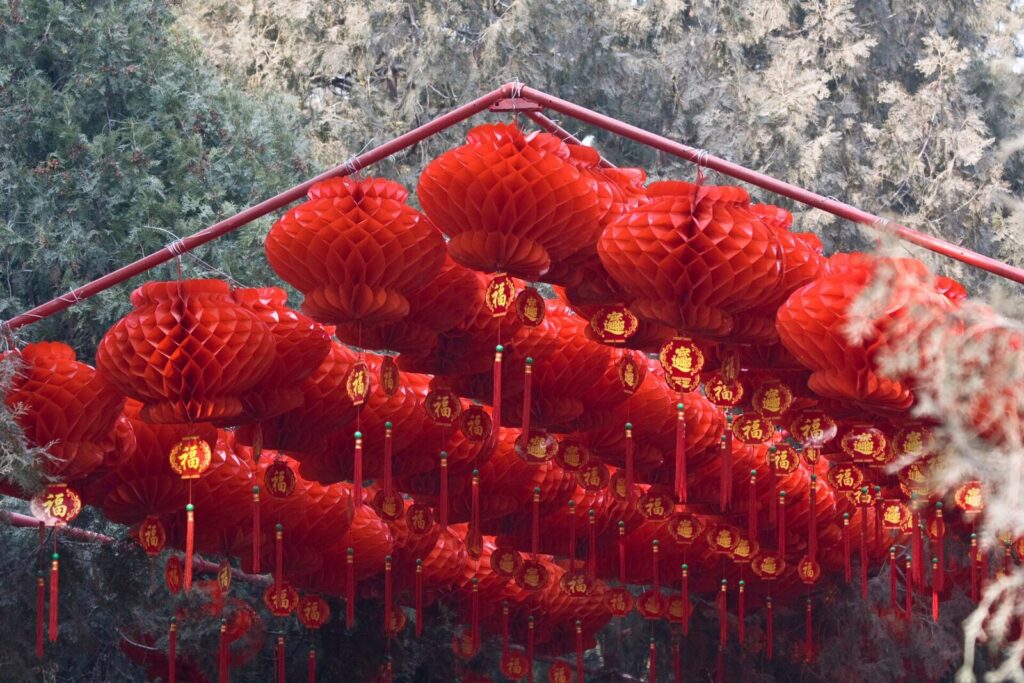
- Genuine festival atmosphere: red lanterns, lion dances, temple fairs, fireworks (where permitted) and festive food.
- Big cities such as Beijing and Shanghai are noticeably quieter and easier to get around, with light traffic.
- Winter is low season for many scenic areas outside the holiday itself.
- Unique photography opportunities and cultural events.
Cons
- Train tickets and flights sell out and cost more, especially February 4 to 6 and February 11 to 14.
- Many small family restaurants, shops and some museums close for several days.
- Domestic tourist hotspots such as Hainan, Yunnan, Chengdu and Xi’an are crowded and expensive.
- Weather in northern China is cold, with freezing temperatures common.
- Some fireworks restrictions apply in central districts of major cities, so check local rules.
What is open and what is closed
Expect a split between the tourist economy and the local economy. Large shopping malls, chain hotels, major attractions, airports and convenience stores keep operating, often with adjusted hours. Small neighborhood restaurants, markets, workshops and many street stalls close from New Year’s Eve for anywhere between three days and a week or more.
| Category | Typical situation |
|---|---|
| Major attractions | Open, often with timed reservations and capped numbers |
| Hotels | Open; premium pricing and minimum stays in popular places |
| Chain restaurants and hotel dining | Mostly open, sometimes with set menus |
| Local restaurants | Many closed Feb 5 to roughly Feb 9 |
| Public transport | Running, with reduced service late at night on New Year’s Eve in some cities |
| Delivery apps | Operating, but fewer riders and restaurants; allow extra time |
Practical tip: stock a few snacks, and pre-book dinner for New Year’s Eve and New Year’s Day at a hotel or a larger restaurant. Our China food guide explains how to order when you arrive.
Getting around during the holiday
High-speed trains
Tickets for China Railway go on sale 15 days before departure, and the most popular holiday departures can sell out within hours. Set a reminder for the day sales open for your date, and have your passport details and payment method ready in the 12306 app or a booking service. Foreign passports are accepted on 12306 and at station counters, so allow extra time for ID checks. If a train is full, try an earlier or later departure, a different station in the same city, or a connection through a hub.
Domestic flights
Fares on busy routes rise sharply around the holiday, while flights on the return surge days are the most expensive. Check our domestic flights guide and compare options early. The cheapest days to fly are generally Chinese New Year’s Day itself and the day before Lantern Festival activities, when most people are already at their destination.
Taxis, ride-hailing and metro
Ride-hailing is easy but surge pricing hits around reunion dinners and at airports. Learn the basics in our DiDi guide and metro guide. Metros are typically the most reliable option in big cities on crowded days. Also install the apps from our essential apps list before you land.
Where to go for Chinese New Year 2027
| Destination | Why go | Crowd level | Notes |
|---|---|---|---|
| Beijing | Temple fairs, quiet streets, Forbidden City | Medium | Very cold; book major sites ahead |
| Shanghai | Yu Garden lantern displays, modern city atmosphere | Medium to high | Many locals leave, but visitors fill the Bund |
| Xi’an | City wall lights, history, food streets | High | See our Xi’an itinerary |
| Harbin | Ice and snow festival at its peak | High | Read the Harbin Ice Festival guide |
| Yunnan (Kunming, Dali, Lijiang) | Mild weather, flowers, ethnic festivals | High | Prices climb in Lijiang; see the Yunnan itinerary |
| Hong Kong | Parade, fireworks, separate public holidays | High | Book hotels very early |
Cities that feel best in the holiday
Beijing and Shanghai are the classic choices because the usual weekday crush disappears. Temple fairs in Beijing typically feature snacks, crafts and performances, and Shanghai’s lantern displays and old-town streets light up in the evenings. Warm southern destinations are the choice if you do not want to deal with winter cold, though they are among the most booked.
Places to approach carefully
Very popular scenic mountains, small ancient towns and famous photo spots can reach visitor caps. Always reserve attraction tickets in advance where required. Remote destinations with limited transport, such as high-altitude regions, may also have reduced services in winter.
Sample 7-day Spring Festival plan: Beijing and Xi’an
- Day 1 (Feb 3): Arrive in Beijing, rest, walk around your hotel area and try hot pot at a larger restaurant.
- Day 2 (Feb 4): Forbidden City with a pre-booked ticket, then Jingshan Park for the city view.
- Day 3 (Feb 5, New Year’s Eve): Great Wall in the morning when roads are quiet; early dinner at a hotel or major restaurant that is confirmed open.
- Day 4 (Feb 6, New Year’s Day): Temple fair visit, lantern displays, relaxed evening.
- Day 5 (Feb 7): Morning train to Xi’an. Book this as early as sales open.
- Day 6 (Feb 8): Terracotta Army with reserved entry, then the Muslim Quarter in the evening.
- Day 7 (Feb 9): City wall by bike at sunrise, then onward flight or train.
For first-time routing ideas, see the 5 days in China: Beijing and Xi’an plan, which can be adapted to the holiday.
Budget for a Spring Festival trip
Holiday pricing differs by city, and rates change as the date approaches, so treat the following as planning ranges rather than quotes.
| Item | Normal winter week | Spring Festival expectation |
|---|---|---|
| Mid-range hotel in Beijing or Shanghai | Typical rates | Often noticeably higher around Feb 5 to 13 |
| Hotels in Yunnan, Hainan, Chengdu | Typical rates | Can rise steeply; minimum stays common |
| High-speed train | Fixed fares | Fares are fixed, but availability is the issue |
| Domestic flights | Standard fares | Peak-day fares can be far higher |
| Meals | Standard | Hotel and set-menu dinners may cost more |
Because holiday prices move, check live rates when you book. For general costs outside the holiday, our winter travel guide and packing advice will help you plan.
Etiquette, red envelopes and festive customs
- Greetings: “Xin nian kuai le” (Happy New Year) or “Gong xi fa cai” will be received warmly.
- Red envelopes (hongbao): Gifts of money given by elders and employers. As a visitor you are not expected to give them, though digital red packets on WeChat are a popular tradition.
- Colors and numbers: Red and gold are lucky. Avoid wrapping gifts in white or black, and avoid giving clocks.
- Dining: New Year’s Eve dinners often include dumplings in the north and fish or rice cakes in the south. See our etiquette guide for table manners.
- Fireworks: Rules vary by city. Some central areas ban them, others allow them on specific nights.
Practical checklist
- Confirm your visa or visa-free eligibility and passport validity well before travelling; see our tourist visa guide.
- Book international and domestic flights as early as possible.
- Mark the train ticket release date (15 days before departure) in your calendar.
- Reserve hotels with free cancellation where possible.
- Confirm dinner plans for February 5 and 6 in advance.
- Set up mobile payments and a data connection, and use our packing list to prepare for the cold.
- Download offline maps and translation apps.
- Keep a flexible day or two for delays.
FAQ
When is Chinese New Year in 2027?
Saturday, February 6, 2027. The Spring Festival public holiday is February 5 to 13.
What animal is the 2027 zodiac year?
The Year of the Goat (sometimes called Sheep or Ram), specifically the Fire Goat in the traditional sexagenary cycle.
Are tourist attractions open during Chinese New Year?
Most major attractions stay open, often with timed entry and large crowds. Small local businesses are more likely to close.
Is it a bad time to travel in China?
It is a hard time for transport and pricing, but a rewarding one for culture if you book early and keep plans simple.
When do train tickets go on sale?
China Railway tickets are released 15 days ahead of the departure date. Check the 12306 app or your booking service on the release day.
Should I buy things for my hosts?
If you are invited to a home, bring fruit, quality tea or sweets. Avoid sharp objects, clocks or anything wrapped in white.
What about Lantern Festival?
Lantern Festival is on February 20, 2027. It is a good alternative if you want festive atmosphere without the peak holiday crowds.
Plan your Spring Festival trip with a concierge
Holiday trips reward good planning: sold-out trains, tight hotel inventory and closed restaurants can derail a first visit. Our travel concierge can design a realistic route, help you book train and hotel options, set up apps and payments, and support you by message during the trip. Services are quoted on request based on your plans. Start at the concierge page or message us on WhatsApp.