
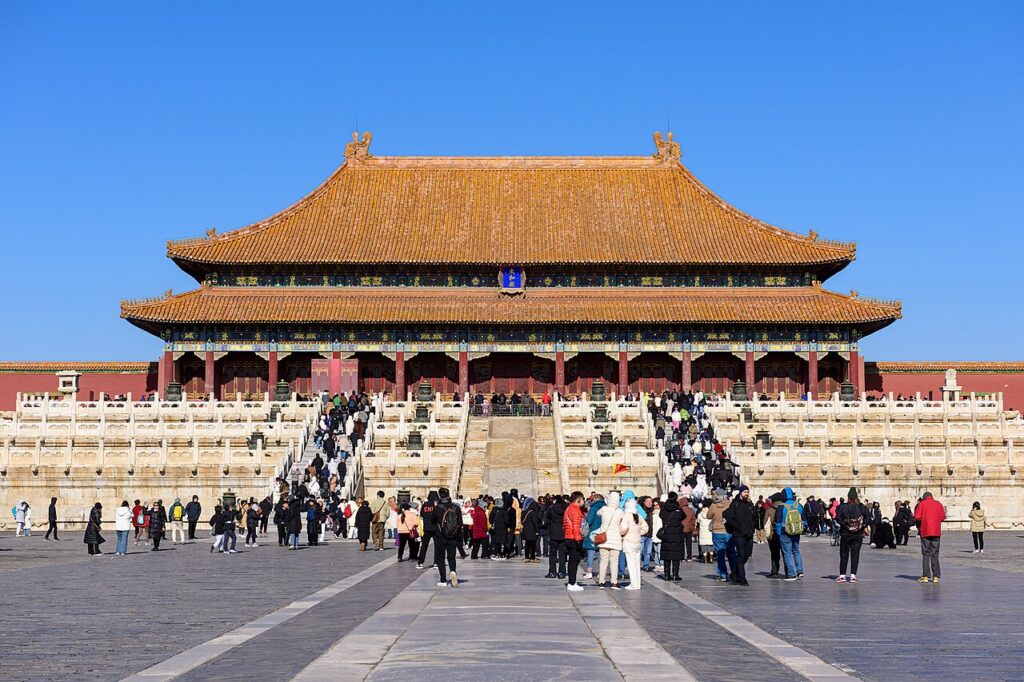
Here is the single biggest surprise for first-time visitors to China: at the country’s most famous sights, there is no ticket window any more. You cannot turn up at the Forbidden City, hand over cash, and walk in. Tickets are booked online, in advance, against your passport number — and your passport is the ticket. Get it wrong and you can find yourself standing outside the gate on the one morning you set aside for the Terracotta Army.
This guide explains how the system works, which sights genuinely sell out, how to pay with a foreign card, and what to do when your date is gone. Prices were checked in November 2026 — check before booking.
How the system works
Since 2023, almost every headline sight in mainland China has moved to real-name booking:
- One document, one ticket. You book with your full name and passport number, exactly as printed in your passport. At the gate, staff scan the physical passport you booked with — a photo or photocopy is not accepted at the strictest venues.
- No paper ticket. There is nothing to print or collect. Your booking is tied to your passport and checked electronically at entry.
- A fixed release window. Tickets for a given date go on sale a set number of days beforehand, often at a set hour. Miss the window and the date may be gone, especially in peak season and over Chinese public holidays.
- A daily cap. Popular sights limit visitors per day. Once the cap is reached, no more tickets appear — not online, and not at the gate.
There are three ways to book. The official WeChat mini-programme or website is cheapest, but often Chinese-first and usually requires Alipay or WeChat Pay. The official English portal, where one exists, is the friendliest option — the Forbidden City has one. And Trip.com sells tickets for most major sights in English and accepts foreign cards directly, usually with a small markup.
Before you book anything, set up mobile payments. Our China payment guide walks through linking a foreign card to Alipay and WeChat Pay — you will need one of them for most official booking channels.
The three sights that genuinely sell out
Most attractions in China do not sell out. These three do.
1. The Forbidden City, Beijing
The Palace Museum is the strictest booking in China. It sells no same-day tickets at all. Each date goes on sale exactly seven days beforehand at 20:00 Beijing time, with a hard cap of 40,000 visitors a day. Peak-season dates and holiday dates can vanish within the hour, so set an alarm — 20:00 in Beijing is midday in London and 08:00 in New York during US summer time.
Admission is ¥60 in peak season (1 April to 31 October) and ¥40 in the low season (1 November to 31 March). The Treasure Gallery and the Clock Gallery cost ¥10 each on top. One passport buys one ticket per day, and the museum is closed on Mondays except on public holidays. Book via the official English portal (intl.dpm.org.cn) or the Palace Museum’s WeChat mini-programme, and bring the passport you booked with to the Meridian Gate.
2. The Terracotta Army, Xi’an
The Terracotta Army now runs a mandatory online reservation system for all visitors — you cannot simply arrive and buy a ticket at the gate — and caps entry at 65,000 people a day. Tickets are released seven days ahead, and weekends and holidays sell out.
The standard ticket is ¥120 in peak season (March to November) and ¥80 in the low season (December to February). One ticket covers the three excavation pits, the Bronze Chariots hall, and the Lishan Garden mausoleum park, with a free shuttle bus between the two sites. Children 1.4 metres and under generally enter free with an adult, but do not count on the senior or student discounts advertised for Chinese visitors — they usually require Chinese ID, so budget the full ¥120. Our Xi’an guide covers how to fit the warriors into a three-day stay.
3. Jiuzhaigou Valley, Sichuan
Jiuzhaigou is online-only: there are no ticket offices at the gate, and booking runs through the official “Jiuzhaigou” WeChat account or the Aba Tourism Network mini-programme, with Trip.com as the English-language fallback. Peak-season entry is ¥190 plus a mandatory ¥90 shuttle bus, so the real total is ¥280. The daily cap is 41,000 visitors in peak season and 23,000 in winter, and dates open roughly one to two weeks ahead. Book as soon as your dates appear, especially for the autumn colour season in October — see our Jiuzhaigou guide for when the valley is at its best.
Free — but still book ahead
Some of the most visited places in China cost nothing and still need a reservation. Tiananmen Square requires a free timed slot, bookable one to seven days ahead. The National Museum of China, across the square, is free but needs a timed reservation released about a week ahead, usually in the late afternoon. The same applies to the Shanghai Museum and other big state museums. The rule of thumb: if it is free and famous, assume it needs a booking. And remember that many museums close on Mondays — check the weekday before you build a day around one.
The easy majority
Outside the handful of sights above, most places in China are straightforward. The Great Wall at Mutianyu, the Summer Palace, the Temple of Heaven, the Li River in Yangshuo, and most temples, gardens, and old towns can be booked online the day before or bought on the day. City parks, night markets, and food streets almost never need advance tickets.
How to pay
This is where first-timers get stuck, so sort it out before you fly. Official booking sites and mini-programmes almost always take Alipay or WeChat Pay, and neither accepts a foreign card directly at checkout. The fix is to link your foreign card inside Alipay or WeChat Pay first — both accept Visa, Mastercard, and several other networks once your passport is verified. Payments of ¥200 or less are fee-free; above ¥200 a 3% service fee applies. Our payment guide covers the setup step by step, including doing it on home Wi-Fi before you land.
Trip.com is the exception: it accepts foreign cards directly, in English, with no Chinese wallet needed. Expect a small markup over the official price. For a sight you only visit once, that is usually money well spent. Carry ¥200–¥300 in small notes as a backup, but do not expect to pay for headline sights with cash.
What to do when your date is sold out
First, check the neighbouring days. Moving the Forbidden City from Saturday to Tuesday often solves the problem outright. Second, check Trip.com: its allocation sometimes outlasts the official channel’s. Third, check again in the morning — a few venues release returned tickets, though this is unreliable.
What does not work: turning up and hoping, asking your hotel to “sort it” on the day, or paying a stranger outside the gate who promises tickets. The system is real-name and passport-linked, so a ticket bought in someone else’s name will not get you in. If a sold-out sight is the centrepiece of your trip, reorder your itinerary rather than your expectations — our 10-day first-timer itinerary shows how to sequence Beijing, Xi’an, Chengdu, and Shanghai so the hard bookings land on the right days.
Your booking calendar
Work backwards from your arrival date:
- As soon as your dates are fixed: set up Alipay and WeChat Pay, and check your visa situation — the 30-day visa-free policy covers many nationalities, but confirm yours before you book.
- Two weeks before: book Jiuzhaigou and anything else that opens a fortnight ahead; reserve your high-speed train tickets, which go on sale 15 days ahead.
- Seven days before, 20:00 Beijing time: book the Forbidden City the moment its window opens, then the Terracotta Army and the National Museum.
- One to three days before: book everything else — the Great Wall, the Summer Palace, the Shanghai Tower observatory — and confirm your hotels.
- On the day: carry the passport you booked with, keep confirmations saved offline, and arrive early.
Mistakes that cost people their visit
- A name that does not match. Enter your name exactly as in your passport, including middle names if the form asks. A mismatch can mean refused entry with no refund.
- Booking two people on one passport. Every traveller needs their own ticket under their own passport number, including children. One passport, one ticket, one day.
- Leaving the passport at the hotel. A photo on your phone is not accepted at the strictest venues. The physical document is your ticket.
- Forgetting Monday closures. The Forbidden City and many museums close on Mondays. Make Monday a park, a food street, or a travel day.
- Assuming the price you saw is the whole price. Jiuzhaigou’s ¥190 ticket needs a ¥90 bus on top; the Forbidden City’s ¥60 does not include the two ¥10 galleries. Read the inclusions before you compare prices.
China’s booking system looks intimidating from the outside, but it is consistent: book early, book in your own name, pay through a Chinese wallet or Trip.com, and carry your passport. If you’d rather have someone else hold the calendar — the release times, the sold-out swaps, the reordering — that is exactly what our concierge service is for. Want this trip tailored to your dates? Our Route Design ($180) turns it into a day-by-day plan, with every ticket window already mapped to your calendar.