
Five days, two cities, and the two halves of imperial China. Beijing gives you the palaces, the Great Wall and the hutongs; Xi’an gives you the Terracotta Army, the City Wall and a food street that never seems to close. This is the classic first trip — the one most travellers sketch out before they start adding Shanghai, Chengdu or a river cruise — and it works because the high-speed train between the two cities does the heavy lifting: four to five hours, city centre to city centre, with no airport queues. Here is how to run it, day by day, with the prices and booking rules that actually apply in 2026.
The trip at a glance
| Day | Where | The headline |
|---|---|---|
| Day 1 | Beijing | Tiananmen Square and the Forbidden City |
| Day 2 | Beijing | The Great Wall at Mutianyu |
| Day 3 | Beijing to Xi’an | Summer Palace in the morning, high-speed train in the afternoon |
| Day 4 | Xi’an | The Terracotta Army and the City Wall |
| Day 5 | Xi’an | Museums, the pagoda and the Muslim Quarter before you fly out |
Day 1: Beijing — the Forbidden City
Start at Tiananmen Square, which is free but needs a free real-name reservation made one to nine days ahead, then cross straight into the Forbidden City. This is the sight that most often catches first-timers out: tickets are sold online only, released seven days ahead, and the daily cap of around 40,000 sells through fast in spring and autumn. Book the moment your date opens. Entry is ¥60 in peak season (April to October) and ¥40 in the low season, and the palace is closed on Mondays. Allow three to four hours — the walk from the Meridian Gate to the northern exit is a slow procession through courtyards, and it is worth every minute.
Exit north into Jingshan Park (¥2) and climb the hill for the view over the palace rooftops at sunset; it is the best ¥2 you will spend in Beijing. In the evening, eat in the hutongs around Nanluoguxiang or on Ghost Street, and order Peking duck at least once while you are in the city. Our China food guide covers what to order and what it costs when the menu is only in Chinese.
Day 2: The Great Wall at Mutianyu
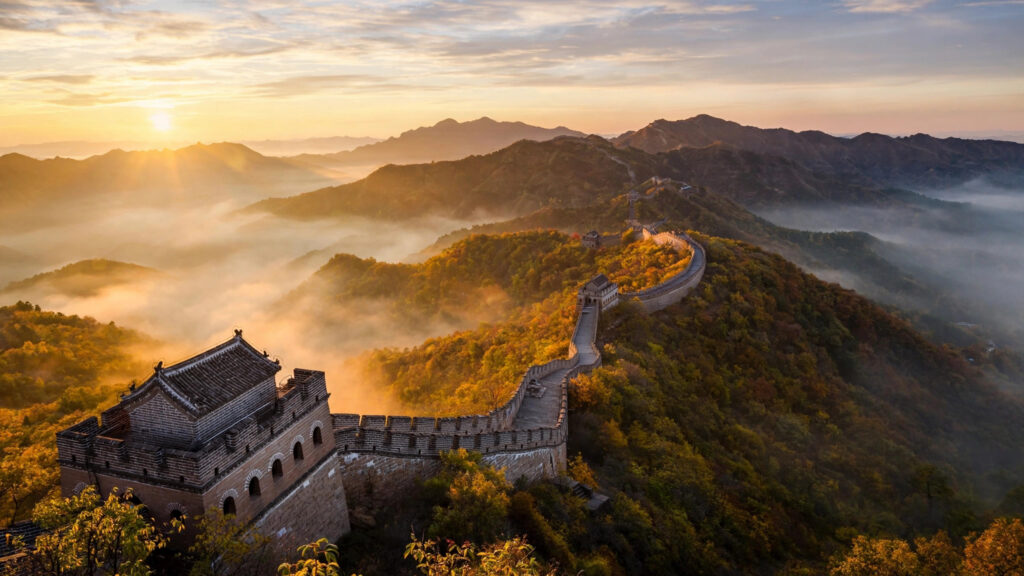
Leave by 07:30. Mutianyu is the section to choose for a first visit: restored Ming-dynasty ramparts, forested ridges, far fewer people than Badaling, and a cable car up with a toboggan run down. It sits about 70 kilometres north-east of the city — take the 916 Express bus from Dongzhimen, a direct shuttle, or a car booked through DiDi, which runs to roughly ¥180–250 each way (check the fare in the app before you set off). Entry is ¥45, the return cable car ¥140, and the toboggan ¥100.
Walk from Tower 6 to Tower 14 and back, which takes two to three hours at a comfortable pace, then head back to town in the early afternoon. Spend the late afternoon at the Temple of Heaven — the ¥34 through-ticket covers the halls, and the surrounding park fills with locals practising tai chi and playing cards. Our Great Wall guide compares Mutianyu with the other sections if you are still deciding.
Day 3: The Summer Palace, then the train to Xi’an
Take the morning slowly at the Summer Palace: ¥30 for entry, or ¥60 for the through-ticket that covers the halls and gardens around Kunming Lake. It is Beijing at its most relaxed, and a good counterweight to the previous two days.
In the afternoon, head to Beijing West station for the high-speed train to Xi’an North. The fastest G trains do the 1,216 kilometres in about 4 hours 10 minutes; most take four and a half to six hours, with second-class seats from ¥515. Trains run roughly every half hour through the day, and tickets go on sale 15 days ahead on the official 12306 app (in English) or on Trip.com. Our China trains guide walks through booking with a foreign passport step by step.
Xi’an North station is about 13 kilometres north of the Bell Tower; the metro (Lines 2 and 4) takes around 40 minutes into town, or a DiDi is simpler after a long day. Stay inside or near the City Wall — it keeps everything on foot for the next two days. If you are still choosing a hotel, our hotels guide explains the foreign-guest rules and which booking filters to trust.
Day 4: The Terracotta Army and the City Wall
The Terracotta Army is the reason most people come to Xi’an, and it needs the same advance planning as the Forbidden City: tickets are ¥120 in peak season (16 March to 15 November) and ¥75 in the low season, booked online against your passport number, and the site caps daily numbers. It is about an hour from the city centre by bus or car. Give it two to three hours; Pit 1, with the massed infantry ranks, is the one to linger in. Our Terracotta Army guide covers the practical details, and our attraction tickets guide explains the booking systems for both cities’ big sights.
Back in town, hire a bike and ride the top of the City Wall (¥54 entry; bike hire is about ¥45). The full circuit is 14 kilometres and takes around two hours at a gentle pace, with the Bell and Drum Towers in view for much of it. In the evening, eat your way down the Muslim Quarter: yangrou paomo (lamb soup with torn flatbread), roujiamo (the “Chinese burger”), and persimmon cakes from the street stalls. Xi’an rewards travellers who arrive hungry — see our Xi’an city guide for the full rundown.
Day 5: Museums, the pagoda and one last feast
Start at the Shaanxi History Museum, which is free but must be reserved about three days ahead on its mini-program — the collection is the best single introduction to the Silk Road anywhere in China. Then walk south to the Big Wild Goose Pagoda and its square, where the fountain show runs in the evening if your flight is late. Leave time for a last lunch in the Muslim Quarter before heading to Xi’an Xianyang airport, about an hour from town, or to the station for an onward train.
Before you go: the practical bits
Visas. Most British, European, Canadian, Australian, Japanese and South Korean passport holders currently enter visa-free for up to 30 days, but the scheme is scheduled to end at midnight on 31 December 2026 and no extension had been announced as of late October. Check our visa-free guide and the 2027 extension update before you book anything non-refundable.
When to go. April to May and September to October are the sweet spots — mild weather and clear skies on the Wall. Avoid the first week of October (National Day) and Chinese New Year, when crowds and prices both spike. See our best time to visit China guide for the month-by-month picture.
Money. Set up Alipay or WeChat Pay linked to your foreign card before you fly; cash is rarely needed anywhere on this route. Our payment guide covers setup, and our China trip cost guide breaks down a full budget.
Budget. A comfortable mid-range version of this trip runs to roughly ¥3,000–5,000 per person, excluding international flights: four nights in a good hotel (¥300–600 a night), food at about ¥150 a day, the train at ¥515, and roughly ¥400 of attraction tickets. Book the Forbidden City and the Terracotta Army first — they are the two tickets that sell out.
Want more time?
Five days covers the classics, but the route stretches easily. Add Shanghai and the trip becomes our 10-day first-timer itinerary, or slow down and make it the full two weeks in China. And if five days is all you have, it is enough: Beijing and Xi’an are the two cities that explain China to a first-timer better than any others.
If this route is the shape of your trip but the dates, hotels and ticket timings feel like a lot to arrange from abroad, our concierge service can take it from here. Want this itinerary tailored to your dates? Our Route Design ($180) turns it into a day-by-day plan — hotels, trains and ticket timings sorted before you fly.