
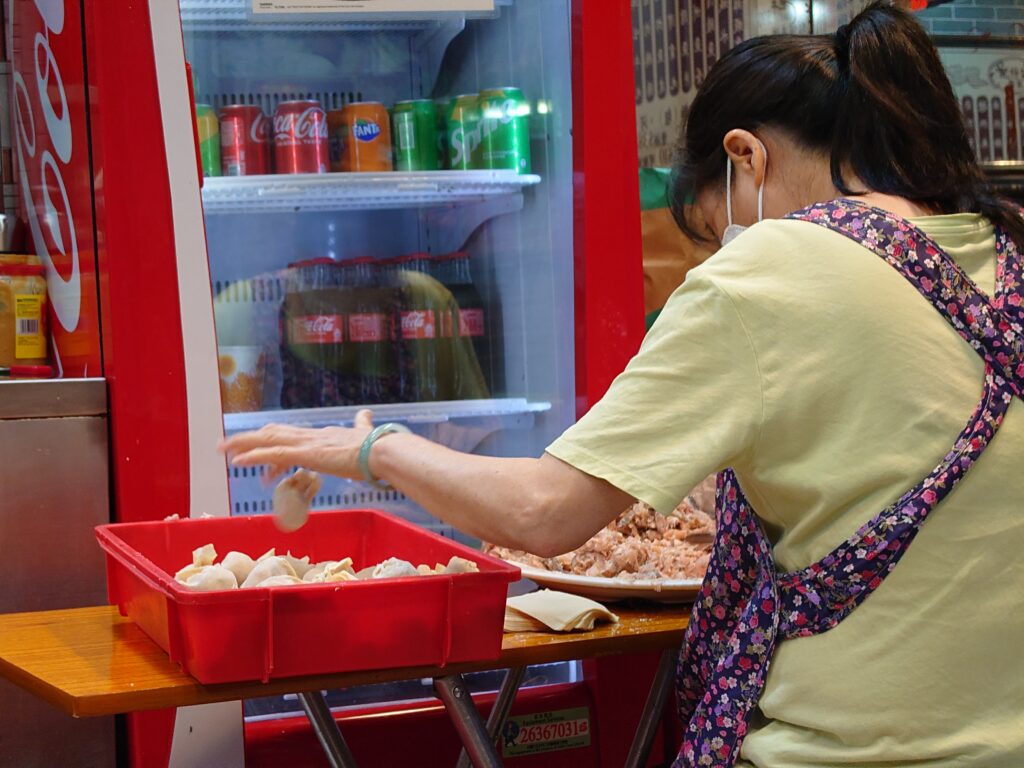
Eating well in China is rarely the problem. Eating confidently on your first day — when the menu is in Chinese characters and the waiter is waiting — is the real challenge. This guide covers how ordering works, what to eat where, how much it costs, and how to handle spice, allergies and dietary needs, so food becomes the best part of your trip rather than a daily negotiation.
If you are still sorting the basics of your trip, read this alongside our first-time guide and our guide to paying in China, since most food problems are actually payment or phone problems in disguise.
How ordering actually works
Counter ordering. Common in noodle shops and dumpling houses. Order and pay at the counter, take a number, and collect your food when it is called. Pointing at a dish on another table works perfectly well here.
Table ordering with a paper menu. Larger restaurants hand you a menu, often with photographs. Tick the dishes you want, or point and hold up fingers for quantities. Menus with pictures are your friend.
QR code ordering. Very common in cities: scan the code on the table with WeChat or Alipay, browse a picture menu on your phone, and pay in the app. If your phone is not set up for this yet, ask staff for a paper menu — most places still have one.
Ordering by weight at markets. At food streets and some hotpot or barbecue spots, you pick ingredients and they are weighed or cooked for you. Watch what locals pay first, and confirm the price for larger items such as seafood.
A translation app with camera mode is the single most useful food tool you can carry. Point it at a menu and you will get a rough but workable translation in seconds. It will occasionally produce comedy — “husband and wife lung slices” is a real Sichuan dish name, and it contains neither — but it is enough to spot meat, noodles, rice and chilli.
How a Chinese meal is structured
Meals are shared: a group orders several dishes for the centre of the table, plus rice per person. For two people, two or three dishes plus rice is plenty; for four, four or five. Order one dish at a time if unsure — you can always add more. Rice costs only a few yuan, while noodles, dumplings and buns are often a complete meal on their own.
Breakfast deserves its own note, because it is where many visitors eat best and cheapest. Look for steamed buns (baozi), soy milk and fried dough sticks (youtiao), rice porridge (congee) with pickles, and noodle soups. A filling breakfast from a street stall or small shop typically costs ¥10–20.
A first-timer’s map of regional food
China does not have one cuisine; it has several great ones, and they change dramatically as you travel. You do not need to memorise all eight classic traditions, but knowing the broad pattern helps you order well in each city.
Sichuan (Chengdu, Chongqing). Bold, spicy and numbing: chilli heat plus Sichuan pepper’s tingling numbness. Mapo tofu, kung pao chicken and hotpot are the classics. Our Chengdu food guide goes deeper.
Cantonese (Guangzhou, Hong Kong). Delicate, fresh and lightly seasoned: dim sum, steamed fish, roast meats and clear soups. If spice is not your thing, this is your safest and most refined bet.
Northern China (Beijing, Xi’an). Wheat country: noodles, dumplings, buns and pancakes instead of rice. Peking duck in Beijing and hand-pulled noodles in Xi’an are essential experiences, not clichés.
Shanghai and the east (Jiangsu, Zhejiang). Slightly sweet and refined: soup dumplings (xiaolongbao) in Shanghai, West Lake dishes in Hangzhou, and delicate seafood along the coast.
Hunan. Spicy like Sichuan but without the numbing pepper — a drier, sharper heat.
Rule of thumb: eat what each place is famous for.
Street food: how to eat it safely
Street food is one of China’s great pleasures, and it is generally safe if you apply three simple rules. Eat where locals queue — high turnover means fresh food. Eat food cooked in front of you and served hot, rather than anything sitting out. Stick to bottled water, and be cautious with ice in very small stalls, though ice in established restaurants is fine.
Night markets are the easiest introduction: one street, dozens of stalls, small portions, and the freedom to graze. Jianbing (a savoury filled crepe), grilled skewers, stinky tofu for the brave, and fresh fruit cups are all good starting points. Most snacks run ¥5–20, so trying something you do not like costs almost nothing.
Spice, allergies and dietary needs
Spice is the issue that catches most first-timers out, because menus do not always flag it. A few phrases, saved on your phone, solve most problems:
- Bu la (不辣) — not spicy
- Wei la (微辣) — mildly spicy
- Shao la (少辣) — a little spicy
- Wo bu chi la (我不吃辣) — I don’t eat spicy food
Even “not spicy” dishes may contain a little chilli, and Sichuan pepper can appear in dishes not described as hot. If you have a low tolerance, order one safe dish — steamed rice, stir-fried greens, tomato and egg — alongside anything adventurous.
Vegetarians should know that vegetable dishes are sometimes cooked in meat stock or with small amounts of meat for flavour, so “no meat” needs to be explicit: wo bu chi rou (我不吃肉). Buddhist vegetarian restaurants, found in most large cities, are the most reliable option, and they are excellent in their own right.
For allergies, a written card in Chinese is far more reliable than spoken explanations. Prepare one before you travel listing your allergens — peanut, gluten, shellfish, sesame — in Chinese characters, and show it at every restaurant. Staff take written allergies seriously, but cross-contamination in small kitchens is hard to guarantee, so carry any medication you need.
What to drink
Tea is the default and free in many restaurants: a pot arrives with your meal and is refilled without asking. Beer is cheap and light; a large bottle typically costs ¥5–10 locally. Baijiu, the powerful grain spirit served at banquets, is often 50% alcohol or more — sip, do not shoot, and know you can toast with tea instead. Tap water is not drunk in China: use bottled water and check the seal.
Paying and etiquette
Most meals are paid by scanning a QR code or paying at the counter with Alipay or WeChat Pay. Cash is still accepted in most places but is increasingly inconvenient in small stalls, and card acceptance is patchy outside international hotels, so do not rely on it for everyday eating. Our payment guide covers setup in detail.
Tipping is not expected in Chinese restaurants. Staff may be confused, or even chase after you, if you leave extra money on the table. The exception is some international hotel restaurants, which may add a service charge to the bill — if it is already on the bill, nothing further is needed.
A few etiquette points will keep you comfortable: do not stick chopsticks upright in rice (it resembles funeral incense), and do not tap your bowl with chopsticks. If a host is paying — common when a Chinese friend or business contact invites you — do not fight over the bill; accept graciously and return the gesture another time.
What food costs
Food is one of the best values in a China trip. As a rough guide for 2026, in most cities a noodle or dumpling meal costs ¥15–35, a sit-down shared meal works out at roughly ¥60–120 per person, and a nicer restaurant dinner runs ¥150–300 per person. Street snacks are ¥5–20. Beijing and Shanghai run higher. Tourist-area restaurants near major sights charge more for less, so walk a street or two away. For a full trip budget, see our itemised cost guide.
Ten dishes to try in your first week
Ten widely available, hard-to-get-wrong starters:
- Xiaolongbao — Shanghai soup dumplings (the soup inside is hot).
- Beijing roast duck — crisp skin, pancakes and sweet bean sauce.
- Mapo tofu — Sichuan tofu in a spicy, numbing sauce; ask for mild.
- Lanzhou beef noodles — hand-pulled noodles in clear beef broth.
- Jianbing — breakfast crepe with egg, pickles and a crispy cracker.
- Gong bao chicken — chicken, peanuts, dried chillies.
- Hotpot — cook your own meat and vegetables in simmering broth.
- Dan dan noodles — Sichuan noodles with sesame, chilli oil and pork.
- Tomato and egg stir-fry — the comforting classic, and a safe fallback.
- Mango pomelo sago — light Cantonese dessert of mango and pomelo.
Before you go
Set up mobile payment before departure, download a camera translation app, and save your spice and allergy phrases on your phone. Most first-timer food anxiety disappears after the first meal successfully ordered by pointing.
If food is the main reason you are travelling — a must-eat list in every city, a dietary restriction to plan around, or a route built around markets and regional kitchens — our concierge service can shape the trip around it. Our Route Design ($180) turns a list of dishes and cities into a day-by-day plan, with the restaurants and food streets placed where you will actually be hungry.
Photo: Amakuha / Wikimedia Commons