
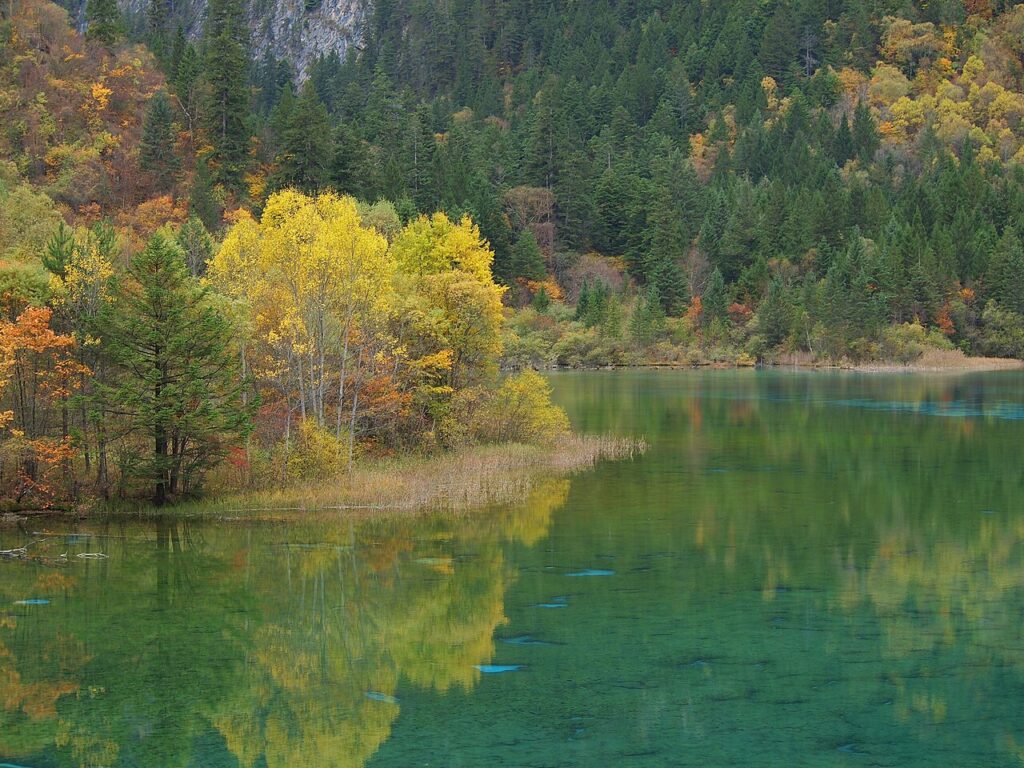
Autumn is the season China does best. The summer rain has cleared, the skies turn a hard, bright blue, and the walking weather is the most comfortable of the year. In the north the hills flame red and gold; in the valleys of Sichuan the forests turn the colour of the lakes below them. For a first trip, autumn 2027 gives you the lot — colour, festivals, clear air — and, once the holiday crowds have gone home, some of the quietest sightseeing of the year.
The catch is timing. The colour peaks for about two weeks in any one place, the big holiday week turns the whole country into one moving crowd, and the places that are genuinely better in autumn sell out first. This guide gives you the month-by-month picture, the places that are genuinely better in autumn, and the booking windows that actually matter.
Autumn 2027 at a glance
September — the warm-up. The north cools first. Beijing’s evenings turn crisp while the south stays hot and humid, so start in the north if you travel in September. The Mid-Autumn Festival falls on Wednesday 15 September 2027, a one-day public holiday, which brings mooncakes and lanterns but only a light bump in crowds, nothing like a golden week. In Jiuzhaigou the high valleys start to turn in mid-September, though the full-colour show is still a month away. September is a good month for the Great Wall and the northern cities, before the October rush.
October — the peak, and the crowd. National Day Golden Week runs Friday 1 to Thursday 7 October 2027 — the State Council confirmed the dates in early November 2026 — and it is the busiest travel week of the year. Trains sell out, hotels jump in price, and the big sights hit their daily visitor caps. Do not plan a first trip for that week. Travel from 8 October instead: the crowds fall away sharply, the air stays clear, and the colour arrives. Beijing’s red leaves peak in late October, and Jiuzhaigou’s forests hit their best from around 20 October into early November.
November — gold, then cold. Early November is the sweet spot most travellers miss. Beijing’s ginkgo avenues turn gold — the city’s own forecast put the urban peak at 1–10 November in 2026 — while Jiuzhaigou keeps its colour into the first days of the month. After mid-November the north turns cold and the leaves come down fast; a strong wind can strip a ginkgo in a day. The south, meanwhile, stays warm: Guilin and Yunnan are at their most comfortable in November, green, mild and far quieter than in spring.
Five autumn trips worth planning around
1. Jiuzhaigou in late October
This is the headline act. Jiuzhaigou’s valley floor sits between 2,000 and 3,100 metres, which is why its colour peaks later than almost anywhere else in China: the forests turn red, gold and orange against turquoise lakes, and the reflections double the effect. Aim for 20 October to 7 November, with the last week of October the most reliable. Five Flower Lake is the most photographed spot in the park — arrive between 9:30 and 10:30, when the sun is high enough to light the water and the wind has not yet broken the reflections. Enter early: the park caps daily entries, and the boardwalks are quietest before 9. Pair it with Huanglong, an hour further on and 1,000 metres higher, which peaks about a fortnight earlier — do Huanglong first, Jiuzhaigou second. Book hotels six to eight weeks ahead for the last week of October. Our full Jiuzhaigou guide covers the two-day route in detail, and our Jiuzhaigou in autumn piece shows what the valley looks like at its best.
2. Beijing: red leaves and golden ginkgo
No city does autumn better. Fragrant Hills (Xiangshan) is the classic red-leaf climb — smoke trees and maples turn the slopes crimson from mid-to-late October — but it is the most crowded spot in the capital on an autumn weekend, so go on a weekday and book a timed ticket. The ginkgo is the quieter pleasure: the avenue along the east wall of the Diaoyutai State Guesthouse is a free public street that turns brilliant gold in early to mid-November, and Ditan Park and the Temple of Heaven offer the same colour with fewer photographers. Go early in the morning, before the wedding shoots arrive, and check a foliage report the week you travel — a single windy day can end the season. Our 3 days in Beijing guide shows how to fit the autumn sights into a first visit.
3. Huangshan and Hongcun in autumn
Huangshan’s granite peaks and twisted pines look good in any season, but autumn adds two things: maple colour on the lower slopes and the clearest skies of the year for the famous sea of clouds. Stay a night on the mountain if you can — sunrise above the clouds is the reason people come — and save a day for Hongcun at the foot of the mountain, a white-walled village reflected in a crescent lake. October and early November are the months; avoid Golden Week, when the cable cars queue for hours. Our Huangshan guide covers tickets, cable cars and routes.
4. The Great Wall in autumn
The Wall is a different walk in autumn. The summer haze lifts, the hills on either side turn rust and gold, and the air is cool enough for a proper hike. Mutianyu is the best first-timer choice: restored, less crowded than Badaling, and easy to reach from Beijing by bus or car in about 90 minutes. Go after Golden Week and on a weekday if you can; the cable car still queues at weekends, but on a clear October morning you can walk long stretches of the Wall with only the wind for company. See our Mutianyu Great Wall guide for the practical details.
5. The warm south in November
When the north turns cold, head south. November is the month the south quietly wins: Guilin and Yangshuo stay green and mild, the Li River runs clear, and the crowds of spring and summer are gone. Yunnan is the same story — Dali and Lijiang sit in that comfortable band of 15–20°C days, and the old towns are at their most relaxed. If your dates fall in November, build the trip around the south and save the north for a visit that starts earlier in the season. See our Guilin and Yangshuo guide and our 7 days in Yunnan itinerary for the routes.
Booking windows that matter
Trains: high-speed tickets open 15 days before departure on 12306, and the popular routes out of Beijing and Chengdu for the second and third weeks of October sell out fast. Set a reminder for the day your tickets open, and have a backup train in mind. Our high-speed rail guide explains how to book as a foreigner.
Jiuzhaigou and the big sights: most major attractions now run timed entry booked against your passport, and Jiuzhaigou caps daily numbers. Book as soon as your dates are fixed — not the week before. See our guide to booking attraction tickets in China.
Hotels: rooms around Jiuzhaigou and on Huangshan go six to eight weeks ahead for late October. For the rest of the country, two to three weeks is usually enough in autumn outside Golden Week.
Flights: domestic flights are usually cheapest four to six weeks out, and midweek departures beat weekends. Check the high-speed rail alternative too — for journeys under five hours, the train is often the better choice.
What to pack for an autumn trip
Autumn in China is a layering season. Days in Beijing or Chengdu can reach the high teens, while mornings in Jiuzhaigou or on Huangshan can drop close to freezing — pack a warm jacket even if the forecast looks mild, and expect a 10-degree gap between day and night. Comfortable walking shoes matter more than ever: the best autumn sights are all on foot. Sun protection still counts at altitude. And carry your passport everywhere: it is your ticket, your hotel check-in and your train ticket in one.
A note on visas for 2027
Check the visa picture before you book. The 30-day visa-free entry that covers 48 countries runs to 31 December 2026, and as of late November 2026 no extension into 2027 had been announced — it may be extended, but do not assume it. The 240-hour transit visa-free route covers 57 countries and is a separate scheme. Confirm your own situation against the current rules before you buy flights. Our visa-free guide explains both schemes.
The short version
Autumn rewards the traveller who picks a fortnight, not a month. Aim for the second half of October for the colour, the first ten days of November for Beijing’s ginkgo, or November in the south for warmth and quiet — and keep 1–7 October clear of your plans. Book the trains the day they open, the Jiuzhaigou tickets as soon as your dates are fixed, and the hotels six weeks out. For the bigger picture across the seasons, see our best time to visit China guide and our spring 2027 guide.
If you would like this shaped around your own dates, our concierge service builds personal, day-by-day routes rather than fixed packages. Want this autumn tailored to your dates? Our Route Design ($180) turns it into a day-by-day plan built around the colour peaks, not the crowds.