
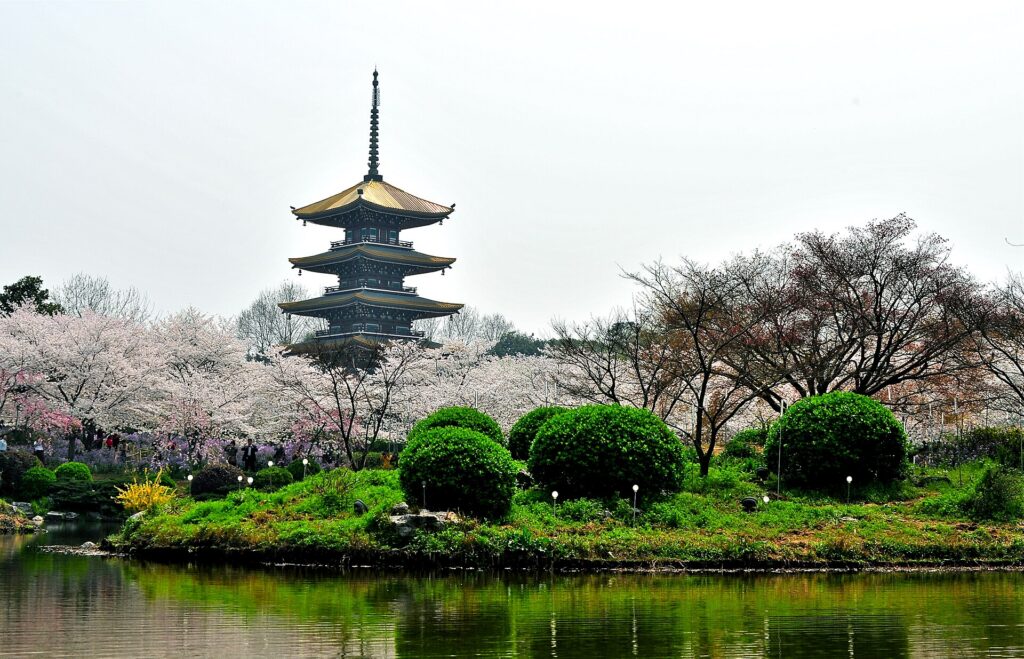
Spring is the easiest season to love China. The air is mild, the hills turn green, and for a few short weeks the country is at its most photogenic: cherry blossom in Wuhan, peonies in Luoyang, mist over the karst peaks of Yangshuo. If you are planning a first trip, spring 2027 gives you the lot — blossom, festivals, comfortable walking weather, and, outside the holiday weeks, thinner crowds than summer or the October golden week.
The catch is timing. The best two or three weeks sell out, and the big holiday breaks turn the whole country into one moving crowd. Get the dates right and spring is the best-value season in China; get them wrong and you will spend your holiday queuing. This guide gives you the month-by-month picture, the places that are genuinely better in spring, and the booking windows that actually matter.
Spring 2027 at a glance
February — the festival month. Chinese New Year falls on Saturday 6 February 2027, the start of the Year of the Goat, with the public holiday running 5–13 February (nine days). The Lantern Festival closes the celebrations on 20 February. It is the most atmospheric time to be in China — temple fairs, lanterns, family reunion dinners — and also the busiest. Expect packed trains, sold-out hotels and higher prices. Go for the festival itself, not for sightseeing, and book everything months ahead.
March — blossom season begins. The south warms up first. Wuhan’s cherry blossom is the headline act, peaking in mid-to-late March (in 2026 the forecast peak was 21–31 March). Kunming and Guangzhou are already warm, and the rapeseed fields around Yangshuo turn the countryside yellow. Crowds are manageable outside the blossom hotspots.
April — the sweet spot. For most first-timers, April is the best month of the year. Beijing is mild, Luoyang’s peonies are in full bloom, and the whole country is green without the summer heat or rain. The one date to dodge is the Qingming (Tomb-Sweeping) holiday, 3–5 April 2027, when domestic travel spikes for three days.
May — green and warm. Early May is lovely, but the Labour Day holiday (1–5 May 2027) is one of the year’s biggest travel peaks. Travel after 6 May and you get warm weather, long days and noticeably fewer people. By late May the south is hot and humid, so keep the north on your list.
Five spring trips worth planning around
1. Cherry blossom in Wuhan (mid-to-late March)
Wuhan is China’s cherry blossom capital, and it earns the title. The two places that matter are Wuhan University, where the blossom lines a century-old campus, and the East Lake Cherry Blossom Garden, which has more than 10,000 trees and stays open late with night illuminations. East Lake is the practical choice for most visitors: it charges about ¥60 in blossom season, needs no reservation lottery, and absorbs crowds far better than the university, where entry is limited and a free reservation is required during the blossom window. Go on a weekday, arrive early, and book your hotel four to six weeks ahead — rooms near the campus sell out for the peak fortnight.
2. Peonies in Luoyang (April)
Luoyang has grown peonies since the Tang dynasty, and every April the city stages its Peony Culture Festival around them. The festival usually runs through April; in 2026 it ran 1–30 April, with the best viewing around 13–21 April. Wangcheng Park, built on the ruins of the Eastern Zhou royal city, is the festival’s traditional heart, and the China National Flower Garden has the largest collection. Pair a peony morning with the Longmen Grottoes in the afternoon — one of China’s great stone-carving sites, and a short bus or taxi ride from the city centre. Hotel prices roughly double during the nine best days, so book early and aim for a weekday.
3. Beijing in April
Beijing in April is the city at its most walkable: daytime highs around 20°C, clear skies on good days, and the parks full of blossom and kite-flyers. It is the best month for the Great Wall — green hills instead of summer haze — and for long days that mix the Forbidden City, the hutongs and the Summer Palace. April is also when Beijing’s crowds are at their most reasonable, between the Spring Festival rush and the May Day peak. Read our 3-day Beijing plan for a day-by-day route that works well in spring.
4. Hangzhou and West Lake
Hangzhou is the classic spring city, and West Lake is the reason. The Su Causeway is lined with blossom and willow in March and April, the tea fields on the hills above the lake are at their greenest, and the old town streets are made for slow wandering. It pairs naturally with Shanghai — two hours by high-speed train — so it fits easily into a first trip. See our 3-day Shanghai guide if you are building a Shanghai–Hangzhou leg.
5. Guilin and Yangshuo in the spring mist
Spring is when the Li River looks like a Chinese painting: low mist over the karst peaks in the early morning, green rice fields, and rapeseed flowers along the country roads in March. It rains more here than in the north, so pack a light waterproof jacket and plan your river cruise for the morning, when the light is best. If you want the full picture, our month-by-month guide compares every region, season by season.
The three dates that decide your trip
China’s public holidays are the single biggest factor in how crowded — and how expensive — your spring trip will be. The State Council published the official 2027 calendar on 5 November 2026, and these are the three breaks to plan around:
- Spring Festival, 5–13 February 2027 (nine days). The largest annual migration on earth. Trains and flights sell out, hotels in tourist cities spike, and many small restaurants and shops close for the first few days. Wonderful if you want the festival; avoid it if you want efficient sightseeing.
- Qingming Festival, 3–5 April 2027 (three days). A shorter, family-focused break. Expect busy trains and popular sights on the Saturday and Monday, with the middle day calmer.
- Labour Day, 1–5 May 2027 (five days). One of the year’s biggest domestic travel peaks. If your dates are flexible, start your trip on 6 May and the country feels half-empty by comparison.
Outside those windows, spring is one of the quietest times to travel in China — noticeably calmer than summer or the October holiday.
When to book what
Spring rewards early planners, but not everything needs booking at the same time:
- Hotels: four to six weeks ahead for Wuhan blossom season and Luoyang peony season; two to three weeks is usually enough elsewhere. Read our guide to booking hotels as a foreigner — not every hotel is licensed to host foreign guests, and this is the mistake that still catches first-timers at the front desk.
- Trains: tickets go on sale 15 days ahead on 12306. For holiday weekends, set an alarm for the minute sales open; for ordinary spring weekdays, a few days ahead is fine.
- Attraction tickets: the big sights now use timed, real-name booking, and the popular ones sell out days ahead in blossom season. Our guide to booking attraction tickets covers which ones need advance booking and how to do it with a foreign passport.
- Flights: domestic flights are usually cheapest two to four weeks out. Spring has no big fare spikes outside the holiday weeks.
What to pack for spring
Spring weather changes fast, and it changes with latitude. The rule is layers: a light waterproof jacket, a warm layer for northern mornings and evenings, and comfortable walking shoes you have already broken in. Pollen is a real issue in blossom season — if you have hay fever, bring your usual antihistamines, as pharmacies can be hard to navigate without Chinese. And pack a power bank: blossom season means long days out and a lot of photos. Our full China packing list covers the rest.
A 10-day spring route that works
If you have ten days and want the best of spring without rushing, this shape works well in April: three days in Beijing (Great Wall, Forbidden City, hutongs), a high-speed train to Luoyang for two days (peonies and the Longmen Grottoes), two days in Wuhan for the last of the blossom and the Yellow Crane Tower, then three days in Shanghai with a day trip to Hangzhou. It is all by train, it follows the blossom north as the season moves, and it keeps every leg under five hours. If you have longer, our two-week itinerary stretches the same idea at a slower pace.
Start planning now
Spring 2027 is five months away, which is exactly the right distance: early enough to get the hotels and the blossom-week dates you want, close enough that flight and train prices are worth watching. Pick your month first — March for blossom, April for the best all-round weather — then build around the holiday dates, not through them. And if you would rather have someone else sort the timing, the trains and the hotel shortlist, that is what our concierge service is for. Visit our concierge page to see how it works. Want this spring route tailored to your dates? Our Route Design ($180) turns it into a day-by-day plan.