
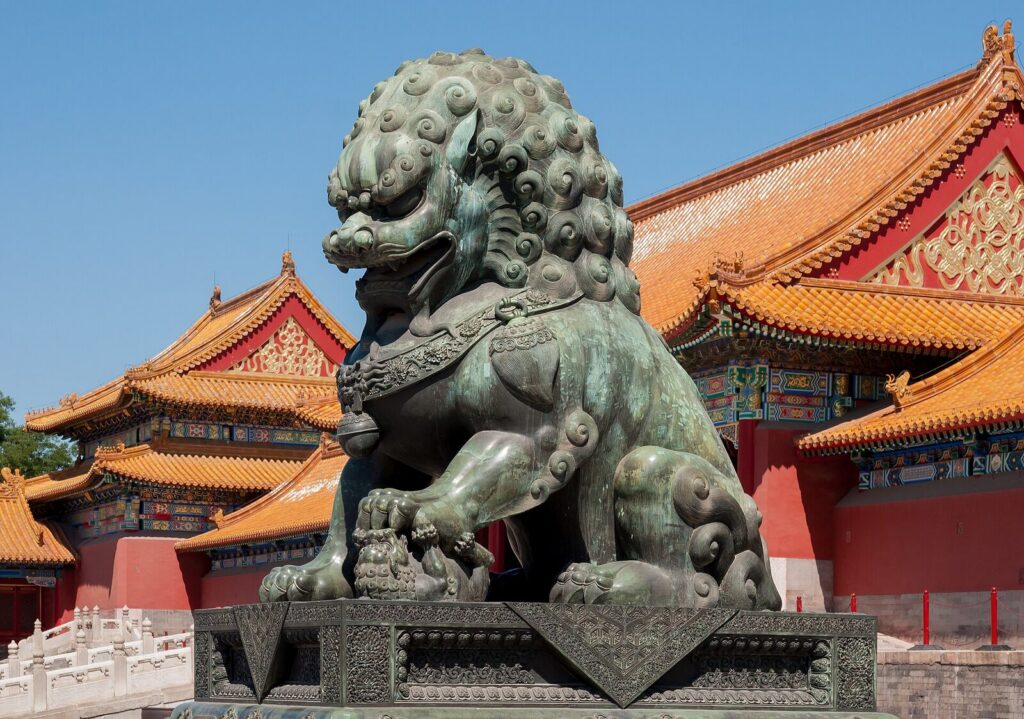
Three days is the minimum Beijing deserves — and, if you plan it well, it is enough. Day one covers the imperial centre, day two the Great Wall, and day three the temples, lakes and neighbourhoods where the city actually lives. This itinerary assumes you arrive the evening before day one and leave on the morning after day three.
Before you arrive: two bookings decide your trip
Beijing rewards people who book ahead and punishes people who wing it. Two reservations matter more than anything else.
The Forbidden City. Tickets go on sale exactly seven days ahead at 20:00 Beijing time, through the Palace Museum’s official website or its WeChat mini-program, and in peak season they sell out within minutes. There are no tickets at the gate. Admission is ¥60 from 1 April to 31 October and ¥40 from 1 November to 31 March; the Treasure Gallery and Clock Gallery cost ¥10 each on top. The museum is closed every Monday except public holidays, so never put the Forbidden City on a Monday. Bring the physical passport you booked with: a photo on your phone will not get you in.
Tiananmen Square. The square itself is free, but entry also needs a free passport-linked reservation made in advance through the official WeChat mini-program. Do it on the same day you book the Forbidden City, since the two sit side by side and you will visit them together.
On visas: citizens of 48 countries can currently enter China visa-free for up to 30 days, and the 240-hour transit visa-free policy covers 57 nationalities. Check the current rules for your passport in our China visa-free guide before you fly.
Day 1: Tiananmen Square, the Forbidden City and the hutongs
Start at 08:30, when the Forbidden City opens — cross Tiananmen Square first if your reservation allows, and budget 30 minutes for it. Enter the palace from the south, through the Meridian Gate, and walk the central axis north: the Hall of Supreme Harmony, the Hall of Central Harmony, the Hall of Preserving Harmony, then the quieter courtyards of the Inner Court. Allow three to four hours.
Exit through the north gate and climb Jingshan Hill, directly opposite. The climb takes about 15 minutes and the view from the pavilion — the whole palace laid out below you — is the best panorama in Beijing. It costs ¥2.
For the evening, head to the Shichahai lakes and the hutongs around Nanluoguxiang. This is old Beijing: grey-brick lanes, courtyard houses, small bars and dumpling shops. A bowl of noodles or a plate of dumplings costs ¥25–40, and the lanes are at their best after dark. If Peking duck is on your list, book a table for tonight or tomorrow — our Peking duck guide lists the restaurants worth the money and the prices to expect.
Day 2: the Great Wall at Mutianyu
Give the Wall a full day. Of the sections reachable from Beijing, Mutianyu is the best all-round choice for a first visit: properly restored Ming-dynasty ramparts, 22 watchtowers along a forested ridge, far fewer people than Badaling, and a cable car up with a toboggan run down.
Entry is around ¥40. The cable car costs ¥140 return, and the toboggan — a metal luge track you ride down the mountain on a little sled with a hand brake — costs about ¥100–120. The simplest independent option is a direct shuttle from Dongzhimen, such as the Mubus service, at about ¥80 return; book it in advance through its WeChat account. A car with a driver costs roughly ¥180 each way and lets you arrive at the gate by 08:30, before the shuttles.
Plan for two to three hours walking the wall itself, between towers 6 and 14, where the views are best. Wear proper walking shoes — the steps are steep and uneven — and bring water, as prices at the base are double what you pay in the city. Aim to be back in central Beijing by late afternoon.
That evening, eat Peking duck if you have not already, or try a hotpot restaurant. A filling hotpot dinner for two runs about ¥150–250. Afterwards, walk Qianmen Street, the restored shopping street south of the square, for a gentler end to a long day.
Day 3: Temple of Heaven, the Summer Palace and the modern city
Start at the Temple of Heaven, where Ming and Qing emperors prayed for good harvests. Arrive by 08:00 if you can: local residents practise tai chi and dance in the surrounding park, and that morning scene is as much the attraction as the Hall of Prayer for Good Harvests itself. Entry to the park is ¥15, with a through ticket to the main halls at ¥34 in peak season (¥28 off-peak).
Take the metro west to the Summer Palace, the imperial summer retreat on Kunming Lake. Entry is ¥30 in peak season (¥20 off-peak). Walk the Long Corridor along the lake, climb Longevity Hill for the view, and take the short ferry across the lake if it is running. Allow three hours — the grounds are large and the pace should be slow.
For the afternoon, choose one of two contrasts. The Lama Temple, Beijing’s great Tibetan Buddhist monastery, is incense, chanting and a 26-metre sandalwood Buddha; entry is ¥25. Or head east to the 798 Art District, a former factory complex turned into galleries, cafés and street art — the clearest picture of contemporary Beijing. Both are easy metro rides.
That evening, walk Wangfujing or return to the hutongs for a final night of street food.
Where to stay
Stay inside the Second Ring Road, near a metro station, and the city opens up. The area around Nanluoguxiang and the Drum Tower suits first-timers who want hutong atmosphere; the area near the Forbidden City suits those who want the shortest morning commute to the sights. A comfortable mid-range hotel runs ¥400–700 a night; a clean budget room can be found from ¥250. One warning: not every hotel in China is licensed to host foreign guests, so confirm before you book — our hotel booking guide explains how to check.
Getting around
Beijing’s metro is the backbone of this itinerary: fares run ¥3–10 by distance, trains run from about 05:00 to 23:00, and every station has English signs. A one-day pass costs ¥20. Our metro guide covers payment — the simplest option is the transport QR code inside Alipay, which works at the gates without a physical card.
From Capital Airport (PEK), the Airport Express train reaches Dongzhimen for a flat ¥25 in about 25 minutes. From Daxing Airport (PKX), the express train to Caoqiao costs ¥35 and takes about 19 minutes. A taxi from PEK to the centre costs roughly ¥100–140. Full details are in our Beijing and Shanghai airport arrival guide.
For short hops, DiDi — China’s ride-hailing app, which works inside Alipay — is cheap and removes all language friction. Carry your passport everywhere: it is checked at the Forbidden City, at Tiananmen Square and at every hotel check-in. And pay like a local: cash is almost never needed, and cards are rarely accepted outside large hotels. Our payment guide walks through setting up Alipay and WeChat Pay before you land.
What three days in Beijing costs
For one person, excluding international flights, a realistic mid-range budget looks like this:
- Hotel (3 nights, mid-range): ¥1,200–2,100
- Food: ¥450–750 (street food and local restaurants, one nicer dinner)
- Sights and tickets: ¥250–350 (Forbidden City, Temple of Heaven, Summer Palace, Mutianyu entry and cable car)
- Transport: ¥250–400 (airport trains, metro, one Wall shuttle or car)
- Total: roughly ¥2,150–3,600, or about $300–500
Budget travellers who stay in hostels and eat at local canteens can cut that roughly in half. Our full China trip cost breakdown itemises the same numbers for the whole country.
Five mistakes to avoid
Putting the Forbidden City on a Monday. It is closed. Move it to any other day and use Monday for the Great Wall or the hutongs instead.
Leaving the Forbidden City booking to the last minute. Seven days out, 20:00 sharp, or you may not get in at all in peak season.
Choosing Badaling by default. It is the section every bus group goes to. Mutianyu is better in almost every way for a first visit.
Overpacking day one. The Forbidden City alone is a half-day of walking. Three sights a day is the limit.
Assuming your foreign card will work. It mostly will not. Set up Alipay or WeChat Pay before you land, and keep the full list of first-timer errors in our China first-timer mistakes guide — most of them are made in Beijing, on day one.
Extending the trip
Three days gives you Beijing. If you have five, add Xi’an for the Terracotta Army — our 5-day Beijing and Xi’an itinerary shows how the two cities fit together by high-speed rail. With seven, add Shanghai for the contrast, covered in our 7-day Beijing and Shanghai itinerary and our 3 days in Shanghai guide.
Book the palace the moment tickets open, give the Wall a full day, and leave one evening unplanned for the hutongs.
Want this itinerary tailored to your dates? Our Route Design ($180) turns it into a day-by-day plan built around your flights, your pace and the tickets that sell out — or, if you would rather have someone handle the bookings and the on-the-ground questions too, our Full Concierge ($480) covers the whole trip. Tell us when you are coming and we will shape Beijing around you.