
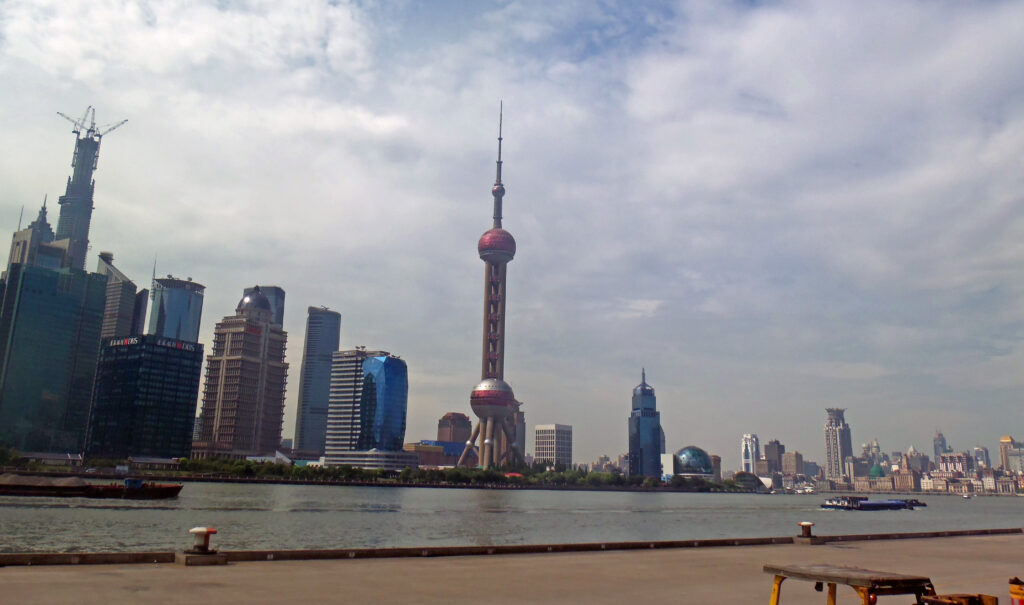
Shanghai is the easiest Chinese city to start with — and the hardest to leave on schedule. In three days you can walk the colonial Bund at dawn, eat your way through a Ming-dynasty garden town, and stand on the highest observation deck in China. This plan is built for first-timers: no wasted mornings, no backtracking, and every price checked for 2026.
Before you arrive
Which airport? Shanghai has two. Pudong (PVG) handles most international flights and sits about 40 km east of the centre. Hongqiao (SHA) is closer in and better for domestic connections. From Pudong, the honest choice is the Maglev: it covers the 30 km to Longyang Road in about 8 minutes for ¥50 (¥40 if you show a same-day boarding pass), running at 300 km/h in current service. From Longyang Road, Metro Line 2 takes you into the centre. The whole journey to People’s Square takes roughly 50 minutes. A taxi from Pudong costs around ¥180–220 depending on traffic, and takes well over an hour at peak times.
Visa. Many nationalities can enter visa-free under China’s 240-hour transit scheme or a 30-day visa-free arrangement — check which one applies to your passport before you fly, and read our China visa-free guide for the details that catch people out, like the onward-ticket rule.
Money and connectivity. Set up Alipay or WeChat Pay before you land, and sort out an eSIM or local SIM while you still have home Wi-Fi — cash is accepted almost nowhere in practice. Our payment guide walks through the setup step by step.
Where to stay. Stay near People’s Square, Jing’an or Xintiandi and you can walk to half the sights on this plan. Lujiazui looks spectacular but empties at night. Book through an international platform and double-check the listing accepts foreign guests — some smaller hotels still cannot. Our hotel booking guide explains the front-desk refusal problem and how to avoid it.
Day 1: The Bund, Yu Garden and the old city
Start early at the Bund. Before 8am the promenade belongs to tai chi groups and photographers, and the Pudong skyline across the Huangpu is at its sharpest. The 52 historic buildings along Zhongshan East 1st Road are free to admire — the Customs House and the old HSBC building are the two to linger at.
From the Bund it is a 15-minute walk south to Yu Garden, the 16th-century classical garden at the heart of the old city. Entry is ¥40 in peak season and ¥30 off-peak, and it opens 8:30–17:00. Go in the morning before the tour groups arrive. The surrounding Yuyuan Bazaar is free to wander and is the right place for your first proper Shanghai lunch: soup dumplings (xiaolongbao) and pan-fried buns (shengjianbao) from a busy stall will cost you under ¥40 and beat most sit-down restaurants.
Spend the afternoon walking Nanjing Road east to west, from the Bund to People’s Square. It is crowded and commercial — but it is the fastest way to feel the scale of the city, and People’s Square is where the metro lines converge.
Come back to the Bund after dark. The skyline lights come on around sunset and the view from the promenade — Oriental Pearl Tower, Shanghai Tower, the whole Lujiazui cluster — is the single image most visitors take home. A Huangpu river cruise (around ¥100–150 for the standard evening sailing) is worth it once, if only for the photos from the water. Book on the day; it rarely sells out except on public holidays.
Day 2: The French Concession, Xintiandi and the skyline from above
Day two is the slow day, and deliberately so. Start in the former French Concession — the leafy grid of streets around Wukang Road, Anfu Road and Huaihai Road. Plane trees, art deco villas, tiny coffee shops and boutiques in converted lane houses. Wukang Road’s art deco Wukang Building is the photo stop; the surrounding lanes are the wander.
Walk or take a short metro ride to Xintiandi, where restored 1920s shikumen stone-gate houses now hold restaurants, bars and shops. It is polished and pricy, but the best-preserved piece of old Shanghai street fabric, and a good place for a long lunch. Nearby Tianzifang is the scruffier, more local alternative — narrow lanes, craft stalls and snack vendors — if Xintiandi feels too tidy for you.
In the late afternoon, cross to Pudong for Shanghai Tower, China’s tallest building at 632 metres. The observation deck on the 118th floor sits at about 546 metres, and the standard adult ticket is ¥180 (about ¥199 on peak days), with a combo including the damper exhibition on floors 125–126 at ¥268. The deck is open 8:30–22:00, last entry 21:30. Book a slot about 30 minutes before sunset: you get the city in daylight, then watch the lights switch on from above. Book ahead — weekends and holidays sell out.
End the day with dinner in Jing’an, around the temple of the same name. The area has the best concentration of mid-range restaurants in the city, and the Jing’an Temple itself, lit up at night, is worth the short detour.
Day 3: Disneyland — or the slow Shanghai
Day three is a choice, and it depends on who you are travelling with.
Option A: Shanghai Disneyland. If this is on your list, give it the full day — the park is large, queues are real, and half a day is a false economy. A standard one-day ticket costs ¥475–799 in 2026 depending on the date, across six price tiers: quiet weekdays are cheapest, Spring Festival, May Day week and the 1–7 October Golden Week are the most expensive. Children aged 3–11, visitors over 60 and guests with disabilities pay about 75% of the standard price, and children under 3 enter free. Tickets are date-locked and linked to your passport, so buy through the official Shanghai Disney Resort app or a trusted platform like Trip.com, and check the price calendar for your exact date before you commit. Arrive at opening and ride the headline attractions first.
Option B: the slow city. If theme parks are not your thing, spend the morning at the Shanghai Museum on People’s Square — free entry, but reserve a timed slot ahead, as it regularly sells out — then take the metro to the M50 art district on Moganshan Road for galleries in converted textile mills. In the afternoon, ride out to Zhujiajiao water town, about an hour west of the centre: canals, stone bridges and Ming-era houses, with entry to the town itself free and individual attractions ticketed. It is the gentlest possible end to a first Shanghai trip, and the closest thing to old China within an hour of the Bund.
What three days in Shanghai costs
Excluding flights and hotels, a comfortable three days runs roughly like this per person — our full China trip cost guide breaks the same maths down for a whole trip.
- Transport: ¥150–250 — metro rides are ¥3–7 each, and a 3-day metro pass costs ¥45. The Maglev adds ¥50 each way.
- Attractions: ¥250–400 without Disneyland; add ¥475–799 with it. Yu Garden, Shanghai Tower and a river cruise are the main paid stops.
- Food: ¥150–300 a day if you mix street stalls with sit-down restaurants. A full local breakfast costs under ¥20.
- Total: roughly ¥1,000–1,700 per person for three days without Disneyland, or ¥1,500–2,500 with it.
Practical tips that save first-timers real time
Use the metro like a local. Shanghai’s metro is the world’s longest, and it reaches everywhere on this plan. Fares start at ¥3 for the first 6 km. A 1-day pass costs ¥18 and a 3-day pass ¥45. Read our metro guide for payment and rush-hour tips before your first ride.
Book the big tickets before you arrive. Yu Garden, Shanghai Tower, the Shanghai Museum and Disneyland all use timed entry or date-locked tickets. The pattern is the same everywhere in China now: the earlier you book, the less you queue. Our attraction tickets guide covers which sites sell out and how far ahead to book.
Eat where the queue is. In Shanghai, a line of locals outside a tiny shop is the most reliable restaurant review in the city. Pointing and a translation app will get you through almost any order — and the best meal of your trip will probably cost less than ¥50.
Carry your passport. Hotels, Disneyland, the museum and the observation deck all check it. A photo on your phone is not always accepted.
Do not try to do Shanghai in a day trip from elsewhere. It looks compact on a map, but the city rewards a second morning. With more time, add a day trip to Suzhou or Hangzhou — both under an hour by high-speed rail — or fold Shanghai into a longer first trip, as in our 7-day Beijing and Shanghai plan.
Three days gives you the skyline, the old city, the concession lanes and one big day out — which is to say, it gives you Shanghai’s two halves: the China that was, and the China that is being built right in front of you. It is a strong start to a first trip, and an easy city to come back to.
If you want this plan shaped around your own dates, pace and interests — a different Day 3, a food-focused route, or Shanghai folded into a longer China trip — our concierge service can do that. Want this itinerary tailored to your dates? Our Route Design ($180) turns it into a day-by-day plan.