
Last updated: October 29, 2026
Landing in China for the first time is exciting and a little overwhelming. Your phone may not have data yet, signs mix Chinese and English, and you’re tired. The good news: China’s big airports are among the easiest in the world to leave if you know the plan. This guide covers Shanghai (Pudong and Hongqiao) and Beijing (Capital and Daxing), with current fares, what each option is really like, and a step-by-step arrival checklist.
Prices below are drawn from Shanghai and Beijing government transport pages and 2026 travel-transport guides; fares and timetables change, so check the signage or the operator’s app on the day. Dollar figures are approximate (about ¥7.1 = $1).
Before you land: a 5-minute setup
- Get data working. An eSIM installed before departure connects as you land. See our China eSIM guide.
- Set up payment. Link a foreign card to Alipay or WeChat Pay so you can scan metro QR codes and pay DiDi. Our payment guide walks through it. Keep some backup cash and your physical card.
- Save your hotel address in Chinese (a screenshot works) for drivers.
- Install DiDi and a map app. See apps you need in China and the DiDi guide for foreigners.
- Know your entry route. Visa-free, 240-hour transit or a visa all work differently at the border desk; our first-time-in-China guide covers the basics.
Step by step: from the plane to the street
- Follow “International Arrivals”. Expect a health/entry declaration check, then immigration.
- Immigration. Have your passport, onward ticket details and hotel address ready. Fingerprints and a photo are normal for most foreign visitors. Lines vary from 10 minutes to over an hour at peak times.
- Baggage and customs. Use the green channel if you have nothing to declare.
- Connect and pay. Switch off airplane mode, open Alipay or WeChat and check your transit/ride QR works.
- Choose your ride using the tables below, and follow signs for “Metro”, “Maglev”, “Airport Express”, “Taxi” or “Ground Transportation”.
Shanghai Pudong International (PVG)
Pudong is about 30 km east of downtown. The metro and maglev stations sit between Terminals 1 and 2, so you can reach either easily from arrivals.
| Option | Time to People’s Square area | Cost | Best for |
|---|---|---|---|
| Metro Line 2 (direct) | About 60-70 min | About ¥7 ($1) | Budget, light luggage |
| Maglev + Metro Line 2 | About 45-60 min total | ¥50 maglev (¥40 with a same-day ticket or transit card) + about ¥3-8 metro | Speed, the experience |
| Airport bus | 60-90 min | About ¥16-30 | Hotels on a bus route |
| Taxi / DiDi | 45-70 min | About ¥150-250 ($21-35) | Families, heavy bags, late arrivals |
The maglev
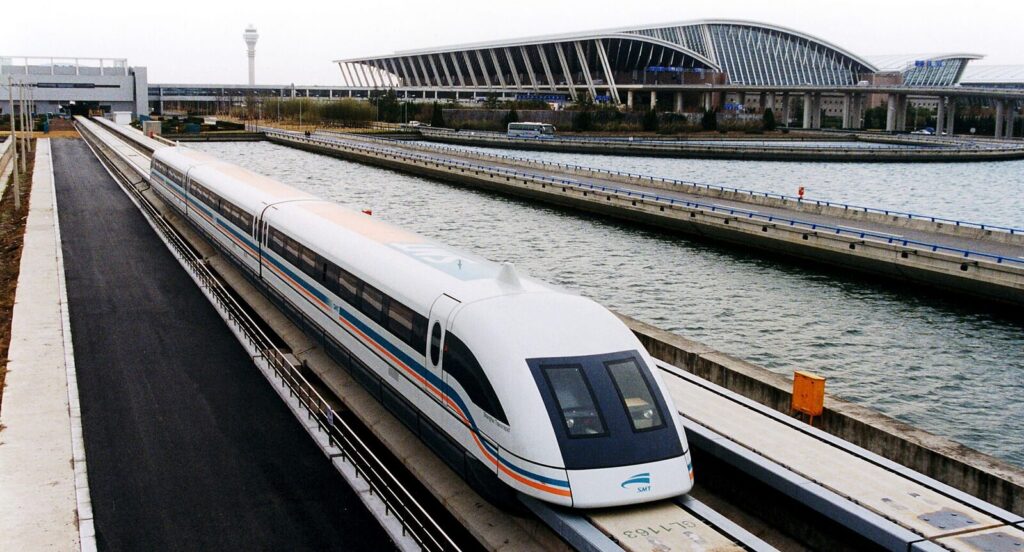
The Shanghai Maglev reaches speeds of up to 430 km/h and covers the trip to Longyang Road station in about 8 minutes. Trains run roughly 07:00 to 21:40 every 15-20 minutes (check posted times). At Longyang Road you change to Metro Line 2 (or Lines 7/16). Honestly, it saves less time than people expect, because the transfer eats several minutes, but it’s a memorable first ride and avoids the slowest eastern stretch of Line 2.
Metro Line 2
Line 2 runs from Pudong straight through People’s Square, East Nanjing Road (nearest stop to the Bund) and on to Hongqiao. Some trains require a change at Guanglan Road; just cross the platform. It runs from about 06:00 to late evening. With a big suitcase at rush hour, it can be tiring.
After the trains stop
Late-night buses and taxis cover the gap. Official taxi ranks operate around the clock; DiDi works too. Hotel near Pudong? Consider a taxi for the short ride.
Shanghai Hongqiao (SHA)
Hongqiao is much closer to downtown. Metro Lines 2 and 10 start at the airport (Terminals 1 and 2) and reach People’s Square in about 30-40 minutes for a few yuan. A taxi into central Shanghai typically runs around ¥60-100 depending on traffic. Hongqiao also sits beside Hongqiao railway station, the hub for high-speed trains to Suzhou, Hangzhou and Nanjing. Staying in Shanghai? See where to stay in Shanghai.
Beijing Capital International (PEK)
Capital Airport is about 30 km northeast of the center, and the rail link is excellent.
| Option | Time | Cost | Notes |
|---|---|---|---|
| Capital Airport Express | About 20-30 min | ¥25 flat ($3.50) | To Sanyuanqiao (Line 10) and Dongzhimen (Lines 2 and 13); every ~10 min; fare charged separately from regular metro |
| Airport bus | 60-90 min | About ¥20-55 | Routes to Beijing Station, Xidan and more |
| Taxi | 40-70 min | About ¥100-150 ($14-21) plus expressway toll | 20% night surcharge 23:00-05:00 |
The Airport Express beats road traffic on the ring roads and is our first pick for most travelers. If your hotel is in Sanlitun, Dongcheng or near a Line 2 stop, it’s the easiest route of all. Planning a stay? See where to stay in Beijing.
Beijing Daxing International (PKX)
Daxing opened in 2019 and lies about 46 km south of the center, so the transfer takes longer than from Capital.
| Option | Time | Cost | Notes |
|---|---|---|---|
| Daxing Airport Express | About 20 min to Caoqiao | ¥35 ($5) standard class | Up to 160 km/h; change at Caoqiao for Lines 10 and 19 |
| Intercity rail to Beijing West | About 30 min | About ¥17-30 | Check train times in the 12306 app or at the station |
| Airport bus | 60-90 min | About ¥25-50 | Several routes |
| Taxi / DiDi | 60-80 min | About ¥180-250 ($25-35) | Fare depends on traffic and tolls |
Door-to-door by rail, expect around 50-60 minutes to central stations, including the transfer.
Taxi, DiDi or pre-booked transfer?
Pros and cons
- Official taxi queue: metered, always available, cash or QR payment. Drivers rarely speak English, so show your address in Chinese. Ask for a receipt (fāpiào).
- DiDi: quotes the fare upfront and records the route. Needs working data and payment. Pickup points can be a short walk away.
- Pre-booked private transfer: from roughly ¥250 and up, a driver meets you in arrivals. Best after a long flight or with kids and lots of luggage, though pricier.
Avoiding scams
- Ignore people in the arrivals hall offering a “cheap taxi”. Walk to the signed queue.
- Insist on the meter. Never agree a flat price on the curb.
- Watch for detours; keep your map open.
Which route should you choose?
| Your situation | Pick |
|---|---|
| One carry-on, daytime, saving money (Shanghai) | Metro Line 2 |
| Want speed and a memorable ride (Shanghai) | Maglev + Line 2 |
| Heavy bags or late-night arrival | Taxi / DiDi |
| Beijing, landing at Capital | Airport Express |
| Beijing, landing at Daxing | Daxing Express, then metro |
Before you check into your hotel
Foreign guests must be registered with the local police. Hotels normally do this at check-in with your passport; if you stay in a private rental, see our accommodation registration guide.
FAQ
How much cash should I carry at arrival?
Most transport accepts Alipay or WeChat, but keep a few hundred yuan as backup in case a payment fails.
Can I use my foreign bank card on the metro?
Often not directly. Buy a ticket from a machine (many accept coins and bills, and some show English) or use Alipay’s transit QR code.
Which Shanghai airport is better?
Hongqiao is closer to downtown and mainly handles domestic and some regional flights; Pudong handles most international flights.
Is the maglev worth it?
For the experience, yes. For pure cost and simplicity, Line 2 wins.
How early should I arrive for departure?
Arrive about 3 hours before an international flight to allow for security, check-in and emigration lines.
Want your arrival taken care of?
If you’d rather land with the details sorted, our China Travel Concierge can help plan your arrival route, set up payments and apps, and arrange airport transfers on request, with a custom quote based on what you need. Message us on WhatsApp to get started.