
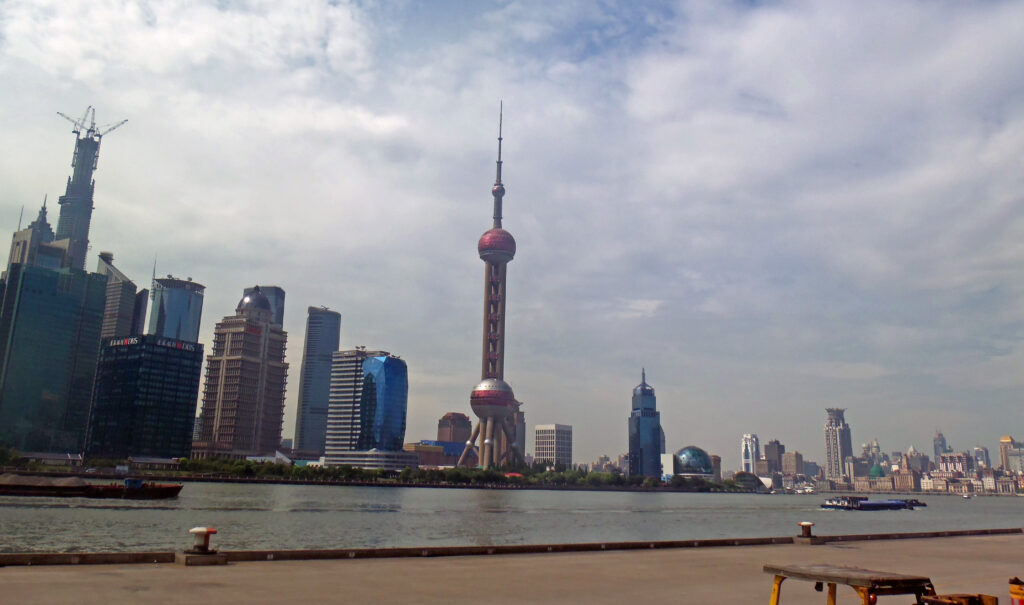
Seven days is not a long time in China, but it is enough for a first trip that feels complete rather than rushed — provided you stop trying to see the whole country. This itinerary does the opposite: two cities, one high-speed train between them, and no domestic flights at all. Beijing gives you imperial China and the Great Wall. Shanghai gives you the modern skyline, old lanes, and the best food streets for a first-timer. Together, they are the clearest possible introduction to the country.
This plan assumes you arrive in Beijing and fly home from Shanghai (or the other way round — it works just as well in reverse), at a comfortable walking pace. If you have more time, our two-week itinerary adds Xi’an and Chengdu.
Before you go: three bookings that decide the trip
Most first-timer frustration in China comes from three things, and all three are avoidable with a little advance planning. First, the Forbidden City does not sell walk-up tickets in the usual sense: tickets are released at 20:00 Beijing time, seven days before the visit date, and you book with your passport number. Adult admission is ¥60 in peak season (1 April to 31 October) and ¥40 in low season (1 November to 31 March), and the museum is closed on Mondays except public holidays. Book the Forbidden City first, then build the rest of your Beijing days around that date.
Second, the train between the two cities. The fastest G-trains run from Beijing South to Shanghai Hongqiao in about 4 hours 18 minutes, covering 1,318 kilometres; most services take four and a half to six hours. Second-class fares are roughly ¥553 to ¥669, depending on the train and date, so check the exact fare on 12306 when you book. Book the train as soon as your Forbidden City date is fixed, and double-check that you are departing from Beijing South and arriving at Shanghai Hongqiao — both cities have several stations, and the wrong one can cost you an hour. Our China high-speed rail guide explains seat classes and foreign-passport booking in detail.
Third, payment and hotels. Set up Alipay or WeChat Pay before you leave home, and confirm that your hotel accepts foreign guests — not every small hotel does. Our payment guide and hotel booking guide walk through both. On entry rules, check the current visa policy before booking: our visa-free guide explains the framework, but confirm your own nationality’s rules before you pay for anything.
At a glance
- Days 1–4: Beijing — hutongs, the Forbidden City, the Great Wall, the Temple of Heaven
- Day 4 afternoon: High-speed train to Shanghai (about 4.5 hours)
- Days 5–7: Shanghai — Yu Garden and the Old City, the Bund, the French Concession, Pudong
- Budget shape: Sightseeing tickets on this route are mostly ¥30 to ¥60 each; the train is the single biggest transport cost
- One rule: Keep Mondays light — both the Forbidden City and Yu Garden are normally closed on Mondays
Day 1: Arrive in Beijing, walk a hutong
Do not plan a major sight on arrival day. Stay near the Drum Tower or Nanluoguxiang area, drop your bags, and spend the late afternoon walking a hutong — one of Beijing’s old grey-brick lanes, with courtyard houses, small noodle shops, and locals playing chess at the kerb.
Eat locally and go to bed early. Tomorrow the Forbidden City rewards an early start: be at the Meridian Gate when it opens, and walk the central axis before the crowds thicken around midday.
Day 2: The Forbidden City and Jingshan Park
Start at Tiananmen Square, cross to the Meridian Gate, and walk the Forbidden City’s central axis: the great halls, the courtyards that get quieter the further north you go, and the Imperial Garden at the far end. Allow three to four hours. If you want the Treasure Gallery and Clock Gallery, add them when you book — they are separate paid galleries, not included in the basic ticket.
Afterwards, climb Jingshan Park, directly north of the palace, for the classic view over the palace’s golden roofs. Finish the day with Peking duck — book a table, as the well-known restaurants fill up. Our first-timer mistakes guide covers the other small errors that cost visitors time on days like this.
Day 3: The Great Wall at Mutianyu
Mutianyu is the best first-timer section of the Wall: restored, dramatic, and far less crowded than Badaling. Go early, take the cable car up, walk along the ridge for an hour or two, and come back down by cable car or toboggan. Allow a full day, including the roughly 90-minute drive each way from central Beijing. Wear proper walking shoes — the steps are steep, uneven, and much higher than they look in photographs — and carry water, as there is little shade on the ridge.
Our Great Wall guide compares the sections in detail. In winter the Wall is windy and icy in places, and in summer it is hot with almost no cover, so dress for the ridge, not for the city.
Day 4: Temple of Heaven, then the train to Shanghai
Spend the morning at the Temple of Heaven, where Beijingers practise tai chi, sing in choirs, and play badminton in the park around the Hall of Prayer for Good Harvests. It is the most relaxed major sight in Beijing, and a good counterweight to the scale of the Forbidden City.
After lunch, head to Beijing South station and take an afternoon G-train to Shanghai Hongqiao. In the early evening, take a first walk along the Bund: colonial-era buildings on one side of the Huangpu River, the futuristic towers of Pudong on the other, and the whole city lit up between them. It costs nothing.
Day 5: Yu Garden, the Old City, and the Bund by day
Start at Yu Garden, the Ming-dynasty classical garden in Shanghai’s Old City. Adult admission is ¥40 in peak season (April to June and September to November) and ¥30 off-peak, opening hours are 09:00 to 16:30 with last entry at 16:00, and it is closed on Mondays except public holidays — so plan this for a Tuesday to Sunday. Go in the morning, when the rockeries, ponds, and pavilions are at their quietest.
Outside the garden walls, the Yuyuan Bazaar is free to wander and is the place to try xiaolongbao (soup dumplings) from a busy, local shop. In the afternoon, walk the Bund in daylight, then cross to Nanjing Road pedestrian street for people-watching.
Day 6: The French Concession and the Shanghai that locals love
Day 6 is deliberately slower. Walk the plane-tree-lined streets of the former French Concession — Tianzifang’s craft lanes, Wukang Road’s 1930s mansions, and the cafés in the old lane houses. This is the Shanghai residents actually spend their weekends in.
In the afternoon, visit the Shanghai Museum on People’s Square (free, but book ahead in busy periods) or Jing’an Temple, then finish in Xintiandi, where restored stone-gate houses now hold restaurants and bars.
Day 7: Pudong, and home
On your last morning, cross the river to Pudong. The observation decks of the Shanghai Tower or the Shanghai World Financial Center give you a final, vertiginous view of the city you have spent three days walking through, and the contrast with Beijing’s low, horizontal skyline is the perfect ending to the trip. Allow time to get to the airport: Pudong Airport is a long way east of the centre, so leave at least three hours before an international flight, more in rush hour.
What this trip costs, roughly
Excluding international flights and hotels, budget roughly ¥400 to ¥600 per person for sightseeing and city transport, plus the Beijing–Shanghai train at roughly ¥553 to ¥669 per person in second class. Meals vary enormously: a bowl of noodles can cost ¥20, a good restaurant dinner ¥150 to ¥250 per person. Hotels are the biggest variable, so choose your neighbourhood first — a good location matters more than a large room.
Mistakes to avoid on this route
- Putting the Forbidden City on a Monday. It is closed. Check the weekday before you book anything else.
- Booking the wrong Beijing or Shanghai station. Use Beijing South and Shanghai Hongqiao for this train, and allow an hour to reach either.
- Trying to add Xi’an as a day trip. It is a four-hour train ride each way. Save Xi’an for a longer trip.
- Leaving Yu Garden until late afternoon. Last entry is 16:00, and the garden deserves a morning.
- Packing the schedule to the hour. China rewards the unplanned hour — a lane you wander down, a market you stumble into, a restaurant you choose because it is full of locals.
When to go
April to June and September to November are the sweet spots: mild weather and gardens at their best. July and August are hot and crowded; January and February are cold but quiet. Whatever the season, check ticket and opening-hour notices for your exact dates, as holiday schedules can change opening days.
Seven days, two cities, one train — and a first trip to China that leaves you wanting to come back rather than needing a holiday to recover from it. If you want this route reshaped around your own dates, pace, and interests, our concierge service can help. Want this itinerary tailored to your dates? Our Route Design ($180) turns it into a day-by-day plan.