
Last updated: November 1, 2026
Peking duck (北京烤鸭, Běijīng kǎoyā) is the dish most visitors fly to Beijing to eat, and it is easy to get wrong: you can queue for two hours at a tourist-heavy branch, order the wrong portion, or pay for a sit-down show you did not want. This guide compares the best-known restaurants, explains the two roasting styles, shows how to order and eat the duck properly, and gives realistic prices in CNY and USD. Prices below are typical ranges reported across 2026 restaurant guides and change often, so treat them as planning figures and check the menu on the day.
How Peking duck works: the two roasting styles
Understanding the difference helps you choose a restaurant that fits your taste.
Hung-oven (挂炉, guàlú)
The duck hangs in an open oven fired with fruitwood. The skin is crisp and glassy, with a light smoky flavour. This is the style made famous by Quanjude, which dates back to 1864, and by many modern places including Da Dong, which uses its own leaner variation.
Closed-oven (焖炉, mènlú)
The duck roasts in a closed brick oven heated without direct flame. The meat tends to be softer and more tender, and the skin a little less crackly. Bianyifang, whose roots go back to the 15th century, is the best-known name for this style.
Best Peking duck restaurants in Beijing compared
| Restaurant | Style | Whole duck (CNY) | Per person (CNY / USD) | Best for |
|---|---|---|---|---|
| Siji Minfu (四季民福) | Hung-oven, casual and polished | ¥228–268 | ¥150–250 / $21–35 | First-timers who want value and a local crowd |
| Quanjude (全聚德) | Hung-oven, historic | ¥258–298, plus service charge | ¥180–350 / $25–50 | The 1864 heritage and tableside carving |
| Da Dong (大董) | Modern “lean” duck | ¥298–398 | ¥300–500 / $42–70 | A special-occasion dinner |
| Bianyifang (便宜坊) | Closed-oven | ¥168–238 | ¥150–250 / $21–35 | Tender meat, different style |
| Li Qun (利群烤鸭店) | Hutong courtyard | ¥200–300 | ¥150–250 / $21–35 | An atmospheric courtyard, book weeks ahead |
Figures are approximate and drawn from several 2026 restaurant roundups; exchange rate used is about ¥7.1 per US dollar. Add ¥30–60 per person for pancakes, sides, tea and drinks.
Siji Minfu: the all-round pick
Locals and visitors alike recommend Siji Minfu, and the Dengshikou branch near the Forbidden City is popular for its views. The duck is well-roasted, the menu has English and pictures, and prices are fair. The catch is the queue: arrive before about 5:30 pm or after 8 pm, or book through the restaurant’s mini-program or a platform if you can.
Quanjude: worth it once for the history
The Qianmen flagship is the famous one. The dining room is busy with tour groups, and some locals feel the quality no longer justifies the price, but the open-flame roasting and the carving at your table are a genuine ritual. Check whether a service charge is added.
Da Dong: the upscale option
Da Dong’s duck is lighter and less fatty, served with creative accompaniments in a stylish room. It is the one to choose for a celebration. Reserve about a week ahead and expect to pay noticeably more than at the others.
Bianyifang and Li Qun: the alternatives
Bianyifang is cheaper and uses the closed-oven method, so it tastes different rather than worse. Li Qun serves duck in a hutong courtyard house near Qianmen; it is charming but tiny, so book well ahead.
How to order and eat Peking duck step by step
- Choose the portion. A whole duck suits two to four people. Many restaurants sell a half duck for couples. Ask whether the price includes pancakes and sauce; sides are usually extra.
- Add a few sides. A cold cucumber dish, a vegetable stir-fry and rice or noodles round out the meal.
- Watch the carving. A chef often slices the duck at your table. The crisp skin comes first, sometimes with sugar for dipping.
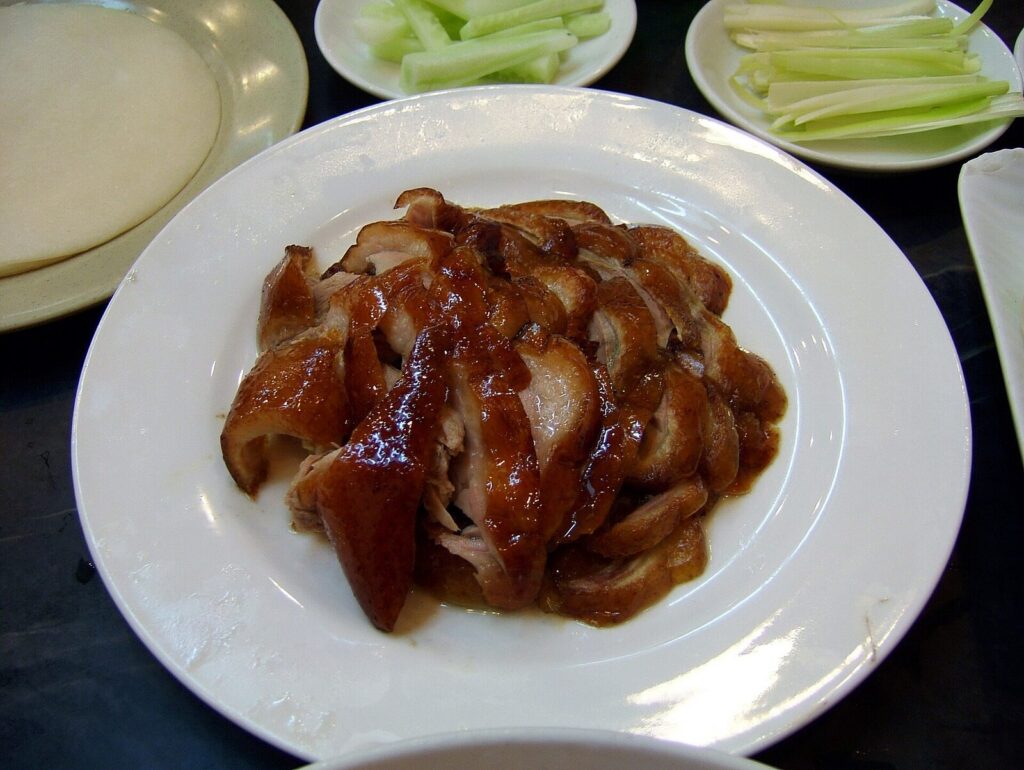
- Build each roll. Take a thin pancake, add a dab of sweet bean sauce, a few slices of duck with skin, and strips of cucumber and spring onion, then fold it up and eat it by hand.
- Finish with the soup. Many places turn the carcass into a milky soup or stir-fry the remaining meat. Do not skip it.
Booking tips and timing
- Go off-peak. Lunch around 11:00–11:30 am or an early dinner before 5:30 pm usually means a shorter wait.
- Book where possible. Popular houses accept reservations through Chinese apps; weekend slots fill early. If you cannot use the apps, your hotel front desk can often call for you. See our guide to the apps you need in China.
- Take a queue number. Many branches hand out paper numbers or let you join the line on a mini-program, then wander nearby while you wait.
- Check the bill. Confirm whether tea, towels, sauces and service charge are listed before paying.
Paying and ordering as a foreigner
Most restaurants accept Alipay or WeChat Pay, and larger ones also accept foreign cards, though not always. Set up a payment method before you go: our China payment guide walks through it. Tipping is not expected; read more in our China etiquette guide.
What else to eat in Beijing
Duck is only one meal. Beijing’s everyday food is cheap and excellent.
| Dish | Typical price (CNY) | When to eat it | Note |
|---|---|---|---|
| Jianbing (savory crepe) | ¥8–18 | Breakfast | Add egg and crispy cracker |
| Zhajiangmian (fried-sauce noodles) | ¥25–45 | Lunch | Mix thoroughly before eating |
| Copper-pot lamb hotpot | ¥100–220 per person | Dinner, winter | Sesame sauce is essential |
| Lamb skewers | ¥5–15 each | Evening | Cumin is the point |
| Doufunao (savory tofu pudding) | ¥6–15 | Breakfast | Savory, not dessert |
For a broader overview of Chinese dishes and how to order, see our China food guide for first-timers.
Pros and cons of the main choices
- Siji Minfu: great value and quality; long queues at peak times.
- Quanjude: historic and easy to find; touristy and pricier for what you get.
- Da Dong: refined, lighter duck; the most expensive option.
- Bianyifang: affordable and tender; less crisp skin.
- Li Qun: atmosphere is unbeatable; very limited seats.
Plan it around your Beijing days
Duck dinner pairs well with a day at the Forbidden City or a Great Wall trip. If you are building the whole route, start with our Beijing 3-day itinerary, pick a base from where to stay in Beijing, and see the airport arrival guide for getting into the city.
Frequently asked questions
How much is Peking duck in Beijing?
Roughly ¥170–400 ($24–56) for a whole duck, or about ¥150–500 per person with sides, depending on the restaurant.
Which restaurant is best for first-timers?
Siji Minfu is the most commonly recommended balance of quality, price and atmosphere. Choose Quanjude for history or Da Dong for a splurge.
Do I need a reservation?
Not always, but popular branches can have 45–120 minute waits at peak hours. Booking or arriving early helps a lot.
Is a whole duck too much for one or two people?
For two people it is generous. Ask for a half duck if the restaurant offers it.
Can I use a foreign card?
Some larger restaurants take them, but many only accept Alipay or WeChat Pay. Set up mobile payment in advance.
Is it safe to eat from street stalls?
Busy stalls with high turnover are generally fine. Pick places with a steady line of locals.
Want help booking your Beijing dinners?
If you would rather not wrestle with Chinese booking apps, our concierge can help plan your Beijing food stops, handle reservations and set up payments for your trip. Quotes are custom to your needs. Visit the Concierge page or message us on WhatsApp.