
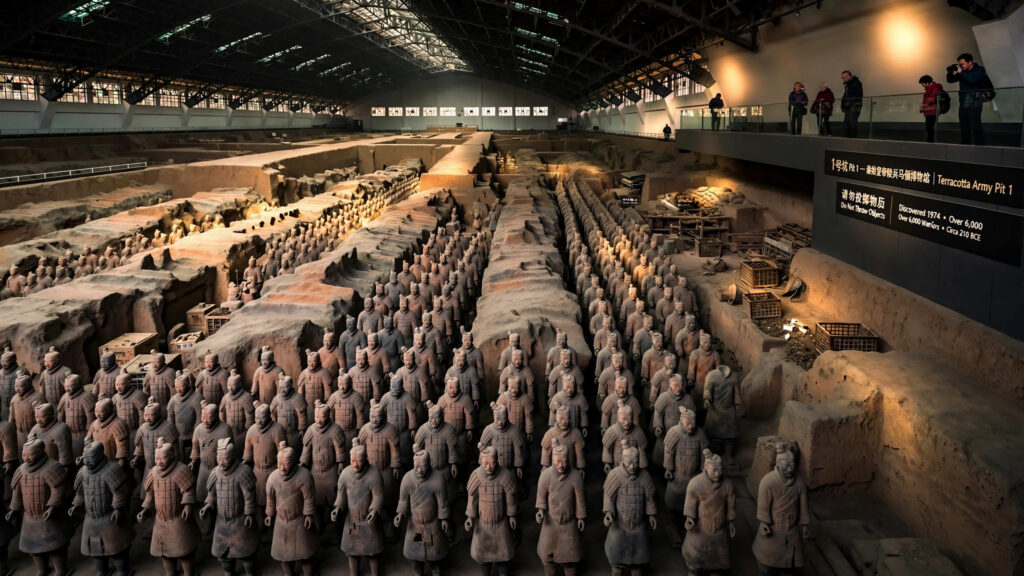
China is far easier to travel in than its reputation suggests — once you know the handful of rules that catch almost every first-timer out. The mistakes below are ordinary and avoidable: the ticket that cannot be bought on the day, the train booked from the wrong station, the phone that stops working the moment you land. Fix these ten things before you fly and most of the trip takes care of itself.
1. Assuming “visa-free” means “no rules”
This is the single most expensive misunderstanding. China has several different visa-free routes, and they are not interchangeable. The 240-hour transit visa-free policy lets passport holders from 57 countries stay up to 10 days without a visa — but only if you are genuinely in transit to a third country or region. Flying home the way you came does not qualify, and you need a confirmed onward ticket before you arrive. Separately, a unilateral 30-day visa-free arrangement covers other nationalities, confirmed through 31 December 2026, with its own country list and conditions.
Do not guess which route you are on. Read our visa guide, check the current list for your passport, and check again close to departure — the lists have changed several times in 2026 alone.
2. Leaving the big sights until you arrive
In China, booking ahead is not a time-saving tip. At the most popular sights it is a condition of entry. The Forbidden City in Beijing releases tickets seven days ahead at 20:00 Beijing time, charges ¥60 in peak season (April–October) and ¥40 off-season, is closed on Mondays, and does not sell same-day tickets online. Miss the release window in a busy week and you simply do not get in.
The same real-name logic applies across the country: tickets are tied to your passport, one per person, often non-transferable. List every capped sight on your route — Forbidden City, Terracotta Army, popular sections of the Great Wall — note each release window, and set alarms in Beijing time. Check before booking, because release rules change without much notice.
3. Trying to buy train tickets on the day
China’s high-speed trains are superb and frequently full. Official tickets on 12306 go on sale 15 days before departure, and popular routes at holiday weekends sell out within minutes of release. Turning up at the station hoping for a seat is a plan for a long wait, not a journey.
Register on 12306 (or a reliable booking app) before you fly, with your name spelled exactly as on your passport — your passport is your ticket, and a mismatch at the gate is a real problem. Note the departure station carefully: Beijing, Shanghai, Guangzhou and Chengdu each have several, and “Beijing Station” and “Beijing South” are not the same place. Our train guide covers the process, including the waitlist for sold-out trains.
4. Landing with no way to pay
Cash is still legal tender in China, but daily life runs on phones. Restaurants, metro gates, bike hire and small shops all expect Alipay or WeChat Pay, and a surprising number of places will look genuinely puzzled by a foreign bank card. First-timers who arrive planning to “sort out payment later” spend their first day hunting for ATMs and their first evening unable to order dinner properly.
Set up Alipay and WeChat Pay at home, link a card, and test a small transaction before departure. Carry ¥500 in small notes as backup for markets and cash-only stalls, but do not plan to live on cash. Our payment guide covers setup, including what to do when a foreign card is declined.
5. Packing five cities into seven days
China is roughly the size of Europe, and first-timers routinely plan it as if it were a single city break. Beijing to Shanghai alone is over 1,300 kilometres; add Xi’an, Chengdu and Guilin and you have spent your holiday in stations and airports. The trip feels rushed, the jet lag never clears, and every city gets a day and a half.
Three cities in ten days is a good first trip; two cities in a week beats four. If you only have a fortnight, use our two-week itinerary as a starting shape rather than adding stops to it. Slow travel is not wasted travel — the teahouse afternoon in Chengdu is the memory, not the fourth high-speed train of the week.
6. Travelling straight into a holiday wave
China’s domestic holidays move hundreds of millions of people at once, and foreign visitors get caught in them by accident. National Day Golden Week (1–7 October), Spring Festival and the Labour Day break (1–5 May) turn famous sights into queues and double or triple hotel prices.
Check the holiday calendar before you pick dates, and read our month-by-month guide for the weeks to avoid and the sweet spots — late April to early June and September to October. If your dates are fixed over a holiday, book everything early and budget for the crowds rather than discovering them.
7. Arriving without connectivity sorted
Google, WhatsApp, Instagram and most Western news sites do not work on mainland Chinese networks without a VPN, and many VPNs need to be installed before you land — app stores inside China will not always let you download one afterwards. Travellers who plan to “download it at the airport” often find themselves offline, mapless and unable to message home.
Sort this at home: an eSIM that works in China, or a tested roaming plan, plus a VPN installed before takeoff. Download offline maps for every city on your route, and save hotel addresses in Chinese characters — a taxi driver can read the characters instantly, but not your English spelling. Our eSIM guide covers the options and setup order.
8. Going to the wrong airport or station
Beijing has two major airports (Capital and Daxing) and Shanghai has two (Pudong and Hongqiao), an hour or more apart. Booking a flight into one and a train out of the other side of the city, with a tight connection, is a mistake people make once. The same trap applies to stations: several cities have a “main station” and a separate high-speed station with a similar name.
Every time you book transport, check the full station or airport name, not just the city. Allow at least three hours between an airport arrival and a train departure in a new city — immigration, luggage and a cross-city transfer always take longer than the map suggests.
9. Leaving your passport at the hotel
In most countries your passport lives in the hotel safe. In China it travels with you. Hotels need it at check-in, trains and flights are booked against it, major sights check it at the gate, and some metro and museum entries ask for it too. A photocopy will not open an automatic gate, and a photo on your phone will not board a train.
Carry the original, in a secure pocket or money belt, every day you travel or sightsee. Keep a photocopy and a phone scan as backup, but the original is what gets you through the day — and the name on every booking must match it exactly.
10. Eating and drinking on autopilot
Two small habits save real discomfort. First, do not drink tap water — buy bottled water everywhere, including for brushing your teeth in smaller hotels. Second, do not order blindly where nothing is in English: “spicy” in Sichuan means something entirely different from spicy at home.
Use a translation app with a photo function for menus, point at what other tables are eating, and start mild. Choose street stalls with a queue of locals and food cooked in front of you. And ignore the “tea ceremony” invitation from friendly strangers near major sights; use the official taxi queue or a ride-hailing app rather than a driver who approaches you inside the station.
The pattern behind all ten
Notice what these mistakes share: none of them is about China being difficult. They are about systems that work differently — real-name tickets, phone-first payment, holiday crowds, passport-as-ticket — and first-timers meeting them unprepared. The travellers who love China most are rarely the ones with the longest itinerary. They are the ones who booked the capped sights on time, set up payment and connectivity at home, and left room in each day for the city to surprise them.
That preparation is also where the money goes. Our cost guide puts a comfortable 10-day first trip at roughly ¥9,000–10,000 per person excluding international flights — but the mistakes above are exactly how that number quietly grows: a missed ticket replaced by an overpriced workaround, a sold-out train replaced by a last-minute flight, a holiday-week hotel booked late at twice the price.
So before you book anything else, do the boring checks: visa route, sight release dates, train release dates, payment apps, connectivity, holiday calendar. Do them in Beijing time, and the rest of the trip is the fun part.
And if you would rather hand that whole checklist to someone who does it every day — dates checked against holiday crowds and ticket windows, route paced so you actually enjoy it, hotels near the right stations — that is exactly what our concierge is for. See how it works.
Want this checklist tailored to your dates? Our Route Design ($180) turns it into a day-by-day plan — sights to book, trains to catch, and the mistakes your itinerary is most likely to make, fixed before you fly.