
Last updated: November 16, 2026
Hefei, the capital of Anhui, is best known in China as a science-and-technology city, but for visitors it is a calm, inexpensive stop with a well-organised old centre, free parks and a strong provincial museum. It is also the easiest rail gateway to Huangshan and Huizhou-style villages, so many travellers pass through anyway. Spending two days here gives you the context for Anhui before the mountains.
Is Hefei worth two days?
| Pros | Cons |
|---|---|
| Most major sights are free | Few headline “must-see” landmarks compared with Nanjing or Hangzhou |
| Fast trains to Nanjing, Wuhan, Shanghai and Huangshan | Real-name booking needed for several sites |
| Compact old centre linked by metro | Little English signage |
| Cheaper hotels and food than the Yangtze Delta | Humid summers, cold damp winters |
Getting to Hefei and around
Most high-speed trains use Hefei South station. Reported second-class fares and times: about CNY 64–70 (US$9–10) from Nanjing South in roughly 50 minutes, from about CNY 119 (US$17) from Wuhan in 1 hour 40 to 2 hours, and from about CNY 182 (US$25) from Shanghai Hongqiao in roughly 2 to 3 hours. Always check the current timetable when booking; see our attraction ticket guide for passport-based booking and domestic flights in China if you fly instead.
The Hefei Metro charges distance-based fares starting at CNY 2 (US$0.28) and rising to CNY 8 (US$1.11). Scan a QR code with Alipay or WeChat Pay; our metro guide explains how. Install the apps in our essential apps guide before you arrive. DiDi taxis between old-city sights usually cost CNY 15–25 (US$2–3.50, reported).
Where to stay
Stay near the old city around Huaihe Road or the Sanxiaokou area, within walking distance of Bao Park, or near a metro line for the museum. Confirm the hotel accepts foreign passports before paying; see how to book hotels as a foreigner. Mid-range rooms commonly run CNY 220–400 (US$30–55) a night.
Day 1: The old city
Morning: Bao Park (2–3 hours)
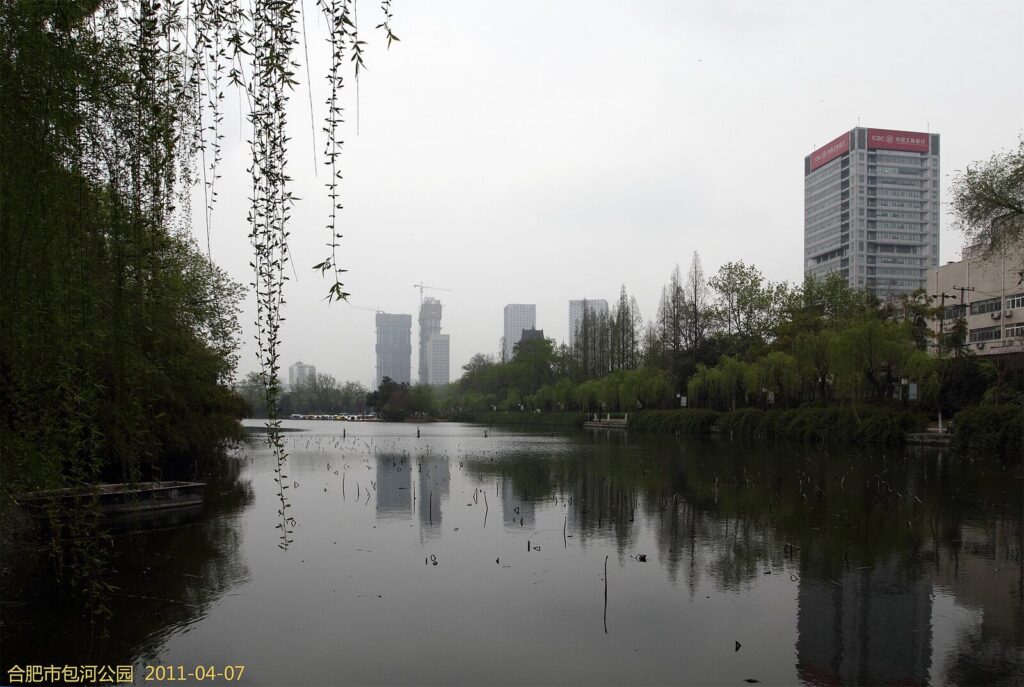
Bao Park (包公园) is a lakeside complex dedicated to Bao Zheng (999–1062), the Song-dynasty official remembered in China for incorruptibility. It holds a memorial temple, his reconstructed tomb area and Qingfeng Pavilion. Since May 2024 the park has been reported free to enter, but entry runs on real-name slots, booked through the park’s WeChat account, Meituan or Trip.com, or at the window with a valid ID such as your passport. Hours are about 09:00–17:00 with last entry around 16:30. Some inner buildings may carry small separate charges (roughly CNY 20 / US$3 reported); confirm at the gate.
Lunch
Try Anhui dishes: stinky mandarin fish is a Huizhou speciality, and local beef noodles and Lujiang-style snacks are cheap. A meal typically costs CNY 25–60 (US$3.50–8). Our China food guide helps with ordering.
Afternoon: Li Hongzhang Former Residence and Huaihe Road
Two streets north, the late-Qing courtyard house of Li Hongzhang sits on the Huaihe Road pedestrian street. It is reported free with reservation and closed on Mondays. Then wander the street for snacks and shops.
Evening: Xiaoyaojin Park
Xiaoyaojin Park marks the site where, in 215 AD, the Wei general Zhang Liao is said to have routed a far larger Wu army. Today it is a free lakeside park with pavilions and boats, open late into the evening, a pleasant place for a walk after dinner.
Day 2: Museum and Swan Lake
Morning: Anhui Museum, Shushan building
The new Anhui Museum building stands near Swan Lake on Huaining Road. Admission is free. Its collections cover Shang and Zhou bronzes, Chu-state currency, Han relief stones, Huizhou carving and the “Four Treasures of the Study” (brush, ink, paper and inkstone). Per the museum’s announcements, it opens Tuesday to Sunday, 09:00–17:00, with entry stopping at 16:30, and is closed on Mondays except public holidays. From 4 July 2026, real-name booking is required on Saturdays, Sundays and public holidays; Tuesday to Friday you can enter after security checks. The older Luyang building has different closing days (Tuesday), so check you are going to the right site.
| Item | Detail |
|---|---|
| Ticket | Free |
| Hours | Tue–Sun 09:00–17:00 (last entry 16:30) |
| Booking | Weekends and holidays; bring passport |
| Time needed | 2–3 hours |
| Metro | Reported route via Line 4 to Liushutang, then a short walk |
Afternoon: Swan Lake
Walk the modern Swan Lake area beside the museum, with its grand theatre and lakeside paths. It shows the other side of Hefei: wide boulevards and new districts. If you have time, return by evening for the lights.
Optional extras
- Sanhe Ancient Town: a water town reachable as a half-day trip, known for sanhe mi jiao rice snacks.
- Chaohu Lake: large freshwater lake for a slow half-day, especially for winter birds.
- Huangshan: continue by fast train; see our Huangshan guide.
- Nanjing: read our Nanjing 2-day itinerary.
Budget
| Item | Per day (CNY) | Per day (USD) |
|---|---|---|
| Hotel (mid-range) | 220–400 | 30–55 |
| Food | 80–150 | 11–21 |
| Metro and taxis | 20–60 | 3–8 |
| Sights | 0–40 | 0–6 |
FAQ
Can foreigners enter Hefei’s free sights?
Yes, a passport works as ID. Real-name booking applies at several sites, so check the day before.
When is the best time to visit?
Spring and autumn are the most comfortable. Summer is hot and humid; winter is cold and damp.
Is Hefei a good base for Huangshan?
Yes. Fast trains connect Hefei to Huangshan North in under about two hours, though schedules vary.
Do I need cash?
Rarely. Alipay and WeChat Pay work almost everywhere.
Opening rules change often. Details here come from recent reports and official museum announcements; verify before you go.