
Last updated: November 5, 2026
Nanjing was the capital of China several times, and it still feels like it: wide tree-lined avenues, a 600-year-old city wall, an emperor’s tomb in a forest and some of the best museums in the east. It is also far calmer than Shanghai or Beijing. This guide gives you a two-day plan, what to reserve in advance, what things cost in yuan and dollars (roughly ¥7.1 to US$1), and how to get there.
Before you go: the reservation rules
This is where visitors get caught out. Three of Nanjing’s main sights are free, but they need an advance booking, usually through a WeChat mini-program, and they accept passports as ID. Release times change, so treat the figures below as typical and check the official account when you book.
| Sight | Price | Booking | Notes |
|---|---|---|---|
| Sun Yat-sen Mausoleum | Free | Required, usually 1–7 days ahead via the Zhongshan Scenic Area mini-program | Open about 8:30–17:00, closed Mondays except holidays; 392 steps |
| Nanjing Museum | Free | Required, up to 7 days ahead; slots usually released in the evening | Closed Mondays, last entry about 16:00; weekend slots go fast |
| Nanjing Massacre Memorial Hall | Free | Required, 1–7 days ahead; each hall booked separately | Closed Mondays; one booking per person per month in some periods |
| Ming Xiaoling | ¥70 (~US$10) | Walk-up or online | Combined Zhongshan ticket about ¥100 (~US$14) |
| Presidential Palace | About ¥35–40 (~US$5–6) | Book 2–3 days ahead | Closed Mondays |
| Confucius Temple area | Street free; Dacheng Hall about ¥30 | None | Best after dark |
Because so many places close on Monday, plan your Nanjing days for Tuesday to Sunday if you can. If a mini-program rejects your passport number, ask your hotel front desk to help; carrying your passport every day is essential, since it is your ticket. Our guide to the apps you need in China covers WeChat setup, and how to pay in China explains Alipay and card options.
Getting to Nanjing
From Shanghai
High-speed trains run from Shanghai Hongqiao to Nanjing South, with the fastest taking around an hour and well over a hundred departures a day. Second class is roughly ¥140–150 (~US$20); check the live price when booking. Choose Nanjing South (南京南) unless your ticket says otherwise; the older Nanjing station is on the north side and used for some other services. Our China train booking guide walks through buying tickets with a passport.
From the airport
Lukou Airport (NKG) connects to the city by Metro line S1, then lines 1 or 3. Allow about 50 minutes to the centre. Taxis and ride-hailing cost more but are simpler with luggage.
Getting around
The metro is clean, cheap (¥2–7 per ride) and covers nearly everything on this list. Muxuyuan station (Line 2) is the stop for Purple Mountain. Taxis are metered; ride-hailing apps work with a linked foreign card.
Where to stay
For a first visit, choose near Xinjiekou (the central hub, with metro lines 1 and 2) or near the Confucius Temple (Fuzimiao) for evening atmosphere. Nanjing South station hotels are convenient for a quick stop but less charming. Mid-range hotels commonly run ¥300–600 (~US$42–85) a night. Remember that hotels must register your passport; see registering your accommodation as a foreigner.
Day 1: Purple Mountain and Qinhuai by night
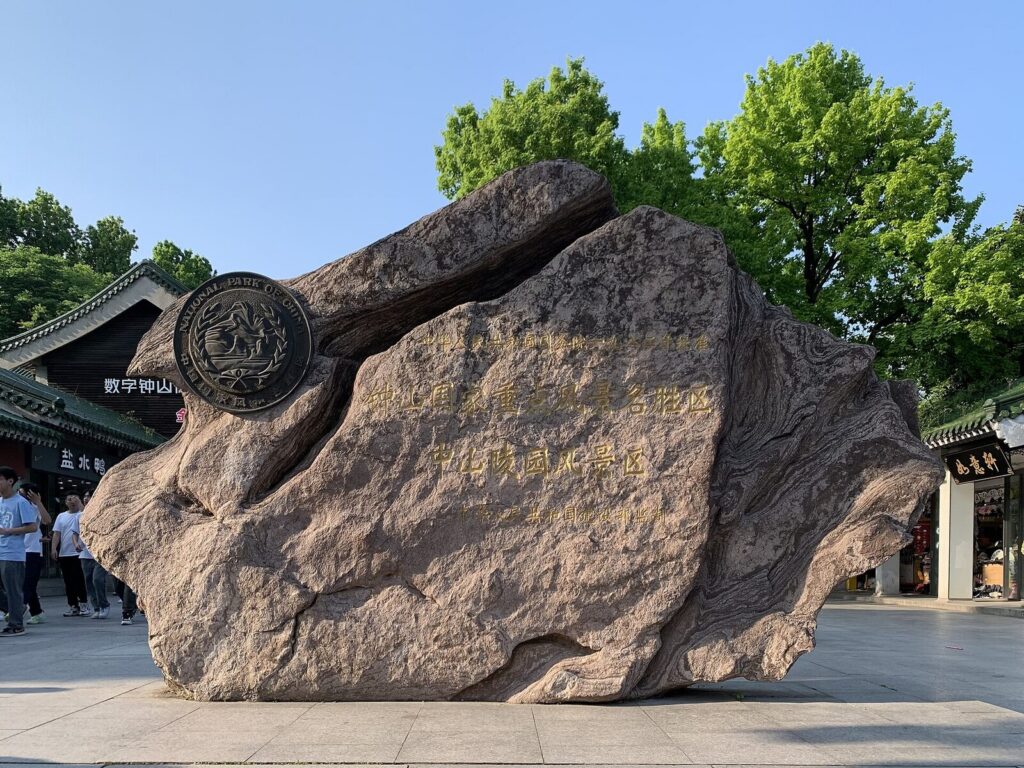
Morning: Sun Yat-sen Mausoleum
Arrive early, before tour groups. The memorial to Dr Sun Yat-sen, founder of the Republic of China, climbs 392 steps to a blue-tiled hall. The tomb chamber itself is not open to visitors, but the stairway, the gates and the view back over the forest are the draw. Allow 1.5–2 hours. Your booking must match your passport.
Late morning: Music Stage and Meiling Palace
A short walk or shuttle ride away, the Music Stage (about ¥10) is a quiet open-air amphitheatre. Meiling Palace (about ¥30) is a 1930s villa in the forest, associated with Soong Mei-ling. Both are included in the combined ticket.
Afternoon: Ming Xiaoling
This is the tomb of Zhu Yuanzhang, founder of the Ming Dynasty, a UNESCO World Heritage site. The highlight is the Spirit Way, lined with giant stone animals and officials. A short route through the main gate takes about 1.5 hours; a full visit takes longer. The single ticket is ¥70 (~US$10). If you add Linggu Temple (about ¥35), the combined ticket at about ¥100 (~US$14) saves money. The scenic area is spread out, so use the shuttle (about ¥10 per ride) rather than walking everything.
Evening: Confucius Temple and the Qinhuai River
Return to the old-city side for dinner and a stroll. The lanterns, bridges and canal boats along the Qinhuai are at their best after dark. A night boat cruise costs roughly ¥80–120 (~US$11–17) depending on the route and season. Nearby Laomendong is a quieter reconstructed old street with restaurants. Try Nanjing’s famous salted duck (盐水鸭), duck blood soup and tangbao. For more on ordering, see our China food guide.
Day 2: City Wall, museum and memory
Morning: Nanjing Museum or Zhonghua Gate
You have two good options. The Nanjing Museum is one of China’s great museums, with jade, bronzes and Ming and Qing treasures; book ahead and allow 2–3 hours. If you prefer outdoors, Zhonghua Gate (about ¥50) is the largest gate of the Ming city wall, with tunnels and views over the Qinhuai. The wall as a whole is among the longest city walls surviving in the world.
Afternoon: Nanjing Massacre Memorial Hall
The memorial commemorates the victims of the 1937 massacre. It is free, sombre and carefully done, with English signage. Book each hall you want to see, bring your passport and allow 1.5–2 hours. Visitors are expected to be quiet and respectful; photography rules vary by hall. Plan something calm afterwards rather than rushing to the next sight.
Late afternoon: Xuanwu Lake or the Presidential Palace
Xuanwu Lake is a large park beside the wall, free to enter and good for a sunset walk. The Presidential Palace (about ¥35–40) covers Qing, Taiping and Republican-era history and suits history lovers.
Pros and cons of Nanjing
| Pros | Cons |
|---|---|
| Quick, frequent trains from Shanghai | Many sights need advance booking and close Mondays |
| Several top sights are free | Purple Mountain is spread out and tiring in summer heat |
| Fewer crowds than Beijing or Shanghai | Less English signage outside the main sights |
| Excellent food and museums | Heavy history; can feel intense after the Memorial |
Best time to visit
Spring (late March to May) and autumn (October to November) are the most comfortable. Summer is hot and humid, and winter is cold and damp but quiet. Avoid major holiday weeks, when reservation slots disappear quickly.
Combining Nanjing with other trips
Nanjing pairs naturally with two days in Shanghai and a Suzhou day trip. If you are flying in from abroad, check whether you can use visa-free entry or the 240-hour transit policy. Keep data working with a China eSIM, and see where to base yourself in Shanghai first.
Budget at a glance
| Item | Approx. cost (2 days) |
|---|---|
| Train, Shanghai round trip (2nd class) | ¥280–300 (~US$40–42) |
| Hotel, 1 night mid-range | ¥300–600 (~US$42–85) |
| Zhongshan combined ticket + Zhonghua Gate | About ¥150 (~US$21) |
| Food and metro | ¥200–350 (~US$28–50) |
| Qinhuai night cruise (optional) | ¥80–120 (~US$11–17) |
Prices are typical published figures and can change; confirm before you go.
FAQ
Is Nanjing worth two days?
Yes. Two days covers Purple Mountain, the old city and a museum or the Memorial. With three days, add Qixia Mountain or a slower pace.
Can foreigners book the free sights?
Yes. The main reservation systems accept passports. If the mini-program fails, ask your hotel for help.
What day should I avoid?
Mondays, when the Sun Yat-sen Mausoleum, Nanjing Museum, Memorial Hall and Presidential Palace are generally closed, except on public holidays.
Is it a good day trip from Shanghai?
It is possible, but rushed. Purple Mountain alone takes most of a day, so an overnight stay is much more relaxed.
Which station do I use?
Nanjing South for most high-speed trains from Shanghai Hongqiao. Always check the station name on your ticket.
Want us to plan it for you?
Our Travel Concierge can help with reservations on Chinese platforms, train tickets, hotel registration, payment setup and an itinerary built around your dates. Quotes are tailored to your trip. Visit our Concierge page or message us on WhatsApp.