
Last updated: November 10, 2026
Hangzhou is the classic add-on to Shanghai, and most visitors treat it as a rushed day trip. Our Hangzhou day trip guide covers the one-day version. This page is for travellers who stay overnight, which lets you see the lake at dawn and dusk, reach Lingyin Temple without rushing and spend a slow half-day among tea fields or wetlands.
Is Hangzhou worth two days?
Yes. The lake is a UNESCO cultural landscape and the city is easy, green and walkable. Spring (March–May) and autumn (September–November) are best; summer is hot and humid, and winter is grey but quiet. Weekends and national holidays bring heavy crowds and sold-out temple slots, so midweek is far better.
| Time | Realistic plan |
|---|---|
| 1 day | West Lake causeways, Lingyin Temple, dinner by the lake |
| 2 days | Add a tea village or Xixi Wetland and Leifeng Pagoda at sunset |
| 3 days | Add the Grand Canal district, museums and a slower lake day |
Getting to Hangzhou
Hangzhou has three main stations, and the name on your ticket matters. Hangzhou East is the big high-speed hub that most Shanghai, Suzhou and Nanjing trains use. Hangzhou Station is closer to the lake but serves fewer fast trains. Hangzhou West is far out in the north-west and best avoided unless your train leaves from there.
| Route | Time | Second class (approx.) |
|---|---|---|
| Shanghai Hongqiao to Hangzhou East | 45–60 min | ¥73–93 (US$10–13) |
| Suzhou to Hangzhou East | about 1.5–2 h | varies, check the app |
| Nanjing to Hangzhou East | about 1–1.5 h | varies, check the app |
Fares change by train, date and class, so confirm in the booking app. Our China trains guide explains booking with a passport, and the payment guide covers paying with a foreign card. If you are arriving from farther away, see the domestic flights guide.
Getting around
Metro Line 1 reaches the east shore of West Lake (Longxiangqiao is the usual stop). Lingyin Temple has no metro; take a bus or a taxi of about 20–30 minutes from the lakefront. DiDi works well, but central lake traffic is heavy and parts of the east and south shores are pedestrianised, so combine metro and walking. Bikes are banned on the main causeways. Load the apps from our essential apps list and see how to use the metro.
Where to stay
- East shore near Longxiangqiao or Hubin: walkable to the lake, metro Line 1, plenty of restaurants. Best for first-timers.
- Near Hangzhou East: convenient for early trains, little atmosphere.
- Near Lingyin or the tea hills: quiet and scenic but more taxi-dependent.
Hotels must register foreign guests with the police; see how to book hotels as a foreigner. A mid-range lakeside hotel typically runs ¥450–900 (US$63–125) a night depending on season.
Day 1: West Lake and Lingyin
Early morning: Su Causeway or Bai Causeway
Start before 8:00, when the lake is calm and tour groups have not arrived. Walk the Bai Causeway from Broken Bridge toward Gushan Island, or the longer Su Causeway (about 2.8 km). Both are free and flat. Willows, lotus beds in summer and misty mornings are the main draw.
Late morning to afternoon: Lingyin Temple and Feilai Peak
Founded in 328 AD, Lingyin is one of China’s oldest Chan (Zen) temples. Since 1 December 2025 the whole Lingyin–Feilai Peak area, including Lingyin, Yongfu and Taoguang temples, has been free, replacing the old ¥45 area ticket and ¥30 incense ticket. Entry is by real-name timed reservation:
- Open Alipay or WeChat and search for the mini-program “杭州灵隐飞来峰”.
- Slots are roughly 7:30–12:00 and 12:00–17:00, released seven days ahead at 08:00 each morning.
- Book with your passport details; there is no same-day booking, and weekend slots sell out.
- Bring the passport itself, since gates check ID rather than a code.
Rules have changed recently and older sites still list the paid tickets, so check the mini-program before you go. Allow 2–3 hours for the carvings, halls and forested paths. Eat vegetarian noodles nearby or head back to the lake for lunch.
Evening: Leifeng Pagoda at sunset
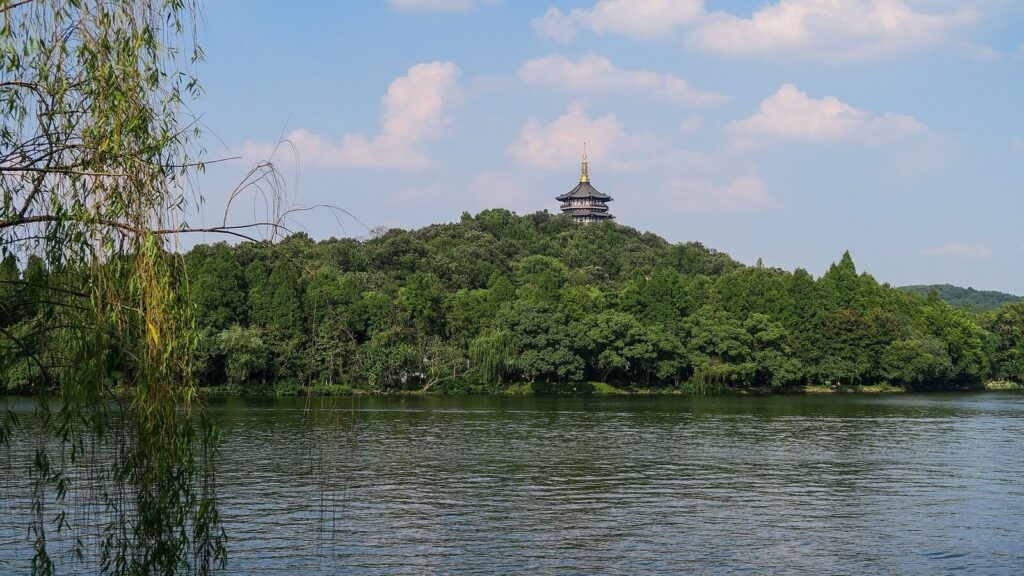
The rebuilt pagoda on the south shore costs about ¥40 and is best around sunset, with views back across the water. Booking is available up to about a week ahead on official channels. Afterwards, wander the lakeside promenade or Hefang Street for snacks.
Day 2: Tea hills or wetlands
Option A: Longjing tea village (half day)
Longjing (Dragon Well) is China’s best-known green tea. Take a taxi from the lake (about 25–30 minutes), walk the terraced slopes and sit at a family teahouse. Expect to pay roughly ¥50–150 (US$7–21) per person for tea tasting. Be wary of any host pushing very expensive tins; ask the price before you taste.
Option B: Xixi National Wetland (half to full day)
Xixi is an 11 km² wetland of channels, reed beds and persimmon trees on the western edge of the city. Admission is about ¥80 (US$11) and covers both the East and West zones. Hand-rowed boats are the highlight in plum-blossom season (February–March) and sell out, so go early. If you only want a green walk, the free parts are pleasant, but the ticket is worth it for the water lanes.
Afternoon: lake boat or a museum
Finish with the island boat to Three Pools Mirroring the Moon (about ¥55 standard, ¥70 deluxe, island ticket included, boarding at several lakeside piers) or a slow walk and a teahouse by the water.
What to eat
Try Longjing shrimp, West Lake vinegar fish, Dongpo pork and beggar’s chicken. Budget ¥60–150 (US$8–21) per person at ordinary restaurants. For more on ordering, see our China food guide.
Budget
| Item | Approx. cost |
|---|---|
| Leifeng Pagoda + Xixi + boat | about ¥175 (US$24) |
| Metro and taxis for 2 days | ¥80–200 (US$11–28) |
| Food | ¥150–300 per day (US$21–42) |
| Mid-range hotel | ¥450–900 per night (US$63–125) |
Pros and cons
- Pros: mostly free sights, very easy by train, beautiful in every season, great tea and food.
- Cons: crowded on weekends and holidays, temple booking is required in advance, hotel prices spike in peak season.
Practical tips
- Carry your passport for the temple, trains and every hotel check-in.
- Set up mobile payment before you arrive; see the payment guide and the eSIM guide.
- Book Lingyin as soon as slots open at 08:00, seven days ahead.
- Combine with Suzhou or Huangshan on a wider east China loop.
FAQ
Is West Lake free?
Yes. The shoreline, causeways and parks are free; only specific sights such as Leifeng Pagoda, boats and some temples charge.
Do I need to book Lingyin Temple?
Yes. It is free but needs a timed real-name reservation, at least a day ahead, through the Alipay or WeChat mini-program.
Which station should I use from Shanghai?
Take a train from Shanghai Hongqiao to Hangzhou East, and check that your ticket says that name.
Can I do Hangzhou as a day trip?
Yes, but it is tight. See our day trip guide.
Prices and rules were checked against recent public guides and can change; confirm on the official booking channels before you go.