
Last updated: October 19, 2026
Shanghai is the easiest big Chinese city to enjoy in a short stay. The metro is huge and cheap, signs are bilingual, and the main sights sit along one river. The challenge is not finding things to do but choosing, and avoiding the classic mistakes: visiting the garden on a Monday, queuing for the most famous dumpling shop instead of eating well nearby, or crossing the river at the worst time of day. This two-day plan groups sights by area so you spend your time looking at things, not riding transport.
Before you go: the essentials
Payments, data and apps
Almost everything in Shanghai runs on mobile payment. Set up Alipay or WeChat Pay with your foreign card before you land; our guide to paying in China as a foreigner walks through it. You will also want mobile data from the moment you arrive, so read our best eSIM for China comparison. For rides, see how to use DiDi as a foreigner.
Entry rules and your hotel
If you are arriving visa-free, check how long you can stay in our 2026 visa-free entry guide. Hotels register you with the police automatically; if you stay in a private apartment, read how to register your accommodation online.
Where to base yourself
For two days, stay near a metro line that links the old city and the river. The area around People’s Square (Lines 1, 2 and 8) is central for both days. The Former French Concession is quieter, leafy and full of cafés; the Bund area puts you steps from the waterfront but costs more. Pick any location within a five-minute walk of a metro station and you will be fine.
Getting around Shanghai
| Option | Typical cost | Best for |
|---|---|---|
| Metro | From about ¥3 (US$0.40) per trip, rising with distance | Almost everything; fast, air-conditioned, English announcements |
| Taxi / DiDi | Short city rides are usually around ¥15–40 (US$2–6) | Late evenings, luggage, rain |
| Maglev (Pudong Airport – Longyang Road) | ¥50 (about US$7) one way, ¥80 round trip | Airport transfer, a fun 8-minute ride |
| Walking | Free | The Bund, Yuyuan area, French Concession |
You can tap into the metro with Alipay or a QR code in the Metro app, so there is no need to queue for cards. Avoid the rush hours of roughly 7:30–9:30 and 17:00–19:30 if you can, particularly on Lines 1, 2 and 10.
Day 1: Old Shanghai, the Bund and the Pudong skyline
Morning: Yu Garden and the bazaar (9:00–12:00)
Take Line 10 or Line 14 to Yuyuan Garden station and walk about ten minutes. Arrive near 9:00, when the garden opens, to beat the tour groups. Admission is ¥40 (about US$5.60) in April–June and September–November and ¥30 (about US$4.20) in July–August and December–March. Children under 1.3 m or under 6 enter free, and children under 18 and seniors over 60 get half price with ID. The garden is open 9:00–16:30 with last entry at 16:00, and it is normally closed on Mondays except on public holidays. Allow one to two hours.
The main attraction is the way the view changes as you walk: the Grand Rockery, ponds, moon gates and the dragon walls along the rooflines. Look through lattice windows rather than just past them.
Many visitors confuse the garden with the Yuyuan Bazaar outside it. The bazaar is a modern shopping area built in traditional style. It is free to walk through, and it is best for a snack: xiaolongbao (soup dumplings), shengjian (pan-fried buns) or tanghulu. Famous restaurants here have long queues, so sample one or two things and keep moving. From January to March the annual Lantern Festival requires a separate ticket around the central bridge area.
If you have 15–30 minutes, the City God Temple just outside the south gate is free and small.
Lunch: Old-town noodles or dumplings (12:00–13:30)
Step a few streets away from the main bazaar and prices drop quickly. A bowl of noodles or a basket of dumplings at a local shop is typically ¥25–50 (US$3.50–7) per person. Pick somewhere with a short, picture-heavy menu and pay with your phone.
Afternoon: Nanjing Road and the Bund (14:00–17:30)
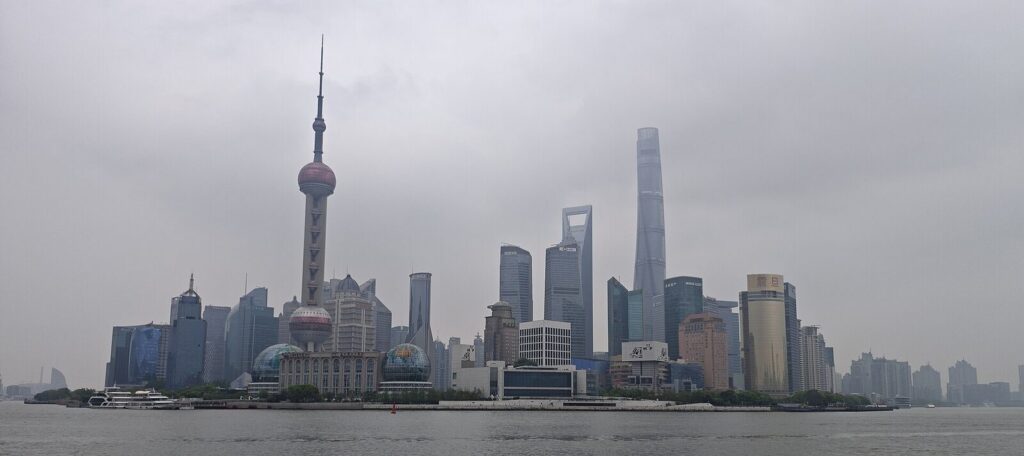
Walk or take the metro to the Bund. Nanjing Road East is the pedestrian shopping street leading to the river; it is busy and commercial, so treat it as a 30-minute stroll rather than a destination. The Bund itself is a promenade of early 20th-century European-style buildings facing the Pudong skyline. It is free, and it is lovely in the late afternoon when the light turns golden.
Arrive before sunset to see both versions of the view: the skyline by daylight, then lit up. Weekends and public holidays are very crowded; arrive early for a spot along the railing.
Evening: Pudong views and a river cruise (17:30–21:30)
For the skyline, choose one of two approaches. The first is a Huangpu River night cruise; marketplace listings for 45–60 minute cruises typically start at around US$25–31 per person. The second is to cross to Pudong and go up a tower. The Shanghai Tower is the tallest, with an observation deck open until about 22:00 (last entry around 21:30), and tickets sold through major platforms start from roughly US$38–45 per person. Choose the cruise if you prefer to see the skyline from the water, and the tower if you want a view over the city.
Dinner afterwards: Shanghai cuisine tends to be slightly sweet, with braised pork belly (hongshao rou), drunken chicken, stir-fried river shrimp and fried noodles. Budget ¥100–200 (US$14–28) per person for a sit-down dinner.
Day 2: Streets, museums and modern Shanghai
Morning: Former French Concession (9:00–12:00)
Start at a café on Wukang Road or around Anfu Road. This leafy district is best on foot: plane-tree-lined lanes, art-deco villas and independent shops. Walk from Wukang Road toward Fuxing Park and Xintiandi. Mornings are quieter and more pleasant than afternoons, especially at weekends.
Photograph the buildings from the street and avoid walking into private residences or closed courtyards. Small galleries and boutiques open late morning, so go for coffee first.
Lunch: Xintiandi or a local lane café (12:00–13:30)
Xintiandi is a restored stone-gate (shikumen) lane quarter, polished and more expensive: expect ¥120–250 (US$17–35) a head. If you prefer to keep costs down, go one block outside and eat at a neighborhood restaurant for under ¥60 (US$8.50).
Afternoon: Choose a museum or modern Pudong (14:00–17:30)
| Option | Why go | Practical note |
|---|---|---|
| Shanghai Museum (People’s Square) | Ancient bronzes, ceramics, calligraphy | Free general admission, but reserve a slot with your passport; typically closed Mondays. Check the official booking page before you go |
| Shanghai Tower / Lujiazui | Skyline and modern architecture | Combine with a walk along the riverside in Pudong |
| Tianzifang or Jing’an Temple | Craft lanes or a golden Buddhist temple in the middle of the city | Jing’an Temple is a ticketed active temple; Tianzifang is free to walk |
If you like history, the museum is the best single use of a few hours. If you want a contrast with Day 1, spend the afternoon in Lujiazui instead.
Evening: Riverside dinner and a last look at the skyline (17:30–21:00)
If you did the cruise on Day 1, spend your last evening at the West Bund or the Pudong riverside walk, where the crowds are thinner than on the Bund. Finish with a drink at a rooftop bar with a view, and note that cocktail prices are typically ¥80–150 (US$11–21).
Sample budget for two days
| Item | Per person, per day |
|---|---|
| Food | ¥150–300 (US$21–42) |
| Metro and taxis | ¥20–80 (US$3–11) |
| Attractions | ¥30–250 (US$4–35), depending on whether you do a tower or cruise |
| Total, excluding hotel | About ¥200–630 (US$28–88) |
Pros and cons of a two-day Shanghai trip
Pros
- Compact: most sights are on or near metro lines.
- Easy to navigate for first-time visitors, with plenty of English.
- Good food at every price point.
- Lots of options if the weather turns, from museums to covered lanes.
Cons
- Crowds on weekends and public holidays, especially at the Bund and the bazaar.
- Monday closures at Yu Garden and several museums.
- Two days leaves little time for day trips such as Suzhou or Hangzhou.
Best time to visit
Spring (March–May) and autumn (September–November) have the most comfortable weather. Summer is hot and humid, with sudden heavy rain; winter is cold and damp but quieter. Avoid China’s national holiday weeks if you dislike crowds.
Common mistakes to avoid
- Going to Yu Garden on a Monday. It is normally closed.
- Relying on cash. Many places do not make change; mobile payment is the norm.
- Booking the wrong day for the museum. Reserve ahead and bring the same passport.
- Taking the metro at rush hour with luggage. Use a taxi for airport or station transfers.
- Visiting the Bund only at night. The daytime and sunset views are worth seeing too.
Rainy-day backup plan
Shanghai gets rain in every season, and a wet afternoon does not have to ruin the plan. Swap the Bund stroll for the Shanghai Museum, which is indoors and free to enter with a reservation. Move Yu Garden to a dry morning, since much of it is outdoors, and use the metro rather than walking between areas. Covered shopping streets and cafés in the French Concession are easy fallbacks, and an evening cruise still works in light rain because the boats have covered decks. If the forecast is poor for the whole stay, put the tower visit on the clearest evening, because visibility matters far more there than at street level.
Arriving and leaving: a quick logistics note
Shanghai has two airports. Pudong (PVG) handles most international flights; Hongqiao (SHA) is closer to the center and is also the main high-speed rail hub. From Pudong, the Maglev plus Metro Line 2 is the fastest rail combination, while a taxi to the center usually takes 45–75 minutes depending on traffic. If you leave Shanghai by train, arrive at the station at least 45 minutes early with your passport, because gates close before departure and security lines can be long. Keep your phone charged and your passport in hand throughout the day: you will need it for museum reservations, train tickets and hotel check-in.
Frequently asked questions
Is two days enough for Shanghai?
Yes for the highlights. If you want day trips to Suzhou or Hangzhou, add at least one more day each.
Is Shanghai safe for tourists?
Generally yes. Use normal city precautions and watch for overpriced tea-house or art-student invitations, a known tourist scam.
Do I need cash?
Carry a small amount, but plan to pay by phone. Our payment guide explains how.
How far is Pudong Airport from the center?
The Maglev reaches Longyang Road in about eight minutes (¥50 one way), and from there you change to Metro Line 2 or take a taxi. Taxis and DiDi are the simplest option if you have luggage.
Can I visit Yu Garden at night?
The garden has separate paid evening guided visits on selected days, at about ¥150–190 per person; most first-time visitors are better off seeing the garden by day and the bazaar after dark.
Can I combine Shanghai with Beijing?
Yes, high-speed trains link them in about four and a half hours. See our train booking guide and our Beijing 3-day itinerary.
Want help planning your Shanghai trip?
Our Travel Concierge service helps independent travelers with planning, booking support, payment and app setup, and WhatsApp assistance during the trip. Every request is quoted on demand. Message us on WhatsApp with your dates and interests and we will tell you what we can do.