
Last updated: October 18, 2026
Beijing rewards the visitor who plans three things in advance: tickets, transport and payments. The sights themselves are enormous and easy to enjoy, but entry rules are strict, several attractions are real-name only, and the city is spread out. This three-day plan is built around those realities, so that each day has one anchor sight, a sensible geographic cluster and time to eat well.
Before you go: the four things that decide your trip
1. Reserve the Forbidden City first
The Palace Museum sells no tickets at the gate. Admission is ¥60 (about US$8.50) from April to October and ¥40 (about US$5.60) from November to March, booked online against your passport number through the museum’s official channels (its WeChat mini-program or official ticketing site). Slots are released seven days ahead and popular dates can vanish within minutes, so set a reminder. The museum is closed on Mondays except on public holidays. The Treasure Gallery and Clock Gallery are optional extras at about ¥10 each.
2. Book Tiananmen Square
Walking onto the square is free but requires a real-name reservation for a specific time slot (dawn, morning, afternoon or evening) in the official mini-program, usually available one to nine days ahead. Bring the physical passport you booked with.
3. Get your payments and apps working
Taxis, subways, restaurants and many ticket offices expect mobile payment. Set up Alipay or WeChat Pay with your foreign card before you land: our guide to paying in China as a foreigner walks through it step by step. You will also want data on arrival; see the best eSIM for China, and for getting around, our DiDi guide.
4. Check your entry status and hotel registration
Most Western visitors now arrive visa-free; see our visa-free entry guide for current rules. Your hotel registers you with the police automatically; if you stay in a private apartment, read how to register your accommodation online.
Three-day overview
| Day | Focus | Main tickets | Pace |
|---|---|---|---|
| Day 1 | Tiananmen Square, Forbidden City, Jingshan Park, hutongs | Square slot (free), palace ¥60 (US$8.50), Jingshan about ¥2 (US$0.30) | Moderate, lots of walking |
| Day 2 | Mutianyu Great Wall | Wall entry around ¥40 (US$5.60) plus optional cable car | Full day, about 8–9 hours |
| Day 3 | Temple of Heaven, Summer Palace, evening food | Temple of Heaven combo ¥34 (US$4.70), Summer Palace ¥30 or ¥60 through ticket | Easy, mostly parks |
Prices are the standard published admissions as of October 2026 and can change; confirm on the official channels when you book.
Day 1: Tiananmen Square, the Forbidden City and the old lanes
Morning: Tiananmen Square (8:00–9:30)
Book a morning slot and arrive early. Security checks involve passports and bag scans, and queues build quickly. The square is the political heart of the capital: the Monument to the People’s Heroes, the Great Hall of the People and the Mao Mausoleum frame it. Allow about an hour. Use the subway to Tiananmen East (Line 1), which drops you right at the edge of the security zone.
Late morning to afternoon: the Forbidden City (9:30–14:00)
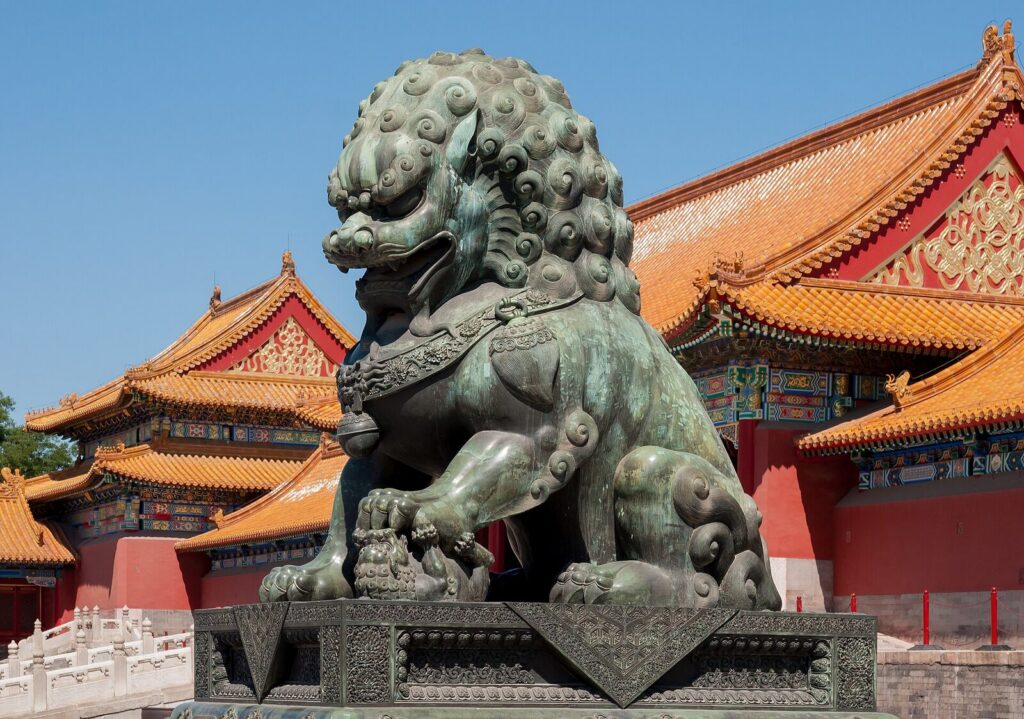
Cross under Tiananmen Gate and walk the central axis: Meridian Gate, the Hall of Supreme Harmony, the Hall of Central Harmony, the Hall of Preserving Harmony, then the inner court and Imperial Garden, exiting by the Gate of Divine Might to the north. It is roughly 2.5 km end to end, and most people need three to four hours. Entry is one-directional, so you cannot easily double back.
- Morning entry is the most popular; the afternoon slot is thinner in crowds but the palace closes earlier in winter.
- The Clock Gallery (about ¥10 / US$1.40) is the add-on most travelers say is worth it: mechanical clocks gifted to the Qing court. Check times, as shows run at set hours.
- Bring water and wear comfortable shoes; there is little shade in the courtyards.
Late afternoon: Jingshan Park (14:30–16:00)
Directly across the road from the palace’s north gate, Jingshan Park has a short climb to a pavilion with a famous view back over the golden roofs. Entry is a few yuan. Late afternoon light is the best of the day.
Evening: Nanluoguxiang, Shichahai and dinner
Walk or take a short ride to the Shichahai lakes and the surrounding hutong lanes. Nanluoguxiang is crowded and touristy; the quieter lanes around Yandai Xiejie and the lakeside bars are better for an evening stroll. For dinner, Peking duck is the obvious choice. Mid-range restaurants charge roughly ¥200–350 (US$28–49) for a whole duck, which comfortably feeds two to three people. Book through Dianping, Meituan or your hotel at peak times.
Day 2: The Great Wall at Mutianyu
Beijing has several wall sections, and choosing one matters. Mutianyu is the best all-rounder for first-time visitors: restored watchtowers, scenic ridgelines, a cable car and a toboggan ride down, and fewer crowds than Badaling. We compare the options in detail in our guide to which Great Wall section to visit.
How to get there
| Option | Cost (approx.) | Time each way | Notes |
|---|---|---|---|
| Tourist bus from Dongzhimen (summer and holidays) | about ¥50–60 (US$7–8.50) | about 1.5–2 hours | Cheapest; needs an early start |
| Ride-hailing (DiDi) | about ¥250–350 (US$35–49) one way | about 1.5 hours | Flexible, but return rides can be hard to find; agree a plan first |
| Private car with waiting time | quoted per day | about 1.5 hours | Most relaxed; ask us for a quote |
Transport prices vary with season and traffic, so treat these as ranges, not fixed fares.
On the wall
- Arrive by 8:30–9:00 to beat the tour buses.
- Buy the entry ticket (around ¥40 / US$5.60 at the time of writing) and decide between walking up the steps or taking the cable car, which costs extra.
- Walk the restored section between the towers; allow two to three hours. The stretch toward the unrestored “wild” section is steeper and more atmospheric.
- Take the toboggan down if the weather is dry and you are not scared of speed.
- Eat at one of the village restaurants near the entrance, then head back by mid-afternoon.
Pros: Spectacular scenery, manageable crowds, good facilities. Cons: A long day, weather-dependent, and weekends in October can be busy. Wear shoes with grip; the steps are uneven and steep.
Day 3: Temple of Heaven and the Summer Palace
Morning: Temple of Heaven (8:00–11:30)
The Temple of Heaven is where Ming and Qing emperors prayed for good harvests. The park is huge and locals use it for tai chi, singing and card games, which is half the charm. Entry to the park is about ¥15 (US$2.10) and the combo ticket that includes the Hall of Prayer for Good Harvests, the Imperial Vault of Heaven (with the Echo Wall) and the Circular Mound Altar is about ¥34 (US$4.70). The altar is closed on Mondays, but the other halls stay open. Go early; by 10:00 the central path is busy with tour groups. The nearest subway is Tiantandongmen on Line 5.
Lunch
Eat near the park or head back toward the Qianmen area for old-style noodle shops and snack streets. A bowl of zhajiangmian (noodles in fried soybean paste) is typically ¥25–45 (US$3.50–6.30).
Afternoon: Summer Palace (13:30–17:30)
The Summer Palace is the imperial lakeside garden in the north-west of the city. Entry is ¥30 (US$4.20) in peak season (April–October) and ¥20 off-season, while the through ticket covering the interior sights is ¥60 (US$8.50) in peak season and ¥50 off-season. Visitors usually walk the Long Corridor, climb Longevity Hill, see the Marble Boat, and cross the Seventeen-Arch Bridge. Tickets are real-name against a passport and released about a week ahead. If you cannot register for the municipal-park ticketing platform without a Chinese phone number, the park’s service window at the gate can sort ID checks, so allow extra time on arrival.
Take Line 4 to Beigongmen (north gate), which is an easy start for the lake walk. Sunset over Kunming Lake is the highlight; the park closes in the evening, so check hours.
Evening: farewell dinner
Try a regional Chinese meal instead of repeating duck: Sichuan hotpot, Xinjiang lamb skewers or dumplings. Budget ¥100–250 (US$14–35) per person at a mid-range restaurant.
What does three days in Beijing cost?
| Item | Budget | Mid-range |
|---|---|---|
| Hotel (per night) | ¥250–400 (US$35–56) | ¥600–1,000 (US$84–140) |
| Food (per day) | ¥120–200 (US$17–28) | ¥300–500 (US$42–70) |
| Local transport (per day) | ¥20–50 (US$3–7) | ¥80–150 (US$11–21) |
| Admissions (3 days total) | about ¥180 (US$25) | about ¥250 incl. extras (US$35) |
| Great Wall transport | ¥100–120 (US$14–17) bus | ¥500–700 (US$70–98) private |
Figures are rough planning ranges drawn from published admissions and typical city prices, not quotes.
Where to stay
For a first visit, base yourself near the subway so you can reach all three days without long taxi rides. The areas around Wangfujing and Dongsi put you close to the Forbidden City and several lines. The Qianmen area suits the Temple of Heaven and old Beijing. The Sanlitun area has the best nightlife and international restaurants, with good subway access. Avoid staying far out along the ring roads unless you are on a tight budget.
Getting around Beijing
- Subway: Cheap (typically ¥3–9 per trip), fast and signed in English. You can pay with Alipay or WeChat QR codes, or a transport card.
- Taxis and DiDi: Good for early starts and late dinners. Traffic is heavy between 7:30–9:30 and 17:00–19:30.
- Bike share and walking: Fine for hutong areas; distances inside the old city are bigger than they look on a map.
Common mistakes to avoid
- Planning the Forbidden City for a Monday.
- Forgetting your physical passport; it is checked against the booking at the gate.
- Leaving ticket booking until you arrive.
- Trying to squeeze the Great Wall and the Summer Palace into one day.
- Relying on cash; many places expect mobile payment.
Is three days enough?
Pros of three days: You hit the headline sights without exhaustion and still have evenings free. Cons: You will skip museums, the 798 Art District, the Lama Temple and the Olympic Park. With a fourth day, add the Lama Temple, the Drum and Bell Towers and a hutong cooking class. Visitors on the transit scheme can follow this same plan inside their allowed stay.
FAQ
Can I buy Forbidden City tickets at the gate?
No. Tickets are sold online only, in advance and against a passport number. Check the official channels for the exact release time.
What is the best season to visit Beijing?
Autumn (September–October) and spring (April–May) offer the best weather. Summer is hot and humid; winter is cold and dry, but much quieter and cheaper.
Do I need a guide?
Not required. The sights are well signed and audio guides are available. If you want help planning, we can assist with bookings and logistics.
How many steps should I plan for?
Expect 15,000–25,000 steps a day on days 1 and 3. Pack comfortable shoes.
Is Beijing safe for tourists?
Beijing is generally considered very safe for visitors. Use normal precautions with belongings in crowds, and only buy tickets from official sources.
Which subway lines matter most?
Line 1 (Tiananmen), Line 2 (the old-city loop), Line 5 (Temple of Heaven) and Line 4 (Summer Palace) cover most of this itinerary.
Want this planned and booked for you?
If you would rather not wrestle with real-name tickets, apps and transport, our China Travel Concierge service helps independent travelers with itinerary planning, booking support, payment and app setup, and WhatsApp help during the trip. Pricing is a custom quote based on what you need. Message us on WhatsApp with your dates and interests and we will reply with options.