
Last updated: November 8, 2026
Xiamen is a subtropical port city in Fujian, built on an island, with old colonial villas, a working Buddhist temple, sea views and some of the best street food in southern China. It is also one of the easier cities to fit into a longer trip: it sits on the high-speed rail line between Shenzhen, Guangzhou and Fuzhou. This guide gives you a realistic two-day route, the reservations that catch foreign visitors out, and how to get around. Prices are in CNY with approximate USD at about ¥7.1 to $1. Figures come from recent travel sources and venue notices; quotas and windows change, so confirm in the booking app before you travel.
Book these before you arrive
Most of Xiamen is free. The cost is planning: several sights use real-name reservations, and your passport is your ticket.
| Sight | Cost | How far ahead | Where to book |
|---|---|---|---|
| Gulangyu ferry (standard boat) | ¥35 return (~$5); premium boat about ¥80 | Reported up to 15 days ahead | “Yujian Xiamen” mini-program in WeChat or Alipay, or the terminal windows |
| Nanputuo Temple | Free | Up to about 4 days ahead | Temple’s official mini-program |
| Xiamen University | Free | 1 to 3 days ahead; slots are limited and some sources describe a draw | Visitor booking WeChat account |
| Zhongshan Road, Shapowei, Zengcuoan, Ring Road | Free | None | Just turn up |
Treat Xiamen University as a bonus, not the plan. Capacity is capped and slots can vanish within minutes. If the app rejects your foreign passport number, ask staff at the ticket windows with the passport in hand. Set up WeChat or Alipay first with our China payment guide and essential apps list.
Getting to Xiamen
- Fly: Xiamen Gaoqi International Airport has domestic routes and some international ones. Metro Line 1 and taxis connect to the island. See our domestic flights guide.
- High-speed rail: Two stations matter. Xiamen Station is on the island and close to the city. Xiamen North is on the mainland, with many of the long-distance trains, and needs a metro or taxi ride in. Check the station on your ticket. From Hong Kong West Kowloon it is roughly 4.5 hours by through train, and from Shenzhen and Guangzhou much less. The Hong Kong to Shenzhen and Guangzhou guide covers the first leg, and the train booking guide explains tickets with a passport.
- From Shanghai: trains take roughly 5.5 to 8 hours depending on service, so a flight is often easier.
Where to stay
- Zhongshan Road and the old town (Siming district): best first-timer base. Food, shops and the evening ferry pier are walkable.
- Near Xiamen Station or Metro Line 1: practical if you arrive by train.
- Near Shapowei or the university: quieter, close to Day 2, but further from the Gulangyu terminal.
Avoid staying by Xiamen North purely for the train; it is far from everything. Foreign guests must be registered by the hotel, which usually just needs your passport. See our hotel booking guide for the front-desk rules.
Day 1: Gulangyu island
Gulangyu is a UNESCO World Heritage site, a car-free island about 600 meters off the coast, with red-roofed villas, winding lanes, gardens and a long piano tradition. The island has no entry fee, but some museums and viewpoints charge, and combined tickets are reported at roughly ¥110 to ¥130 ($15 to $18). For a deeper walk-through, read our Gulangyu guide.
The ferry, step by step
- Book the ferry in the Yujian Xiamen mini-program and add yourself as a passenger with your passport number.
- Choose a morning departure. Weekend and holiday mornings sell out.
- In the daytime, tourists board at the Xiamen International Cruise Center terminal (also called the Dongdu or Xiagu terminal), not the old Lundu pier opposite Zhongshan Road. The Lundu pier serves residents by day and opens to visitors mainly for evening sailings. Going to the wrong pier is the classic mistake.
- Carry the same passport to the gate. The return leg is open, so you can come back when you like.
A simple route
| Time | Plan |
|---|---|
| 8:00 to 9:00 | Ferry from the cruise terminal; about 20 minutes crossing |
| 9:30 to 12:00 | Wander the lanes toward Bagua Building and the old consulate area; stop at a museum if you like pianos |
| 12:00 to 13:30 | Lunch away from the main shopping lane, where prices are higher |
| 13:30 to 16:00 | Coast walk, Shuzhuang Garden or Sunlight Rock for the view (paid) |
| 16:30 onward | Ferry back; dinner around Zhongshan Road or Bashi market area |
Typhoons can halt every ferry at short notice in summer and early autumn, so keep a flexible day in your plan then. Tourist shops on the main island lanes are priced for visitors, so ask the price before you eat or buy.
Evening: Zhongshan Road is a pedestrian street of arcaded old buildings. Try oyster omelets, peanut-soup noodles, sea-worm jelly if you are adventurous, and tea shops. Check seafood prices before it is cooked.
Day 2: Nanputuo, campus and the coast
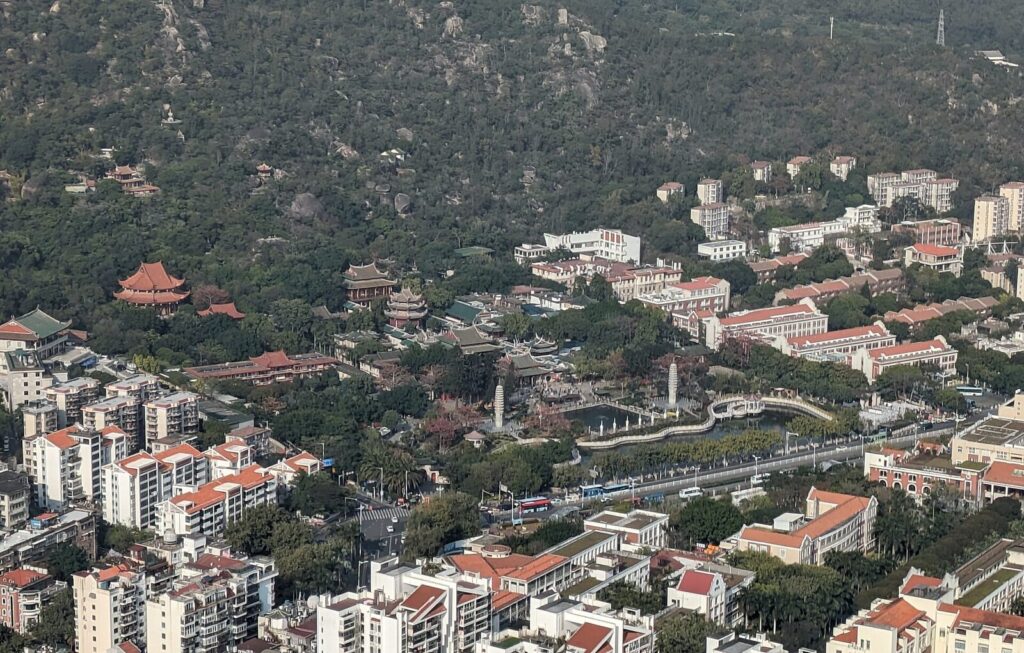
Morning: Nanputuo Temple
Nanputuo is an active Buddhist temple of roughly a thousand years’ history, set against a wooded hill. It is free but needs a named reservation. Arrive early, when courtyards are full of incense and morning chanting rather than tour groups. Dress modestly, keep your voice low and do not photograph worshippers up close. The vegetarian restaurant here is a good lunch. Climb the hill behind for a view over the city and sea if your legs are willing.
Late morning: Xiamen University
The campus next door is often called one of China’s prettiest, with mixed Chinese-western buildings facing the sea. Entry is free with a booked slot. If you did not win one, do not stress: the coast outside is just as pleasant.
Afternoon: Shapowei and Zengcuoan
Walk or take a short ride to Shapowei, a former fishing port turned cafe and art district, then continue to Zengcuoan, a seaside village of lanes, cafes and snack stalls. It is touristy, but it is free and good for sunset. Head for Huandao Road (Island Ring Road) if you want a coastal bike or taxi stretch; shared bikes are the easiest way.
Evening
End with dinner in the old town or take the evening sailing past the island lights if you booked it. Our China food guide has ordering tips if menus are Chinese-only.
Getting around Xiamen
| Option | Best for | Notes |
|---|---|---|
| Metro | Airport, Xiamen North, Jimei | Line 1 links the island with the mainland; it does not go to the university |
| Bus | Old town to Nanputuo and the coast | Cheap, crowded at peak |
| Taxi / DiDi | Short hops, Day 2 route | See our DiDi guide |
| Shared bike | Ring Road, Shapowei | Needs Alipay or WeChat |
Pros and cons
- Pros: compact, mild climate, great food, very walkable old town, easy rail links, mostly free sights.
- Cons: ferry and campus quotas, crowds at weekends and holidays, typhoon disruption in summer and early autumn, tourist-priced shopping lanes.
Best time to go
October to April is the comfortable window. Summer is hot, humid and typhoon-prone. Golden Week and Chinese New Year are the busiest periods, so book the ferry as early as the app allows. For holiday timing see our best time to visit China guide.
Extending your stay
With a third day, visit the Fujian tulou roundhouses, a few hours inland, or the Jimei School Village. Our Fujian tulou guide covers the inland trip. Planning a longer route? Try the 10-day China itinerary.
FAQ
Is two days enough for Xiamen?
Yes for the highlights. Three days is more relaxed and separates the ferry day from the reservation-heavy day.
Can foreigners buy the Gulangyu ferry ticket online?
Yes, with a passport, usually through the Yujian Xiamen mini-program. If the app rejects your passport, buy at the terminal windows early in the day.
Which Gulangyu pier should I use?
In the daytime, the Xiamen International Cruise Center (Dongdu) terminal. The pier opposite Zhongshan Road is mainly for residents by day.
Do I need to reserve Nanputuo Temple?
Yes, a free named slot is required, booked a few days ahead. Check the current rules in the official mini-program.
Is Xiamen University open to foreigners?
Yes, with a reservation and passport, but slots are limited. Plan as if you may not get one.
Which train station should I choose?
Xiamen Station is on the island and closest to the sights. Xiamen North is on the mainland and farther out. Check the station name on your ticket.
Want us to plan it for you?
If you would rather not wrestle with ferry slots, WeChat mini-programs and train stations, our concierge can design your route, help with bookings and stay on WhatsApp during the trip. Pricing is a custom quote for your needs. See the concierge page or message us on WhatsApp.