
Last updated: October 23, 2026
Shanghai is a long, flat city of more than 24 million people, and the metro is excellent, but the ride from one end of the center to the other can still take 40 minutes. Where you sleep decides how much of your trip you spend underground. This guide compares the areas that make sense for visitors, what rooms typically cost, and how to book without surprises.
Prices are typical planning ranges drawn from several 2026 hotel guides and booking-site data, converted at about CNY 7.1 per US dollar. They are not live quotes. Rates jump on weekends, during Golden Week in early October and around Chinese New Year, and they dip in winter and midsummer, so always check the final payable price for your dates.
Shanghai areas at a glance
| Area | Best for | Typical price per night | Metro |
|---|---|---|---|
| The Bund / East Nanjing Road | First-timers, views, short stays | CNY 350-1,500+ (US$50-210+) | Lines 2, 10 |
| People’s Square | Transit hub, museums, mid-range value | CNY 400-1,300 (US$55-185) | Lines 1, 2, 8 |
| Former French Concession | Cafes, food, walking, couples | CNY 500-2,000+ (US$70-280+) | Lines 1, 7, 10, 13 |
| Jing’an | Shopping, polished and practical | CNY 500-1,800 (US$70-255) | Lines 2, 7, 14 |
| Lujiazui (Pudong) | Skyline views, business | CNY 1,000-2,500+ (US$140-350+) | Line 2 |
| Hongqiao / Zhongshan Park | Budget, rail and airport access | CNY 280-700 (US$40-100) | Lines 2, 3, 4, 10 |
The Bund and East Nanjing Road: the classic first base
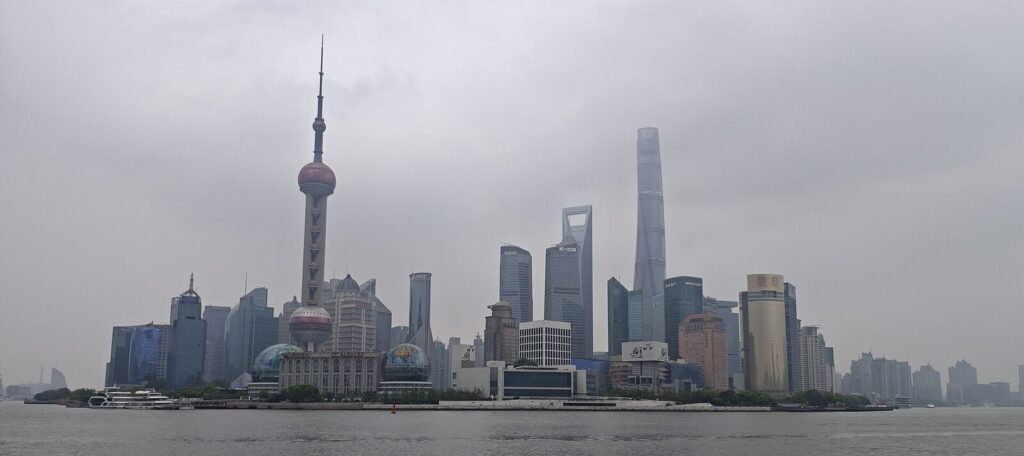
The Bund is the riverfront strip of early-20th-century buildings facing the Pudong skyline. Most guides, from Chinese travel sites to Western blogs, name it the default for a first visit. Walk out of the lobby and you are on the promenade; Nanjing Road’s pedestrian street, Yu Garden and People’s Square are all within a 10 to 25 minute walk or one or two metro stops.
Pros
- The city’s most famous night view becomes part of your stay.
- Walkable to the main sights, which saves transit time on a short trip.
- Strong metro links on Lines 2 and 10, plus many hotel choices at every price.
Cons
- Crowds and noise, especially on weekends and holidays.
- Rooms with a real river view cost far more than rooms a few streets back.
- Many nearby restaurants cater to tourists rather than locals.
Money-saving tip: if riverfront prices are too high, move one or two blocks back toward East Nanjing Road or Yu Garden. You keep the walkability and often save a third or more.
People’s Square: convenience over charm
People’s Square is where Lines 1, 2 and 8 meet, and it houses the Shanghai Museum. The surrounding streets are busy and commercial, not pretty, but a hotel here puts you one transfer from nearly anything. It is a smart choice for short stays, for travelers arriving by train, and for anyone who values logistics over atmosphere. Mid-range hotels commonly fall around CNY 400-1,300 (US$55-185).
Former French Concession: cafes and tree-lined streets
The Former French Concession is a leafy residential quarter of plane trees, villas, small galleries and some of the city’s best cafes and restaurants. Streets around Hengshan Road, Wukang Road and Xintiandi are the most visitor-friendly. It suits a second or third day when you want to wander, and it is the pick for couples and food-focused travelers.
Pros
- Atmosphere: the part of Shanghai that feels most like a neighborhood.
- Excellent dining and boutique hotels, including restored villa properties.
- Still connected: Lines 1, 7 and 10 cross the area.
Cons
- Fewer major sights within walking distance.
- Not every hotel is a short walk from a metro station, so check the map before booking.
- Boutique and design hotels are priced at a premium.
Jing’an: practical, polished, central
Jing’an, around Jing’an Temple and West Nanjing Road, is clean, well connected and full of malls, hotels and restaurants. It suits repeat visitors and practical travelers who want a modern base. It lacks the Bund’s riverfront drama, but metro Lines 2, 7 and 14 get you to the Bund in about 10 to 15 minutes. Typical hotels run CNY 500-1,800 (US$70-255).
Lujiazui and Pudong: skyline views, business, less street life
Across the river, Lujiazui offers the tall-tower hotels and the best views of the skyline you are standing inside. It is a good option for business travelers and for splurge stays, but evenings are quieter, and you will cross the river each time you want the old city. Rooms start around CNY 1,000 (US$140) and climb steeply. If you only want the view, visit a rooftop bar rather than paying for the room.
Hongqiao, Zhongshan Park and the airports
Hongqiao is the hub for Hongqiao Airport and Hongqiao railway station, handy if you take high-speed trains to Suzhou, Hangzhou or Nanjing. Rooms are cheaper (about CNY 280-700 or US$40-100) and Lines 2, 3, 4 and 10 reach the center in 20 to 35 minutes. Pudong Airport is about 45 km from downtown, so a hotel nearby makes sense only for a very early flight or late arrival. See our Shanghai 2-day itinerary for how the days fit together.
How to choose: a simple decision guide
| If you… | Stay in |
|---|---|
| Have 2 days and want the icons | Bund / East Nanjing Road |
| Arrive or leave by train and want simple logistics | People’s Square |
| Prefer cafes, food and walking | Former French Concession |
| Want modern comfort and shopping | Jing’an |
| Want the skyline from your window | Lujiazui |
| Are on a tight budget or have an early train | Hongqiao / Zhongshan Park |
How to book a hotel in Shanghai as a foreigner
- Pick the area first, then the hotel. Pin your top three sights on a map and check the walk to the nearest metro station.
- Compare more than one platform. International sites and Trip.com list most properties; compare the final price including taxes and breakfast.
- Confirm the hotel accepts foreign passports. A few small budget properties are not licensed to host foreigners, so check the listing or message the hotel before paying.
- Check cancellation terms. Free cancellation is worth a small premium if your visa or flights might change.
- Save the address in Chinese. Screenshot the Chinese name and address so a taxi or ride-hailing driver can follow it; see our guide to DiDi for foreigners.
- Carry your passport at check-in. Hotels must register foreign guests with the police; our guide to registering your accommodation online covers what to do if you stay with friends or in a private rental.
Also set up payments before you land: our guide to paying in China explains Alipay and WeChat Pay, and our eSIM guide keeps you online on arrival. Hotels often ask for a deposit at check-in, usually refunded at checkout.
Budget guide: what you get at each level
| Level | Typical price | What to expect |
|---|---|---|
| Budget | CNY 280-500 (US$40-70) | Chain hotels or hostel private rooms; small rooms, basic breakfast, farther from the core |
| Mid-range | CNY 500-1,200 (US$70-170) | Clean modern rooms, good locations, often breakfast |
| Upscale | CNY 1,200-2,500 (US$170-350) | Design hotels, river or skyline views, strong service |
| Luxury | CNY 2,500+ (US$350+) | Landmark Bund and French Concession properties |
Common mistakes to avoid
- Booking by district name only. “Huangpu” or “Pudong” covers huge areas; check the distance to a metro station.
- Ignoring the weekend swing. Shanghai prices rise sharply Friday and Saturday; shifting a night can save real money.
- Staying far out to save a little. A cheap room 45 minutes from the center costs you time every day.
- Arriving at Pudong without a plan. The Maglev, Line 2 and taxis all work, but a late arrival is easier with the first-night address ready in Chinese.
When to go: seasons and price swings
Shanghai’s best weather is spring (April and May) and autumn (late September to November), and hotel prices follow. Golden Week in the first days of October is the most expensive and crowded period of the year, with rooms near the Bund selling out well ahead. Chinese New Year brings a different effect: many locals leave town, but visitor demand and holiday surcharges still lift rates, and some restaurants close. Summer is hot and humid with typhoon-season rain, and winter is cold and damp but cheap. Large trade fairs at the National Exhibition and Convention Center in Hongqiao can also push prices up for a few days, so if your rates look strangely high, check whether a fair is on.
Hotel types: chains, boutique and serviced apartments
Domestic chains such as Hanting, Home Inn, 7 Days and Atour are clean, consistent and cheap, usually CNY 280-500 (US$40-70). Check that the specific branch accepts foreign guests and that the listing shows a metro station nearby.
International brands (Hilton, Marriott, Hyatt, IHG and others) are concentrated in Lujiazui, the Bund, Jing’an and Hongqiao. They offer English-speaking staff, reliable beds and loyalty points, at CNY 800 (US$110) and up.
Boutique and heritage hotels are the French Concession and Bund specialty: restored villas, art deco towers and design hotels. They are the most memorable choice for a special trip, but rooms can be small and lifts can be slow, so read recent reviews.
Serviced apartments make sense for stays of a week or more, with a kitchenette and laundry. Check the minimum stay and the foreigner registration rules before you book.
Getting from the airports to your hotel
From Pudong Airport, Metro Line 2 runs to People’s Square and Jing’an in roughly an hour and costs only a few yuan. A taxi to the center takes about 50 to 70 minutes depending on traffic and costs considerably more than the metro, so decide by luggage and time of day. The Maglev is fast but only goes to Longyang Road station, where you still need to transfer. From Hongqiao Airport and Hongqiao railway station, Lines 2 and 10 connect directly to the center. Whichever route you pick, have your hotel’s Chinese address saved offline.
Frequently asked questions
What is the best area to stay in Shanghai for first-time visitors?
The Bund and East Nanjing Road area is the most common recommendation, with People’s Square as a more convenient, slightly cheaper alternative.
Is Pudong a good place to stay?
Lujiazui is good for skyline views and business trips, but it is quieter at night and you cross the river for most sights. First-timers usually do better on the west bank.
How many days do I need in Shanghai?
Two full days cover the headline sights; three or four let you add the French Concession, a water town and a museum. See our 2-day itinerary.
Can foreigners stay in any hotel?
Most hotels accept foreign passports, but some small budget places are not licensed to. Confirm before you pay.
Is Shanghai safe to stay in?
Shanghai is generally regarded as a safe, well-lit city for visitors. Normal city precautions apply on crowded streets.
Do I need cash for the hotel?
Not usually, but have a card or a working mobile payment method for the deposit. See our payment guide.
When should I book?
For Golden Week, Chinese New Year and big trade fairs, book weeks ahead. In quiet months, a few days before is usually enough, but better locations go first.
Want help planning your Shanghai stay?
If you would rather not compare dozens of listings, our Travel Concierge service can help you plan your route, shortlist hotels in the right area, set up payments and apps, and answer questions by message while you travel. Pricing is a custom quote based on what you need. Message us on WhatsApp to get started.