
Last updated: November 13, 2026
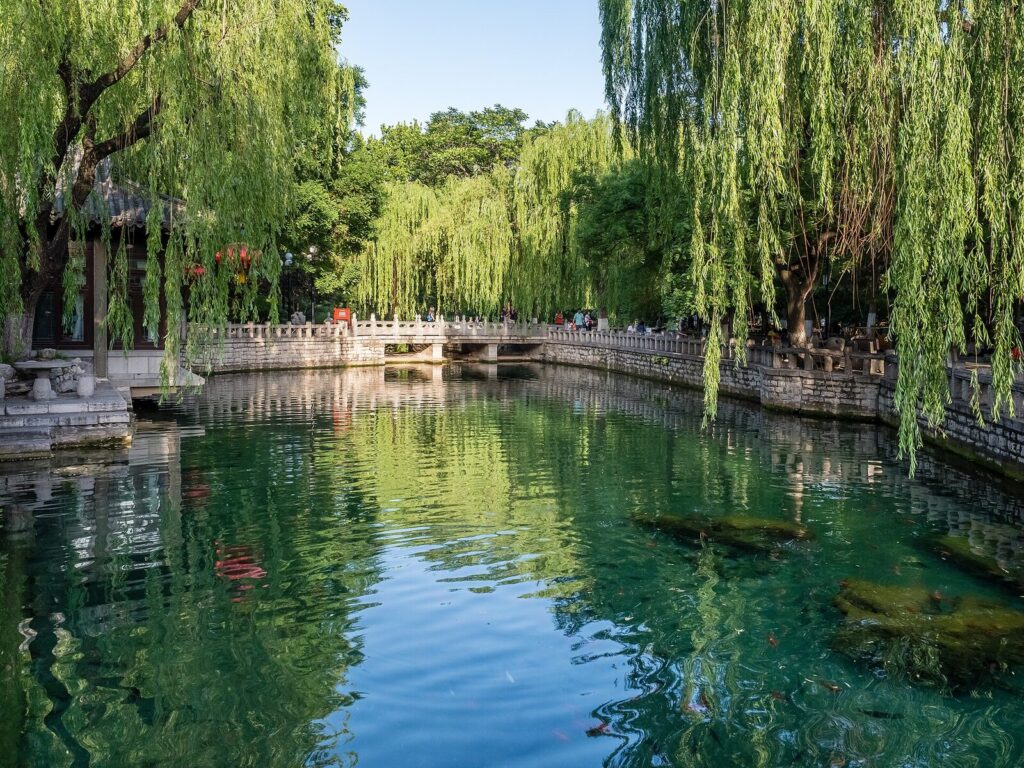
Jinan sits on the Beijing–Shanghai high-speed line and is easy to forget. Most visitors rush between the capital and Shanghai, or head straight to Mount Tai. That leaves one of northern China’s most pleasant mid-sized cities to people who live there: spring-fed canals, willow-lined lakeside walks, and a very good food scene. This guide gives a practical two-day plan, current ticket notes, train details and the booking traps to avoid. Prices below come from recent published sources and local government notices; they change, so confirm before you go.
Is Jinan worth two days?
Yes, if you like walkable, low-key cities and food. It is not a headline destination like Xi’an or Chengdu, and big-ticket sights are few. The appeal is the way the springs run through the old city: you can walk from one to the next in an afternoon. The city is also a handy base for Mount Tai and Qufu (Confucius’s hometown).
| Pros | Cons |
|---|---|
| Compact central sights; mostly free or cheap; fast trains from Beijing, Shanghai and Qingdao; strong local food; fewer foreign crowds | Springs flow best after rain and can be weaker in dry spells; winter is cold and dry; few English signs; no single landmark that photographs like a skyline |
When to go
Autumn (September to early November) and late spring are the most comfortable. Summer is hot and humid but the lotus on Daming Lake is at its best. Winter brings cold, and some sources note cheaper off-season admission at certain parks; one local outlet lists Baotu Spring at ¥20 from November to February, while a government-based notice lists ¥40 year-round. Treat the lower price as a possible bonus, not something to count on.
Getting to Jinan
High-speed rail is the sensible choice. Jinan has three main stations for visitors: Jinan West (the largest, with most Beijing–Shanghai trains), Jinan East (some Beijing trains, fastest options), and Jinan station in the old city. Daminghu station is also near the lake. Always check which station your ticket names.
| Route | Time | Second-class fare |
|---|---|---|
| Beijing South to Jinan West | About 1h 25m to 2h | ¥184–223 (about US$26–31) |
| Qingdao to Jinan | About 2h 30m | ¥130–210 (about US$18–29) |
| Qufu East to Jinan | About 40 minutes | ¥60–95 (about US$8–13) |
| Jinan West to city center by Metro Line 1 | About 30 minutes | About ¥5 (US$0.70) |
Fares and times are from travel-guide and ticketing sites in 2026 and vary by train. Our China train booking guide explains how to book with a foreign passport, and the metro guide covers city transport. If you are coming from the coast, see our Qingdao 2-day itinerary.
Where to stay
Stay near Quancheng Square or the Baotu Spring area for walking access to the old city. Jinan West station is convenient for a one-night stopover but far from the sights. Foreign guests must be registered by the hotel; some budget hotels refuse foreigners, so check the booking details first using our hotel booking guide.
Day 1: The springs of the old city
Morning: Baotu Spring
Start at Baotu Spring, the symbol of Jinan and the first of its 72 named springs. Three jets bubble up day and night, and the water is clear enough to see fish. The park also holds the Li Qingzhao memorial hall, a tribute to the Song dynasty poet, and a series of smaller springs and pavilions. Reported details: address No. 1 Baotuquan South Road, adult ticket ¥40 (about US$5.60), student ticket ¥20, free for children under 6 or 1.4 metres and below, and free for seniors over 60 with valid ID. Local sources list opening hours of 7:00 to 19:00, with the park staying open later at some times; a July 2026 municipal notice said advance reservation was not required, though it may be at holidays. Arrive near opening time before tour groups.
Midday: Lu cuisine lunch
Jinan is the home of Lu cuisine, one of China’s eight great cuisines. Look for sweet and sour carp from the Yellow River, jiuzhuan dachang (braised pork intestines, an acquired taste) and simple soups. Street snacks include jianbing, sweet potato balls and stinky tofu. Our China food guide has tips on ordering with a translation app.
Afternoon: Black Tiger Spring and the moat
Walk about 1.2 kilometres (20 to 25 minutes) along Black Tiger Spring West Road to Black Tiger Spring, where water pours from carved tiger heads into a pool. The riverside park around it is free, and the old moat connects the springs. Boat docks on the moat run from around 9:00 to 17:00 or 20:00 depending on the season; boats are weather dependent, so confirm on site. Finish by walking through Five Dragon Pool, listed as free, open 7:00 to 22:00.
Evening
The moat is lit at night and makes an easy stroll. Have dinner near Quancheng Road, and keep your phone ready for Alipay or WeChat Pay; see our payment guide if you have not set it up.
Day 2: Daming Lake and a choice
Morning: Daming Lake
Daming Lake is formed by springwater gathering in a natural basin. Pavilions, shrines and a lotus-and-willow shoreline have been famous for centuries. Recent reports describe the park as free to enter (opening hours around 6:00 to 22:00 per the municipal notice), with paid boat rides (around ¥40, student discount) and separate fees for some inner gardens. Older guides still list inner-garden tickets of about ¥30 to ¥40, so ask at the gate. Allow two to three hours for a full circuit.
Afternoon option A: Thousand Buddha Mountain
Thousand Buddha Mountain (Qianfoshan) is a city hill with Buddhist carvings and views over the city. Reported peak-season ticket: ¥30, off-season about ¥20. It is a good half-day for those who want a gentle climb.
Afternoon option B: Move on to Mount Tai or Qufu
If your time is short, take the train to Tai’an for Mount Tai (see our Mount Tai guide), or to Qufu East, about 40 minutes away, for the Confucius temple. Both can be done as one-night stops after Jinan.
Budget for two days
| Item | Estimate (CNY) | Estimate (USD) |
|---|---|---|
| Round-trip train from Beijing (second class) | ¥370–450 | US$51–62 |
| Hotel, 1–2 nights, mid-range | ¥250–500 per night | US$35–70 |
| Attractions (Baotu, boat, hill) | ¥40–120 | US$6–17 |
| Food and local transport | ¥150–250 per day | US$21–35 |
The hotel and food ranges are rough planning estimates, not quotes.
Step-by-step: booking your Jinan trip
- Book the train on Trip.com or the 12306 app with your passport. Buy as early as the booking window allows on holidays.
- Reserve a hotel that accepts foreign guests and near the old city.
- Check each park’s official channel a few days before for hours and any reservation requirement. Our attraction tickets guide shows how.
- Set up mobile payment and an offline map; install the apps in our apps guide.
- Bring your passport for every ticket, station and hotel check-in.
FAQ
Which Jinan station should I arrive at?
Most Beijing and Shanghai trains stop at Jinan West. It is about 30 minutes from the center by Metro Line 1. Check the station name on your ticket.
Are the springs always flowing?
Flow depends on groundwater. Local reports note that heavy rain in 2025 pushed spring levels up; in dry periods the output can be weaker. Autumn is generally a good bet.
Do I need to reserve for Baotu Spring?
A July 2026 municipal notice said advance reservation was not currently required, but rules change at holidays. Check before you go.
Can I do Jinan as a day trip from Beijing?
Technically yes, because trains take under two hours. But the springs are best in the morning and the moat is lovely at night, so one night is worth it.
Is English widely spoken?
Not much. Use a translation app and have addresses saved in Chinese.
Plan your China trip with help
Want Jinan combined with Beijing, Qufu and Mount Tai without the booking headaches? Our Travel Concierge helps independent travelers with route design, ticket and train booking support, and on-trip help, quoted to your needs. Message us on WhatsApp to get started.
Ticket prices, opening hours and train fares are drawn from published sources in 2026 and may change; verify on official channels before travel.