
Last updated: October 30, 2026
Chongqing is the “8D city” of China: a megacity of more than 30 million people stacked on cliffs above two rivers, with metro trains that run through apartment blocks and a hotpot culture that makes Sichuan food in Chengdu look mild. It is also one of the easiest big cities to visit independently once you know the quirks. This guide gives you a realistic two-day plan, real prices in CNY and USD, and the mistakes to avoid.
Is Chongqing worth two days?
Yes, as a standalone stop or as an add-on to Chengdu. The two cities are about an hour apart by high-speed rail, so many visitors pair them (see our China train guide). Chongqing is also covered by China’s 240-hour transit visa-free policy for eligible travelers; see our visa-free entry guide for the current rules.
| Pros | Cons |
|---|---|
| Dramatic skyline and night views unlike anywhere else | Very steep; lots of stairs and slopes |
| Cheap metro and many free sights | Hongyadong and the cableway get crowded at peak times |
| Excellent food at every budget | Even “mild” hotpot is spicy by Western standards |
| Easy rail link to Chengdu and Wulong/Dazu day trips | Navigation apps can mislead you in multi-level streets |
Before you go: the basics
When to visit
Autumn (October–November) and spring (March–May) are the most comfortable. Summers are hot and humid and winters are damp and grey. See our best time to visit China guide for the wider picture.
Getting from the airport
Chongqing Jiangbei Airport (CKG) is connected to the metro. According to local guides, all flights now use Terminal 3, so take the metro from the T3 station. Expect 40–60 minutes to the city center with a change, at about ¥7–10 ($1–1.40). A ride-hailing car is easier with luggage; our Didi guide explains how to set it up.
Apps and payments
Install Alipay or WeChat Pay and set up your foreign card before arrival (payment guide), plus an eSIM (eSIM guide). The full list is in apps you need in China. Chongqing’s local Yukuai metro code reportedly only works with a local social security card, so use Alipay’s transit feature or buy a token.
Where to stay
Jiefangbei and the Yuzhong peninsula put you within walking distance of the main sights and metro Lines 1 and 2. Budget hotels run about ¥120–200 ($17–28) a night and mid-range ¥250–450 ($35–63). Foreign guests must be registered by the hotel; read our accommodation registration guide and hotel booking guide.
Day 1: Peninsula, river and neon
Morning: Jiefangbei and Bayi snack street
Start at Jiefangbei, the central pedestrian district built around the 1947 Liberation Monument. Entry is free. Walk to nearby Bayi Haochi Street for xiaomian (spicy noodles), dumplings and grilled snacks; snacks usually cost ¥10–30 ($1.40–4).
Midday: Yangtze River Cableway
The cable car opened in 1987 as ordinary public transport and now works mostly as a scenic ride across the river (about 1,166 m, 4 minutes). Sources list the one-way fare at roughly ¥20–30 ($3–4) and round trip around ¥50. Queues can reach an hour at peak times, so go on a weekday morning or buy a skip-the-queue ticket through Trip.com. Take Metro Line 1 or 6 to Xiaoshizi for the north station.
Afternoon: Old streets and the Yangtze view
Walk the old-town lanes around Shibati and Xiahaoli, or the mountain-city walkways, for the “layers of Chongqing” feeling. Wear shoes with grip: slopes get slippery in rain.
Evening: Hotpot, then Hongyadong at night
Hotpot costs about ¥80–150 ($11–21) per person at a mid-range restaurant. Ask for wēilà (微辣, mild) or yuānyāng guō (鸳鸯锅, split pot with a clear broth). Sesame oil with garlic is the standard dip and tames the heat.
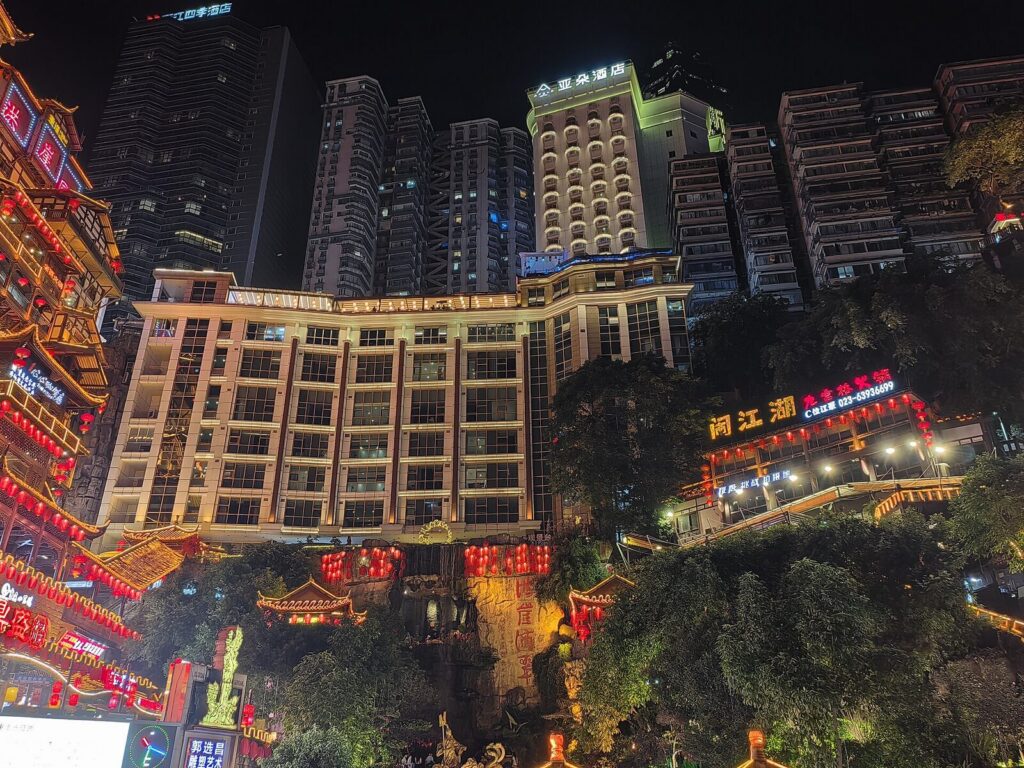
Then walk to Hongyadong (洪崖洞), the stilt-house complex lit up above the Jialing River. Entry is free; the lights are best from dusk to about 10 pm. For the postcard view, cross Qiansimen Bridge or take a river cruise (typically ¥100–150, about $14–21).
Day 2: Monorail, old town and Dazu option
Morning: Liziba “train through a building”
Take Metro Line 2 to Liziba. The viewing platform is free and sits outside the turnstiles, so you do not need to ride. Trains pass every 3–8 minutes; morning light is best. Leave the station by the exit signed for the viewing platform (guides disagree on whether Exit 1 or 2 is closest, so follow the signs). Allow 30–45 minutes: it’s a short stop, not a whole day.
Late morning: Ciqikou Ancient Town
Ride Line 1 to Ciqikou, Exit 1. Entry to the town is free; expect crowds and souvenir markups. Try mahua (fried dough twists), tea houses and riverside snacks. Go early to beat tour groups. Allow 2 hours.
Afternoon: pick one
- Raffles City and Chaotianmen: the skyscraper viewing deck packages have been listed from ¥120 ($17) up to ¥248 ($35) depending on add-ons. Metro Line 1 to Chaotianmen, Exit 2.
- Eling Park or the Three Gorges Museum: a quieter, mostly free option for views and history.
- Dazu Rock Carvings (full day, UNESCO): swap this for the plan above. Baoding Mountain is about ¥115 in peak season (March–November), Beishan about ¥70, with a combined ticket near ¥140 and a shuttle of ¥22 return. High-speed trains from Chongqing take roughly 20–45 minutes to Dazu South and cost around ¥32–53 ($4.50–7.50). Allow 5–7 hours total.
Evening: night view or a second hotpot
If you skipped the cruise yesterday, do it now. Otherwise try a different hotpot style or the local noodles.
Costs at a glance
| Item | CNY | USD (approx.) |
|---|---|---|
| Metro ride in the center | ¥2–7 | $0.30–1 |
| Yangtze River Cableway (one way) | ¥20–30 | $3–4 |
| Liziba viewing platform, Hongyadong exterior, Ciqikou entry | Free | Free |
| Hotpot, per person | ¥80–150 | $11–21 |
| Night river cruise | ¥100–150 | $14–21 |
| Dazu Baoding + Beishan combined | ~¥140 (+¥22 shuttle) | ~$20 |
| Mid-range hotel, per night | ¥250–450 | $35–63 |
For a full trip budget, see how much a China trip costs. Conversions use roughly ¥7.1 to $1; prices change, so confirm on the day.
Practical tips
- Do not trust walking time alone. A 300 m distance on the map can mean several floors of stairs; look for elevators and escalators.
- Use the metro for cross-river moves and a taxi or Didi when tired or with bags.
- Visit viewpoints at golden hour, then stay for the lights.
- Carry tissues and a small power bank; hotpot restaurants and long walking days both demand them.
- Check holiday dates. Golden Week and Chinese New Year are packed; see our Chinese New Year 2027 guide.
Combining Chongqing with other cities
The classic pairing is Chengdu (pandas, food) plus Chongqing: see the panda base guide and our Chengdu food guide. Longer trips can fit into our two-week China itinerary.
FAQ
Is two days enough for Chongqing?
Yes for the highlights. Add a third day for Dazu or Wulong.
Is Chongqing hotpot too spicy for me?
It can be. Order mild, choose a split pot, and keep a drink of milk tea or soy milk nearby.
Do I need to book Liziba or Hongyadong tickets?
No. Both are free to view. The cableway, cruises and viewing decks are the items worth booking in advance.
Can I use English in Chongqing?
Limited. Use a translation app and show addresses in Chinese characters.
Is Chongqing included in the 240-hour visa-free transit?
Chongqing has been listed among the cities covered, but eligibility depends on your nationality and onward ticket. Verify with the current official rules before booking.
Want a Chongqing plan built around you?
If you’d rather not juggle tickets, trains and hotel registration yourself, our Travel Concierge can help plan your route, book rail and attractions, and set up your phone for China. Quotes are custom and based on what you need. Message us on WhatsApp to start.