
Ten days is the sweet spot for a first trip to China. It is long enough to see the country properly, and short enough that you do not need to rush from city to city every morning. This itinerary follows one clean line — Beijing, Xi’an, Chengdu, then Shanghai — so you always move forwards, never double back, and every transfer is a single train or flight.
The pace is honest: busy days are followed by slower ones, and no day depends on a dawn start. If you have only a week, cut Shanghai to two days and Chengdu to one — but do not try to squeeze in a fifth city. Four cities in ten days already gives you imperial palaces, an ancient army, pandas, and a modern skyline. That is plenty.
The route at a glance
| Days | Where | What you are really there for |
|---|---|---|
| Days 1–3 | Beijing | The Forbidden City, the Great Wall, and old hutong lanes |
| Days 4–5 | Xi’an | The Terracotta Army and a city wall you can cycle |
| Days 6–7 | Chengdu | Giant pandas, teahouses, and Sichuan food at its source |
| Days 8–10 | Shanghai | The Bund, old neighbourhoods, and a modern city to finish in |
Travel between cities: Beijing to Xi’an by high-speed train, Xi’an to Chengdu by high-speed train, Chengdu to Shanghai by flight. Details and prices for each leg are below — check them before booking, as timetables and fares change by season.
Days 1–3: Beijing
Day 1 — Arrive and settle in. Stay near the city centre, close to a metro station, so your first evening is easy. Walk around your neighbourhood, find a small restaurant, and get an early night. Jet lag is real on day one; do not plan a major sight for arrival day.
Day 2 — The Forbidden City and the hutongs. The Forbidden City is the one booking you must sort out before you leave home. Tickets are released at 20:00 Beijing time, seven days before your visit, and there are no same-day sales. Standard admission is CNY 60 from April to October and CNY 40 from November to March, and the palace is normally closed on Mondays, except on public holidays. Book with the passport details of every traveller, exactly as printed. In the afternoon, walk the hutong lanes north of the palace, where courtyard houses, small cafés, and local shops sit side by side. It is the best contrast to the scale of the morning.
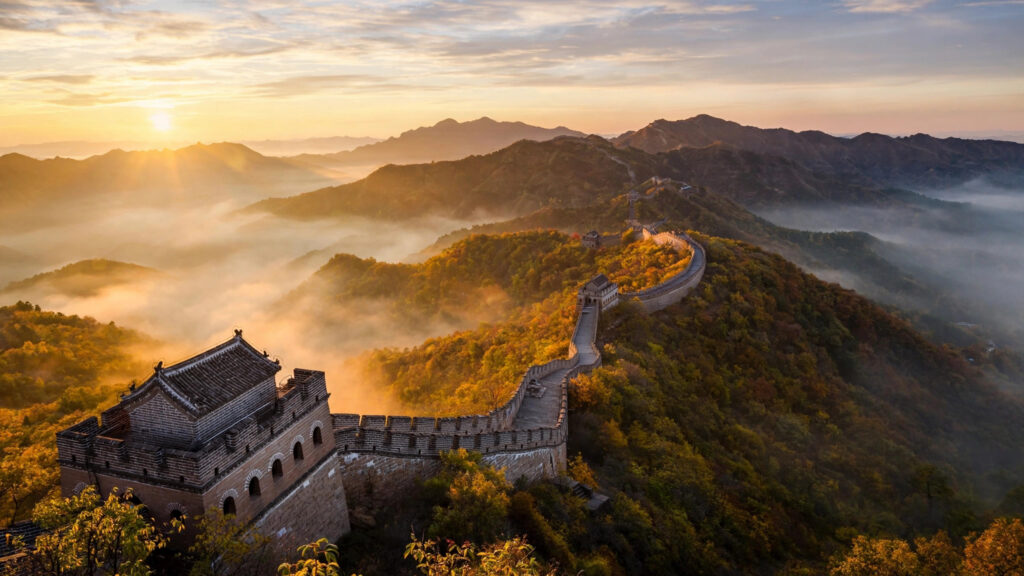
Day 3 — The Great Wall. Go to Mutianyu rather than the busiest section if this is your first visit: the wall is well restored, the crowds are thinner, and the cable car saves a steep climb. Leave early, take water and sun protection, and allow a full morning. Back in Beijing in the afternoon, visit the Temple of Heaven park, where local people practise tai chi, play cards, and sing in groups — it is one of the most enjoyable free scenes in the city. Our Great Wall guide compares the sections in detail and explains how to beat the crowds.
Days 4–5: Xi’an
Day 4 — Train to Xi’an, then the city wall. Take a high-speed train from Beijing West to Xi’an North. The fastest services take about 4 hours 10 minutes; most take between four and a half and six hours, and second-class fares start at around CNY 515. Book on the official 12306 app or website once tickets open, and carry the passport you booked with, as it serves as your ticket at the gate. In the afternoon, hire a bicycle and ride on top of Xi’an’s complete Ming-era city wall. It is flat, takes about an hour and a half at a gentle pace, and gives you a perfect overview of old and modern Xi’an. Finish in the Muslim Quarter for street food in the evening.
Day 5 — The Terracotta Army. Standard admission is around CNY 120, and in peak season — roughly April to October and around public holidays — tickets can sell out days ahead, so book online in advance and check the current rules before booking. Go early, start at Pit 1, the largest and most famous hall, then work through Pits 2 and 3. Allow at least half a day, including the journey from central Xi’an. Back in the city, visit the Giant Wild Goose Pagoda area in the late afternoon, when the fountains and evening crowds make it lively without being overwhelming. Our Xi’an guide sets out a full three-day version if you want to linger longer.
Days 6–7: Chengdu
Day 6 — Train to Chengdu, then pandas. The high-speed train from Xi’an North to Chengdu East takes about 3 hours 10 minutes on the fastest services, and three to four and a half hours on most others, with second-class fares from around CNY 263. This is the easiest leg of the whole trip: one train, no airport queues, and Chengdu East is on the metro. If you arrive by lunchtime, spend the afternoon in a teahouse in People’s Park, where you can sit for hours over a pot of tea while locals play mahjong around you.
Day 7 — Pandas in the morning, food in the evening. Go to the Giant Panda Breeding Research Base first thing in the morning, when the pandas are most active and the temperature is cooler. The Sunlight Nursery and Moonlight Nursery enclosures are usually the liveliest. In the afternoon, wander Jinli Ancient Street for souvenirs and snacks, then have a proper Sichuan dinner in the evening. Order one mild dish alongside the spicy ones, ask for less chilli if you are unsure, and drink plenty of water — Sichuan heat builds slowly and then stays with you. Our Chengdu guide covers pandas, teahouses, and food in more detail.
Days 8–10: Shanghai
Day 8 — Fly to Shanghai, walk the Bund. Fly from Chengdu to Shanghai; the flight itself is around two and a half hours, plus airport time at both ends, so treat this as a travel day with one good evening activity. That activity should be the Bund at dusk: stand on the riverside promenade, look across the Huangpu River at the Pudong skyline, and watch the lights come on. It is the single most recognisable view in modern China, and it costs nothing.
Day 9 — Old Shanghai and new Shanghai. Start at Yu Garden and the surrounding old town, where narrow lanes, tea houses, and small shops survive beside the modern city. Then take the metro to the French Concession, with its tree-lined streets, lane houses, and cafés — a good place for a slow lunch and an afternoon of wandering. For a view from above, go up a Pudong tower late in the afternoon, when the light is best.
Day 10 — A day trip, or a slow farewell. If you still have energy, take a day trip from Shanghai: Suzhou’s classical gardens are about half an hour away by high-speed train, and Hangzhou’s West Lake is about an hour. Both are easy, and both are worth it. If you would rather rest, spend the morning in a Shanghai market or museum, do your last shopping in the afternoon, and fly home in the evening. Either way, do not plan a tight connection on your last day — leave a generous buffer for traffic to the airport.
Three bookings to make first
Most things in China can be sorted out as you go, but three cannot. First, Forbidden City tickets, released seven days ahead at 20:00 Beijing time. Second, Terracotta Army tickets in peak season. Third, your trains: tickets on 12306 generally open around 15 days before departure, and popular daytime services sell out on weekends and holidays. Sort these three before you worry about anything else, and the rest of the trip becomes much calmer. Our China high-speed rail guide explains booking with a foreign passport step by step.
What this trip costs, roughly
Your biggest fixed costs are the two train legs and the Chengdu to Shanghai flight, plus admission to the Forbidden City and the Terracotta Army. Hotels and food vary far more than transport, so we do not give a single total here that would mislead you. For a realistic, itemised budget — hostels to comfortable hotels, street food to restaurants — read our China trip cost guide, and for the errors that most commonly waste money, read our first-timer mistakes guide. Book trains and major sights early, and carry Alipay or WeChat Pay linked to a foreign card — they cover almost everything.
A note on pace
This itinerary deliberately leaves gaps. You will not see every palace hall, every garden, or every museum, and that is the point. Ten days in China works best when you see fewer things properly: one wall section walked slowly, one panda enclosure watched patiently, one neighbourhood explored on foot. If a day feels too full, drop the last item on the list. The city will still be there, and you will enjoy the rest far more.
If this route sounds right but your dates, interests, or pace are different, that is exactly what a personal plan is for. Our concierge service can reshape this itinerary around the way you actually travel — slower days, more food, fewer early starts, or a different finishing city. Want this itinerary tailored to your dates? Our Route Design ($180) turns it into a day-by-day plan.