
Last updated: November 20, 2026
First-time visitors worry a lot about offending someone. In practice, China is relaxed about foreigners getting it wrong, and most locals will quietly help you. Still, a few customs are worth knowing because they change how a meal, a meeting or a temple visit feels. This guide covers dining, gifts, greetings, temples, public behaviour, photography and the small surprises that catch Western visitors off guard.
Dining etiquette
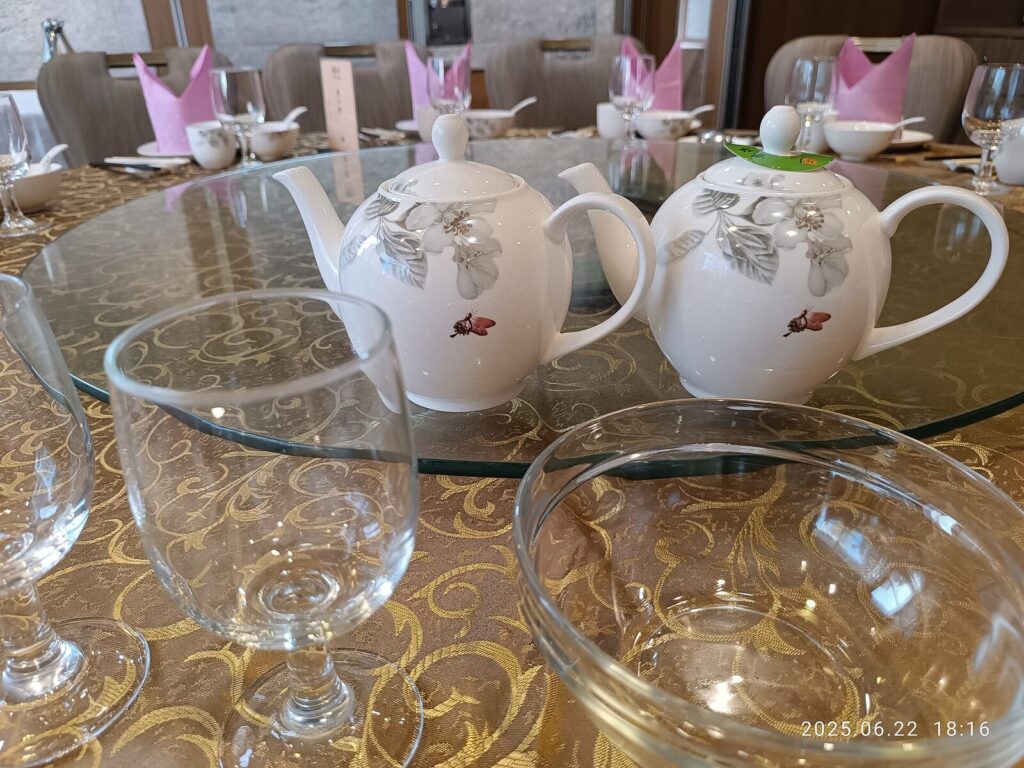
Most visitors meet etiquette first at the table. Meals are usually shared: dishes go in the middle, often on a rotating glass turntable, and everyone takes a little of each.
Chopsticks
- Never stand chopsticks upright in a rice bowl. It resembles incense offered to the dead and is the single biggest taboo.
- Do not point with them, spear food, or tap them on the bowl.
- Rest them on the rest or across your bowl, not crossed on the table.
- If you struggle, ask for a fork. Restaurants in cities and tourist areas almost always have one.
Sharing, serving and the turntable
- Turn the turntable clockwise and slowly; wait if someone is taking food.
- Use the serving spoons or the reverse end of your chopsticks if the table has them. Many local restaurants have none, and people use their own, which is normal.
- Leaving a little food is fine at a banquet and even suggests the host was generous. At a casual noodle shop, finish what you order.
- Bones, shells and seeds can go on the table or a side plate. Do not be shy about it.
Toasts and seating
At a formal meal the seat facing the door is usually for the host or most senior guest. Wait to be shown where to sit. The host often starts the toasts. You can say ganbei (cheers, literally empty glass), but you are not obliged to finish: suiyi (as you like) lets you sip. Saying you do not drink is accepted, especially if you give a reason such as medicine or a long travel day.
Paying the bill
Expect a friendly fight over the bill; hosts often insist on paying. If you are the host, settle quietly before the end of the meal. Splitting the bill is becoming common among younger people, and you can send money by app. See our guide on luggage storage and forwarding for another small logistics problem that is easier with a little planning.
Tipping: do not
Tipping is not part of Chinese culture. Servers in most restaurants, taxi drivers, hotel porters and hairdressers do not expect it, and some will run after you to return the money. Exceptions are small: high-end international hotels may accept a tip for a porter, and private drivers or hired helpers on a multi-day arrangement may appreciate a small thank-you. A service charge appears on some upscale bills, which replaces tipping.
Greetings, names and conversation
| Situation | What to do | Why |
|---|---|---|
| Meeting someone | A nod or light handshake is fine | Hugs and kisses are uncommon with strangers |
| Using names | Family name first, then title (e.g. Manager Li) | Chinese names put the surname first |
| Business cards | Give and receive with both hands, read it, do not pocket it instantly | Treated as an extension of the person |
| Personal questions | Age, job, marriage, income are normal small talk | It signals interest, not rudeness |
| Compliments | Deflect politely | Modesty is valued |
| Disagreeing | Soften, avoid public confrontation | Saving face matters |
Face (mianzi) is the idea behind much of this. Embarrassing someone in front of others, even over a small mistake, costs them face. If a price is wrong or service is poor, raise it calmly and privately and you will usually get a better result.
Politics and sensitive topics are best left alone with new acquaintances. Locals are generally warm about travel, food, family and football. If a chat turns to a sensitive subject, change it gently.
Gifts and invitations
If you are invited to a home, which is a real honour, bring fruit, tea or a small treat from your country. Present it with both hands. Many hosts will politely refuse once or twice before accepting; that is ritual, so offer again. Gifts are usually not opened in front of the giver.
Things to avoid giving
- Clocks or watches: the phrase for giving a clock sounds like attending a funeral.
- Pears or umbrellas: the words sound like separation.
- White or black wrapping: associated with mourning. Red and gold are happy colours.
- Sets of four items: four sounds like death in Mandarin. Eight is lucky.
- Green hats: a joke about infidelity.
Red envelopes (hongbao) with money are given at weddings and Lunar New Year, not as casual gifts. If you travel during the holiday, see our Chinese New Year 2027 travel guide.
Temples, sacred sites and tombs
- Dress modestly: covered shoulders and knees are safest at active temples.
- Step over, not on, door thresholds in temples.
- Do not touch or climb on statues, and keep voices low.
- Photography inside halls is often banned; look for signs.
- Do not point your feet at altars or sit on sacred objects.
- Incense is for worshippers; as a visitor you can simply watch.
Some museums and tombs also ban flash or tripods. Staff will usually whistle or wave if you are in the wrong spot, and a smile and apology ends it.
Public behaviour: what feels different
Queues and crowds
Queueing is better than its reputation, especially at airports, metro security and major attractions, but a crowd can still push forward at a ticket window or train door. Hold your place gently and do not take it personally.
Noise, smoking and spitting
China is loud and cheerful in public places; phone calls on speaker and loud conversation are common. Smoking is banned indoors in many places but still seen. Spitting has declined sharply in cities.
Metro, buses and trains
On the metro, let people off first, move away from the door, and offer your seat to elders, children and pregnant women. Priority seats are enforced socially. On long-distance trains, people eat noodles and share snacks; keep your area tidy and expect conversation if you are friendly.
Toilets
Carry tissue; many public toilets do not supply paper. Squat toilets are still common outside big hotels. Put used paper in the bin if signs ask, because older plumbing clogs.
Staring and photos
In smaller places you may be photographed or asked for a selfie. Say no with a smile if you prefer. Always ask before photographing someone close up, especially monks, children and ethnic minority villagers.
Health, safety and common sense
Etiquette overlaps with safety. Drink bottled or boiled water, use hot tap water only for washing, and carry your passport for hotels and train stations. Our China safety guide covers scams, emergency numbers and health tips in detail.
Quick do and don’t list
| Do | Don’t |
|---|---|
| Accept tea, fruit and snacks offered | Stick chopsticks upright in rice |
| Use both hands for cards and gifts | Tip in restaurants and taxis |
| Learn hello (nihao), thank you (xiexie), sorry (duibuqi) | Point at people or things with one finger |
| Download translation and payment apps | Insist on direct confrontation in public |
| Keep voice calm when annoyed | Touch heads, especially children’s |
| Ask before photographing people | Give clocks or pears as gifts |
Pros and cons of local manners for visitors
Pros: People are patient with beginners, food culture is generous, and effort to follow a custom is noticed and appreciated.
Cons: Personal questions and staring can feel intrusive, queues can be pushy, and the quiet rules around face are easy to break without noticing. Treat these as culture, not rudeness.
FAQ
Do I need to speak Mandarin?
No. A few phrases and a translation app are enough, and staff in major cities and tourist sites often speak some English.
Is it rude to use a fork?
Not for a visitor. It is a practical choice, and nobody will mind.
Should I refuse the first offer of food or a gift?
Refusing once is a polite habit among locals, but as a visitor you can accept right away if you want it.
Can I bargain?
At markets, yes, calmly and with a smile. Shops, malls, supermarkets and restaurants have fixed prices.
What should I wear?
Casual, comfortable clothes are normal in most places. Dress a little more modestly for temples and formal dinners.
Is showing affection in public okay?
Holding hands is common and fine; kissing in public is less typical outside big cities.
Need a hand with the details?
If you would like help turning this into a smooth trip, our concierge service plans routes, helps with bookings and apps, and supports you on WhatsApp. Pricing is a custom quote based on your trip. Visit the Concierge page or message us on WhatsApp.