
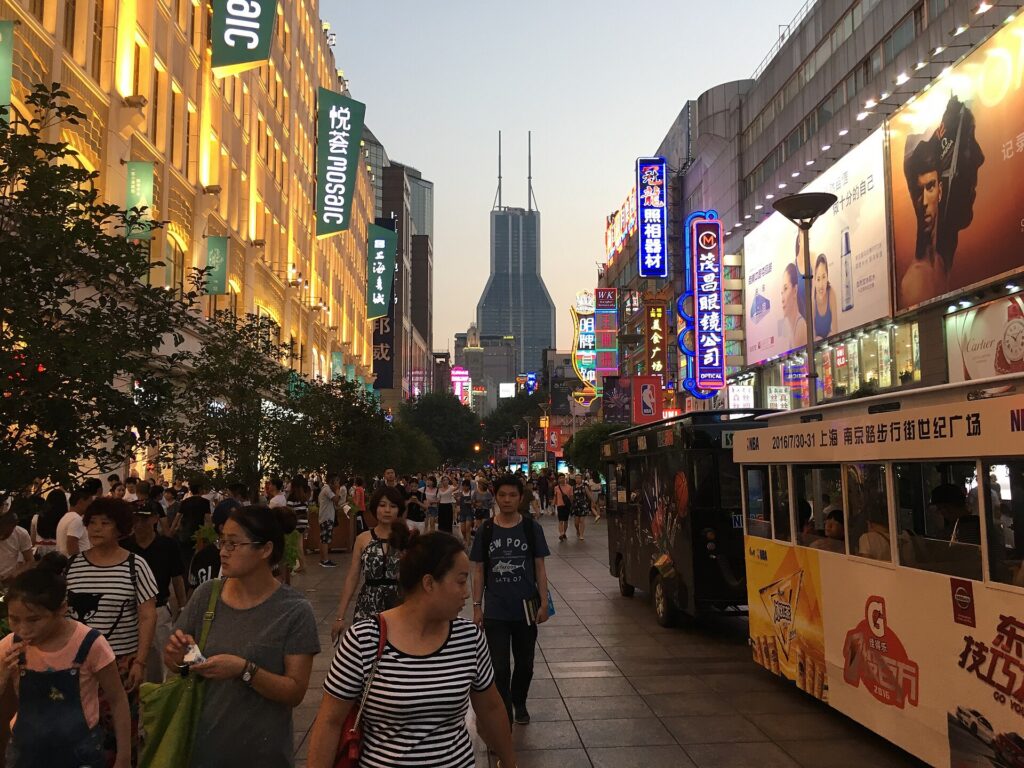
Shopping in China is half the fun of the trip — and, done right, noticeably cheaper than at home. Tea that costs a small fortune in London sells for a few pounds in a Hangzhou tea house. Silk, porcelain, jade, electronics, snacks you have never seen before: the range is enormous, and so is the range of prices for the same item in different shops. This guide covers what is worth buying, where to buy it, how bargaining works, and how to claim back part of the tax before you fly home.
What to buy in China
Tea. China grows the world’s best tea, and buying it at the source is one of the trip’s great bargains: green tea from Hangzhou (Longjing), oolong from Fujian, pu’er from Yunnan. Buy from a proper tea shop where you can taste before you buy, and expect ¥100–300 for a decent 250g tin. Skip the “free” tea ceremonies in tourist areas that end with a hard sell — the tea is real, the price is not.
Silk. Suzhou is the historic silk capital, and silk scarves, blouses and bedding are genuinely good value — a scarf runs ¥100–300 depending on weight and weave. Real silk feels cool to the touch with a slightly uneven, natural sheen. “Silk-like” polyester is everywhere and costs a tenth as much.
Porcelain and ceramics. Jingdezhen has made porcelain for a thousand years, and you will find it in every city. Small pieces — a teapot, a pair of cups — travel well and make good gifts. Wrap them in clothes inside your suitcase, or ask the shop to pack them.
Jade and jewellery. Be careful here. Real jade is expensive, and the market is full of treated stone, glass and resin sold as the real thing. If you are not buying from a reputable jeweller, treat jade as a souvenir, not an investment: pay souvenir prices and enjoy it for what it is. The same applies to pearls and “antiques” — anything sold as old in a tourist market almost certainly is not.
Electronics and gadgets. Chinese brands — phones, earbuds, power banks, smart watches — are often 20–40% cheaper than the same model abroad, and the big electronics malls in Shenzhen and Beijing are worth a visit. Check the warranty: most Chinese warranties only cover repairs inside China, and some domestic-market phones lack Google services.
Snacks and food gifts. Dried fruit from Xinjiang, Yunnan coffee beans, Sichuan peppercorns, chilli crisp, moon cakes in autumn. Supermarkets are the best place to buy them — fixed prices, no bargaining. Our China food guide covers what to eat while you are there; the same goes for what you take home.
Where to shop
Department stores and malls. This is where most first-timers should do most of their shopping. Prices are fixed and clearly marked, the goods are genuine, and — importantly — these are the shops that participate in the tax refund scheme. In Shanghai, start on Nanjing Road and Huaihai Road; in Beijing, Wangfujing and Sanlitun; in Chengdu, Chunxi Road. See our 3 days in Shanghai guide for how these streets fit into a first visit.
Pedestrian shopping streets. Every big city has one, and they are worth an evening even if you buy nothing: neon, street food, crowds, and a good sense of what ordinary Chinese shopping looks like. The shops along them are a mix of chains and tourist stalls — fine for souvenirs, less good for bargains.
Markets. Fabric markets, antique markets, night markets. These are the most fun and the most variable: quality ranges from excellent to fake, prices are negotiable, and a lot of what looks old is made to look old. Go for the experience and for small, cheap items; save serious money for the department stores.
Supermarkets and convenience stores. Do not overlook them. A big supermarket is the best place for snacks, tea, dried goods and small gifts — and the prices tell you what things should actually cost, which makes you a sharper bargainer everywhere else.
How bargaining works
In malls and department stores, the price on the tag is the price. In markets and small independent shops, it is a starting point. A few rules that actually work:
- Start at a third to a half of the asking price for souvenirs and clothing in tourist markets. The seller will counter, and you will meet somewhere in the middle.
- Know the real price first. Check the same item in a fixed-price shop before you bargain. If a “silk” scarf costs ¥30 in a mall, do not pay ¥200 for it in a market.
- Be willing to walk away. It is the only leverage you have, and it works. If the seller lets you go, the price was real.
- Keep it friendly. Bargaining in China is a social exchange, not a fight. Smile, take your time, and never raise your voice.
How to pay
China is almost cashless. Mobile payment — Alipay and WeChat Pay — works in virtually every shop, including market stalls, and foreign cards can now be linked to both. Bring a Visa or Mastercard as a backup, and a little cash (¥200–300) for the rare stall that only takes it. Read our guide to paying in China as a foreigner before you travel, and set up Alipay at home — doing it from your hotel on arrival wastes an evening. Keep receipts for anything expensive: you need them for the tax refund, and for any warranty or return.
Claiming your tax refund: the 2026 rules
This is the part most visitors miss, and it is real money. China’s departure tax refund lets overseas visitors claim back part of the VAT on goods bought at designated tax-refund shops and taken out of the country. The rules were overhauled in 2025 and again in 2026, and the current version is far more generous than the one most guidebooks describe.
Who qualifies. Foreign nationals (and Hong Kong, Macao and Taiwan residents) in mainland China for no more than 183 consecutive days.
The minimum spend is ¥200 in one designated shop on one day — cut from ¥500 in April 2025. Look for the tax-refund sign in the shop window; markets and street stalls are not part of the scheme.
How much you get back. The refund rate is 11% of the price (including VAT) for most goods, and 8% for goods in the lower VAT band such as some foods and books. The refund agency takes a handling fee of roughly 2%, so expect about 9% of the purchase price back in practice — roughly ¥450 on a ¥5,000 purchase.
Two ways to claim. The classic way: at the shop, ask for the tax refund form (离境退税申请单) and a VAT invoice at the time of purchase. At the airport, show the form, the invoice and the unused goods at customs before check-in, then collect the refund — cash up to ¥20,000, bank transfer above that. Since April 2025, many shops also offer instant refund (即买即退): you get the money back in the shop on the spot, against a pre-authorisation on your credit card, and the claim is settled when customs verifies the goods at departure. You must still leave China within 90 days of the purchase, and the goods must be unused.
What changed in 2026. From 1 July 2026 the scheme is paperless, with a single national service code on your phone, and small claims face random checks rather than inspection of every item. There are now more than 14,000 participating shops. Details still vary by city, so confirm the procedure in the shop and at your departure airport.
What not to buy
- “Antiques” from tourist markets. Real antiques cannot legally leave China without an export permit, so anything sold casually as a Ming vase is a reproduction. Enjoy it as one.
- Counterfeit brands. Fake designer bags and watches are easy to find and tempting. Apart from the quality, customs in your home country can confiscate them — and a bag that falls apart on day two is not a bargain.
- Anything you cannot carry. A full tea set is lovely until you have to carry it through three airports. Think about weight, fragility and luggage space before you pay, not after.
A few last tips
Shop early for things you want to use while travelling — a power bank, a rain jacket, a day pack — and leave souvenir shopping for the last day or two, when you know how much luggage space and money you have left. Leave time before your flight for the tax refund queue at the airport; it is usually quick, but not always.
Shopping is one of the easiest ways to get a feel for a city — the prices, the crowds, the bargaining tell you more about everyday China than any museum. Go with a list, leave room for surprises, and do not spend your whole trip in shops. Our China trip cost guide helps you set a realistic shopping budget before you go, and our first-timer mistakes guide covers the other traps that catch new visitors.
If you would like your shopping built into your trip rather than squeezed around it, we can help. Our concierge service plans routes around what you actually want to do — the tea streets of Hangzhou, the silk shops of Suzhou, the electronics malls of Shenzhen — with the tax-refund stops marked on the map. Want a shopping route built around your dates and must-buy list? Our Route Design ($180) turns it into a day-by-day plan.