
Most travellers treat a long stopover in China as dead time: a hard seat by the gate, airport noodles, a slow countdown to boarding. That is a waste. Beijing and Shanghai are two of the few cities in the world where a 12-hour gap between flights can buy you the Forbidden City, the Great Wall, or a walk along the Bund — and you can do it without a visa, thanks to China’s transit rules.
This guide gives you timed plans for 6, 12 and 24 hours in each city, with exact fares and the mistakes that turn a great layover into a missed flight. Everything below is written for a first-time visitor with a passport, a phone, and hand luggage.
Can you leave the airport during a layover in China?
Yes — in most cases, and without a visa. China runs a 240-hour (10-day) visa-free transit scheme for passport holders from 57 countries, including the US, UK, Canada, Australia, New Zealand and most of Europe. You need a confirmed onward ticket to a third country or region within 240 hours — so London–Beijing–Bangkok qualifies, but London–Beijing–London does not. Entry is through 65 designated ports, which include Beijing Capital, Beijing Daxing, Shanghai Pudong and Shanghai Hongqiao.
If your nationality is not on the list, the 24-hour transit rule still lets most travellers step out briefly, though the conditions are tighter — check with your airline first.
Separately, passport holders from 50 countries can enter China visa-free for up to 30 days. For most of those nationalities that scheme currently runs to 31 December 2026, and whether it is extended has not yet been announced, so check before you book. Our full explainer is here: China Visa-Free Transit in 2026: How the 240-Hour Rule Actually Works.
The one rule that decides your whole layover
Work backwards from your next flight, not forwards from landing. International departures need you back at the airport 2.5 to 3 hours before take-off, and you should add an hour for immigration, baggage reclaim, and getting out of the terminal. That means a “12-hour layover” is really about 7 to 8 hours in the city; a “6-hour layover” is about 2 to 3.
So, as a rough guide: 6 hours or less — only leave the airport if you land at the closer airport and you have hand luggage only. 8 to 12 hours — a proper half-day in the city. 18 to 24 hours — a full day, and the Great Wall becomes realistic in Beijing.
Beijing layover: 6, 12 and 24 hours
Beijing has two airports. Capital (PEK) is about 30 minutes from the centre; Daxing (PKX) is further south, around 50 to 60 minutes door to door. Check which one you are flying through before you plan anything — our airport arrival guide covers both in detail.
6 hours in Beijing
Only attempt this from Capital Airport, and only with hand luggage. Take the Capital Airport Express to Dongzhimen — ¥25, about 25 to 30 minutes — then walk the hutongs around the Drum Tower or have lunch in Sanlitun. Be back on the train to the airport within two and a half hours of landing. From Daxing, six hours is not enough: the express alone takes 19 minutes to Caoqiao plus a metro change, and the margin disappears. Stay in the terminal and save Beijing for next time.
12 hours in Beijing
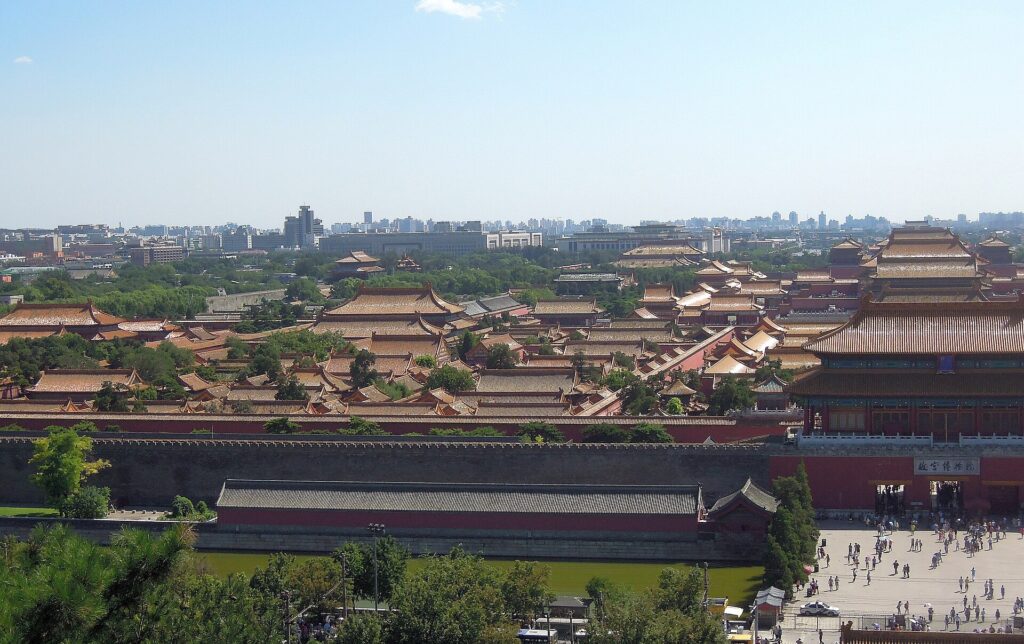
This is the sweet spot. From either airport, head for the Forbidden City — but only if you booked tickets in advance. Tickets go on sale exactly 7 days ahead at 8:00 pm Beijing time, cost ¥60 in peak season (April to October) and ¥40 in the low season, and sell out fast. There are no ticket sales at the gate, and the palace is closed on Mondays. Bring the physical passport you booked with. Our guide to booking attraction tickets explains the timed-entry system.
A realistic 12-hour plan: airport express into town, Tiananmen Square and the Forbidden City in the morning (allow 3 hours), climb Jingshan Hill behind the palace for the classic view over the golden roofs, then lunch on dumplings or Peking duck in the hutongs. If you could not get Forbidden City tickets, swap in the Temple of Heaven — the same grandeur, far easier to enter. Our Beijing 3-day itinerary has the full version of this route.
24 hours in Beijing
With a full day, add the Great Wall at Mutianyu. The simplest independent route is the Mubus shuttle from Dongzhimen (about ¥80 return, departing around 9:00 am, roughly 90 minutes each way). Entry is about ¥40, the cable car about ¥140 return, and the toboggan ride down is the part people remember. Be back in the city by mid-afternoon for the Summer Palace or an evening food crawl, and stay overnight near Dongzhimen or Sanlitun so the morning airport run is short. Our Great Wall guide covers which section to choose and how to beat the crowds.
Shanghai layover: 6, 12 and 24 hours
Shanghai is the easier layover city. Pudong Airport has the Maglev, the world’s only commercial magnetic-levitation train, which covers the 30 km to Longyang Road in about 8 minutes at 300 km/h. A one-way ticket is ¥50, or ¥40 if you show a same-day boarding pass. The catch: Longyang Road is not downtown — change to Metro Line 2 for another 20 to 25 minutes to the Bund area. Metro Line 2 all the way from the airport costs about ¥7–8 and takes 55 to 60 minutes to People’s Square, so the Maglev saves time, but not as much as the headline suggests.
6 hours in Shanghai
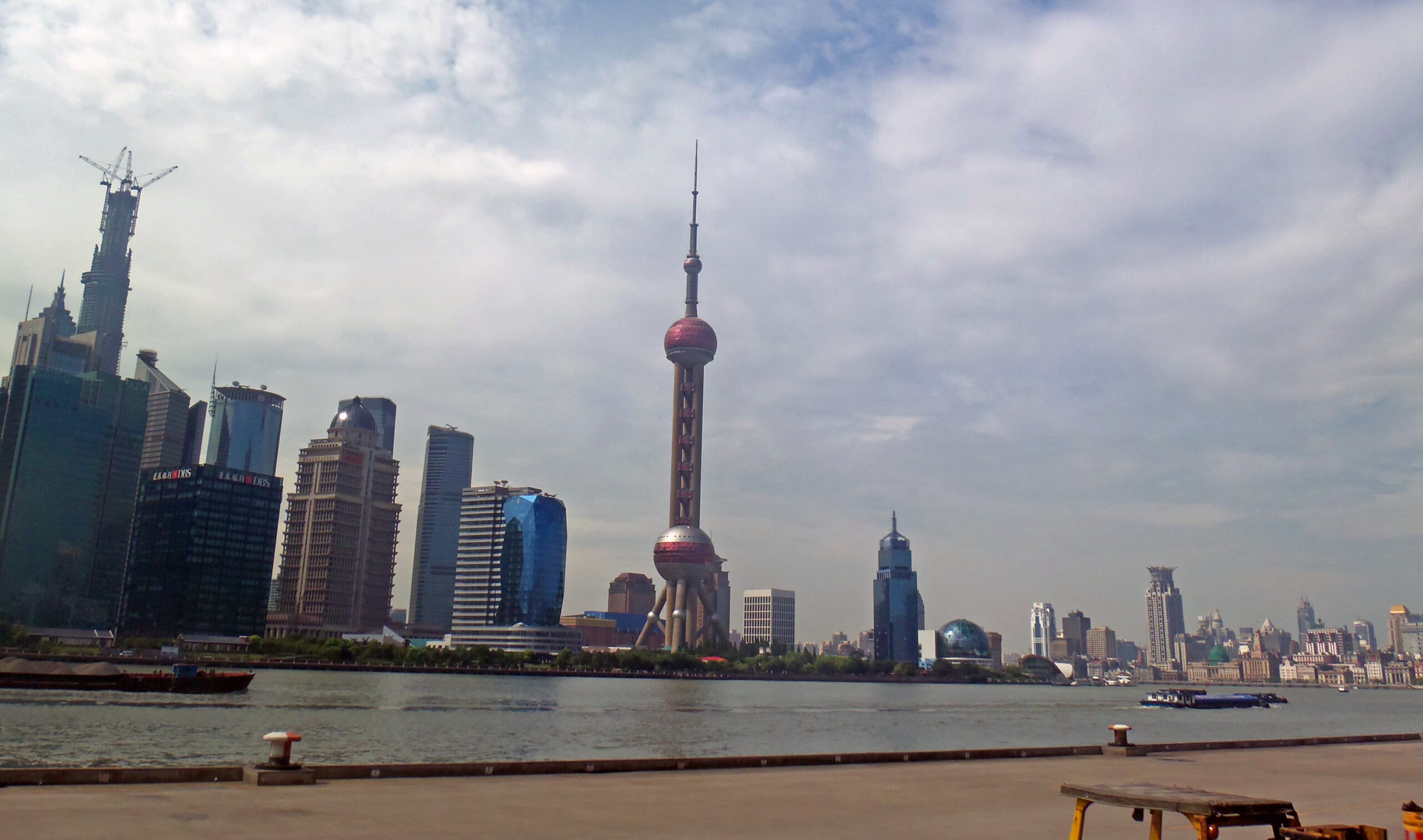
Take the Maglev, then the metro to Lujiazui. Walk the riverside promenade, look up at the Oriental Pearl Tower and the three supertall towers, and have lunch in the Super Brand Mall or at a soup-dumpling spot nearby. That is a real taste of Shanghai in under three hours on the ground.
12 hours in Shanghai
Cross the river to the Bund for the colonial-era waterfront, then walk into the Old City for Yu Garden and the surrounding bazaar — go early, as it fills up by late morning. In the afternoon, wander the plane-tree streets of the former French Concession (Wukang Road, Tianzifang), and come back to the Bund after dark, when the Pudong skyline lights up. Our 3-day Shanghai guide runs the same route at a slower pace.
24 hours in Shanghai
Add a morning in Zhujiajiao, the water town about an hour west of the centre by metro and bus — canals, stone bridges and tea houses, without the crowds of the city centre. Or stay in town: a Huangpu River cruise at dusk, dinner in the French Concession, and a slow morning at a park-side tea house before your flight. If your layover runs overnight, stay near People’s Square or the Bund; both are one metro ride from the airport line.
Layover practicalities that save you an hour
- Luggage: if your bags are checked through to your final destination, they stay in the system — travel light with a daypack. Both Beijing airports and Pudong have left-luggage counters if you need to stash a cabin bag.
- Money: set up Alipay or WeChat Pay before you land and link a foreign card. Almost everything, from metro fares to street food, is paid by phone. Our payment guide walks through the setup.
- Connectivity: buy an eSIM before you fly or pick up a local SIM at the airport. The metro and DiDi both work far better with data — our eSIM guide compares the options.
- Getting around: the metro is cheap, fast and signed in English — see our metro guide. For anything awkward, DiDi works with a foreign number and takes foreign cards.
- Language: save your destination name in Chinese characters on your phone. It helps taxi drivers and metro staff far more than any phrasebook.
Five mistakes that ruin a China layover
- Turning up at the Forbidden City without a ticket. Tickets are online-only, released 7 days ahead at 8:00 pm, and they sell out. No ticket, no entry — plan around it, or pick the Temple of Heaven instead.
- Trying the Great Wall on less than 10 hours. It is a half-day trip even from Capital Airport, and traffic back into Beijing is unpredictable.
- Trusting a taxi in rush hour. Beijing and Shanghai traffic can double a journey time between 5 and 8 pm. The airport expresses and the metro do not get stuck.
- Forgetting your passport. You need the physical passport — not a photo — for attraction tickets, security checks and your flight. Keep it on you.
- Cutting the return too fine. If your layover plan has no slack for a delayed inbound flight or a slow immigration queue, shorten the plan, not the buffer.
A layover is the cheapest way to sample China: no hotel to book, no visa to arrange, and a story no one else on your flight will have. Pick the plan that fits your hours, book the one ticket that needs booking, and leave the rest to the metro.
Flying through Beijing or Shanghai soon? Our Route Design ($180) turns your layover into a timed, step-by-step plan — exact trains, ticket links, and a backup option if your flight runs late. Tell us your flight times on our concierge page and we will build it around your connection.