
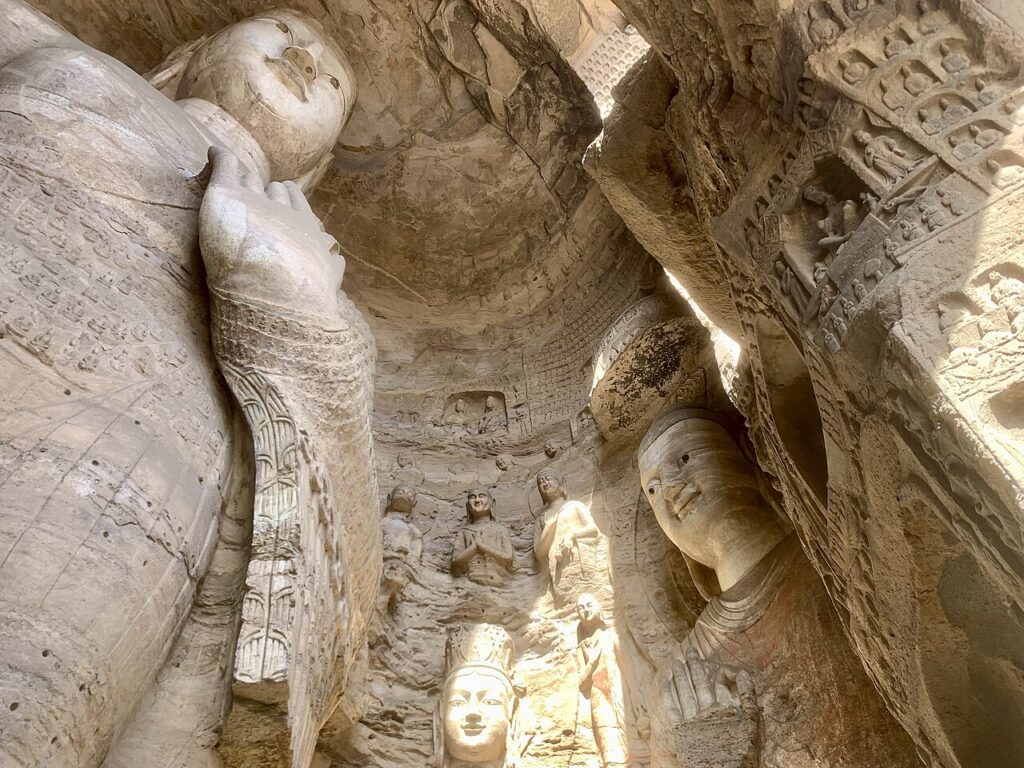
Shanxi · Datong
Carved into a sandstone cliff west of Datong more than 1,500 years ago, the Yungang Grottoes are one of China’s great encounters with early Buddhist art. Begun under the Northern Wei dynasty in the 5th century, the site holds 252 caves and over 51,000 statues, and was inscribed as a UNESCO World Heritage Site in 2001. The five Tan Yao caves (16–20) are the heart of it: each holds a single colossal Buddha, up to 17 metres tall, serene and monumental in the half-light. Look closer and the carvings tell a story of cultural exchange — Indian and Central Asian motifs woven into Chinese stonework, musicians, dancers and flying figures crowded around the Buddhas. Spring and autumn bring the kindest weather, while November, in the quiet off-season, trades warmth for near-empty caves — bring layers, as Datong turns cold. The on-site museum adds the context that turns beautiful stone into history you can follow.
Tips: Arrive at opening time on a weekday to beat the tour-bus crowds, and allow two to three hours. Start with Caves 16–20, then linger in the smaller side caves, where the finest detail hides. Flash photography is not allowed inside. Pair Yungang with Datong’s old city wall and, if you have a second day, the gravity-defying Hanging Temple at Hengshan.
Photo: Dudva / Wikimedia Commons (CC0)