
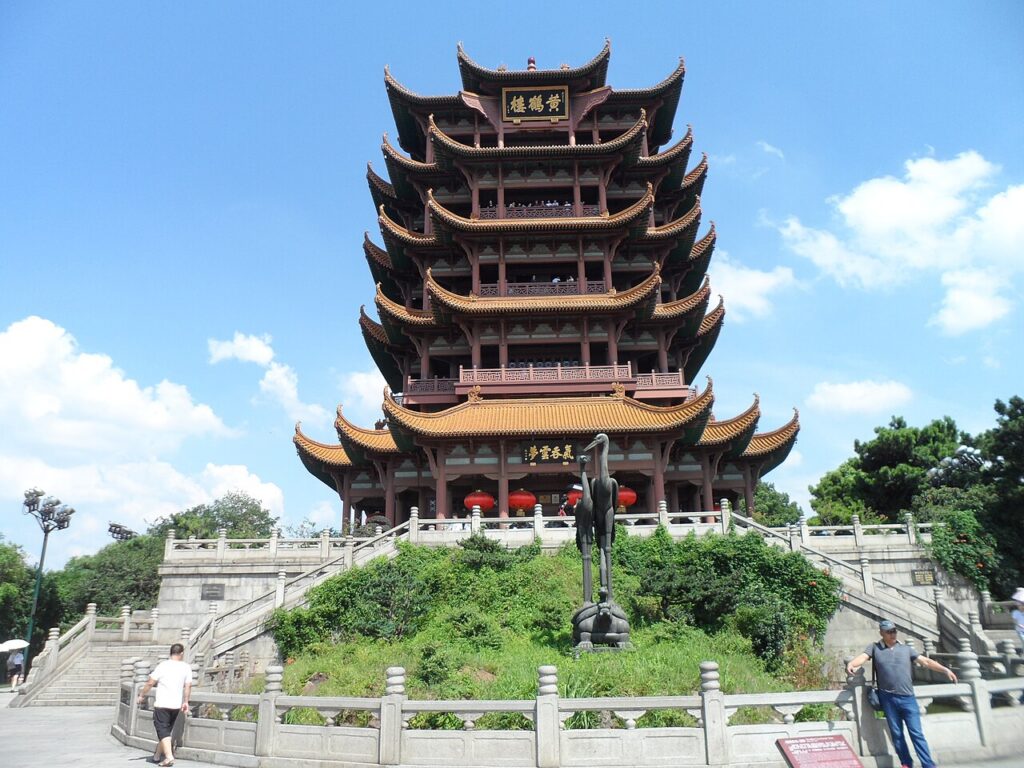
Hubei · Wuhan
For more than 1,700 years, poets have climbed Snake Hill to look out over the Yangtze from this tower — and the view still justifies the climb. First built in 223 AD as a military watchtower during the Three Kingdoms period, the Yellow Crane Tower was destroyed and rebuilt many times; the five-tiered tower standing today, completed in 1985, rises 51 metres with sweeping yellow-tiled roofs and red pillars. It earned its fame from Cui Hao’s Tang-dynasty poem, which made it one of China’s three great towers south of the Yangtze. From the open top gallery you can take in the whole of Wuhan at once: the wide Yangtze below, the 1957 Yangtze River Bridge — the first ever built across the river — and the three old towns of Wuchang, Hankou and Hanyang spread across the far banks. Inside, each floor is a small museum of murals, calligraphy and the legends of the crane. Spring and autumn bring the clearest skies, and sunset turns the river to gold.
Tips: Arrive at the 8:00 opening or in the late afternoon for sunset and the thinnest crowds, and allow 1.5 to 2 hours. Climb slowly through the exhibition floors rather than heading straight to the top, then walk down through Snake Hill Park to the riverfront — or cross the Yangtze by ferry at dusk for the classic view back toward the tower. In summer bring water: Wuhan is famously one of China’s “furnace” cities.
Photo: 螺钉 / Wikimedia Commons (CC BY-SA 4.0)