
Beijing · Haidian
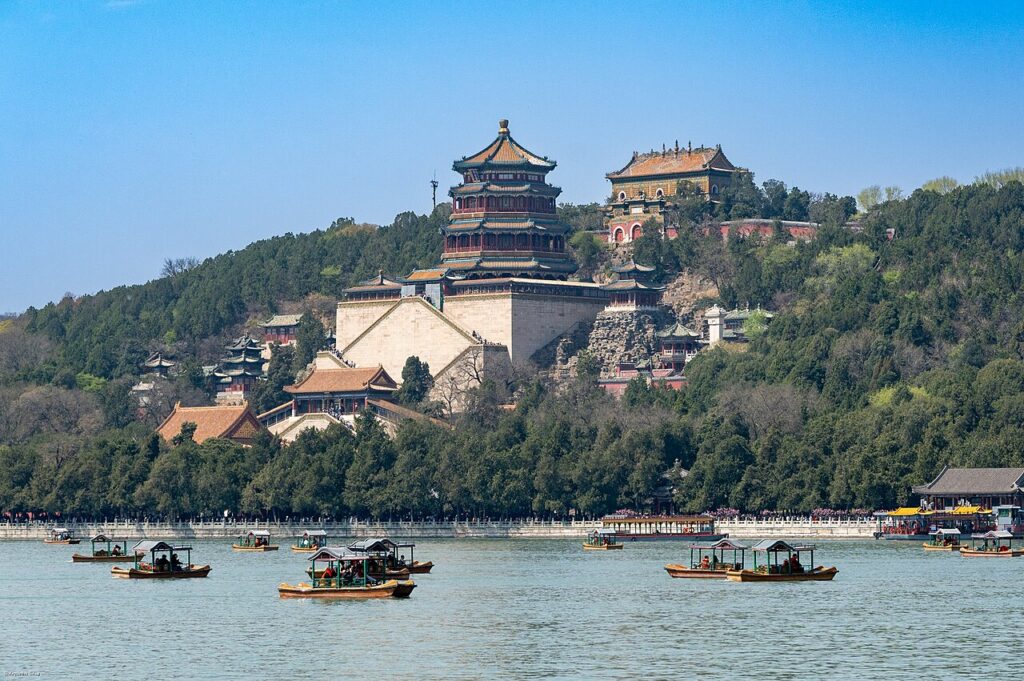
The Summer Palace is Beijing at its most graceful — a 290-hectare imperial garden where Kunming Lake covers three-quarters of the grounds and Longevity Hill rises above it, crowned by the Tower of Buddhist Incense. Built under Emperor Qianlong in the 18th century and rebuilt by Empress Dowager Cixi, it was the Qing court’s summer retreat from the Forbidden City, and UNESCO listed it in 1998 as a masterpiece of Chinese landscape garden design. Walk the 728-metre Long Corridor, its beams painted with more than 14,000 scenes from myth and literature, then cross the Seventeen-Arch Bridge — 150 metres of white marble lined with 544 carved lions — to South Lake Island. In late autumn the maples and ginkgos on Longevity Hill turn gold, and around the winter solstice the setting sun threads all seventeen arches with golden light. For a deeper experience, climb the hill at opening time for the panorama over the lake, then slip behind it to the quiet Back Lake and Suzhou Street, a canal-side lane the emperors built as a miniature Jiangnan shopping street.
Tips: Arrive at the East Gate right at opening — 6:30am in summer, 7am in winter — and walk the Long Corridor before the crowds. Buy the combined ticket (¥60 in peak season) to enter the Tower of Buddhist Incense and the garden’s inner halls. Allow four hours, and pair the visit with the nearby Old Summer Palace ruins or the Fragrant Hills for a full northwest-Beijing day.
Photo: xiquinhosilva / Wikimedia Commons (CC BY 2.0)