
Qinghai · Xining
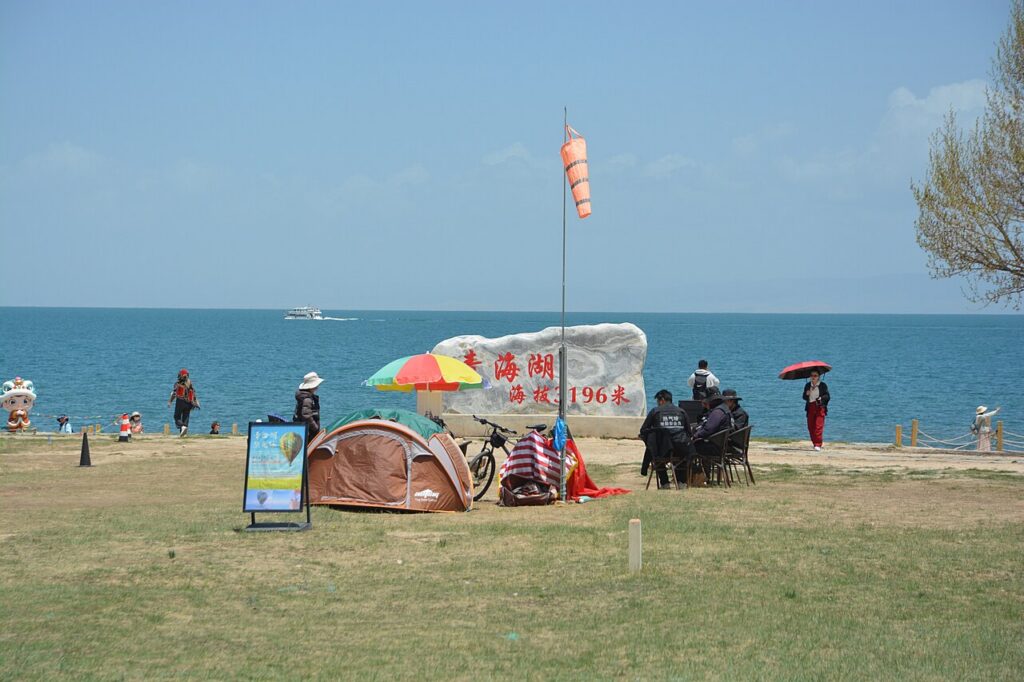
China’s largest inland saltwater lake sits more than 3,200 metres up on the northeastern edge of the Tibetan Plateau, and its scale is the first surprise: a blue so wide it meets the sky like a sea, ringed by grassland, snow-dusted ridges and herds of yak and sheep. In July and August the shoreline turns gold with rapeseed flowers, while spring brings bar-headed geese, brown-headed gulls and other migrants to the lake’s protected wetlands — best watched from designated viewing points at dawn. The classic way to take it in is slowly: a lakeside road loops about 360 kilometres around the water, passing Tibetan villages, small monasteries and open viewpoints, and cyclists tackle it over four to six days. Come for the light as much as the lake itself — mornings are calm and clear, afternoons bring plateau wind — and for a night in a lakeside homestay, with yak-milk tea and stories of seasonal pastures.
Tips: Arrive early and base yourself in Xining first to acclimatise, as the lake sits above 3,200 metres. Pack sun protection and a warm layer — even summer nights can be cold, and the UV is strong. Cycle a lakeside section rather than the full loop unless you are experienced, and pair the lake with a stop at a Tibetan monastery or a grassland homestay.
Photo: Jonashtand / Wikimedia Commons (CC BY-SA 4.0)