
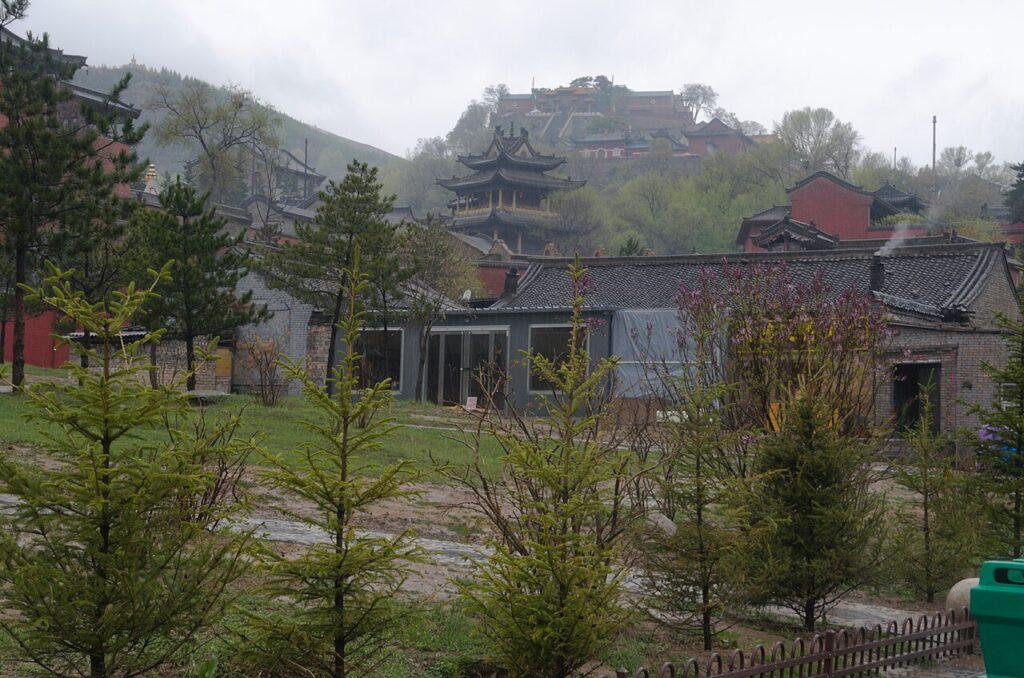
Shanxi · Xinzhou
Mount Wutai is not one peak but five — flat, treeless terraces rising to 3,061 metres, the highest ground in northern China, ringed around the temple town of Taihuai like the palm of a hand. For nearly 2,000 years this has been the foremost of China’s Four Sacred Buddhist Mountains, the earthly seat of Manjushri, bodhisattva of wisdom, and the valley still holds more than 50 temples, a UNESCO World Heritage site since 2009. Walk the main street of Taihuai and the great halls crowd in: Xiantong Temple, the oldest and largest; Tayuan Temple with its 56-metre white stupa; and Foguang Temple, whose East Main Hall from 857 is the finest surviving Tang-dynasty timber building in China. The deeper pull is the mountain itself — alpine meadows, prayer flags, and the Great Pilgrimage, a 47-kilometre circuit of all five terraces that pilgrims still walk over two or three days. Come May to September, when the valley stays cool while the lowlands swelter; winter here is brutally cold and many high trails close.
Tips: Base yourself in Taihuai for two days: day one for the temple core and the climb to Dailuoding, day two for an East Terrace sunrise and a shuttle ride to the North Terrace. Pack warm layers even in July — nights at altitude are cold. The scenic-area ticket is about ¥135 in peak season; reach Wutai from Taiyuan by bus in roughly three hours.
Photo: Popolon / Wikimedia Commons (CC BY-SA 4.0)