
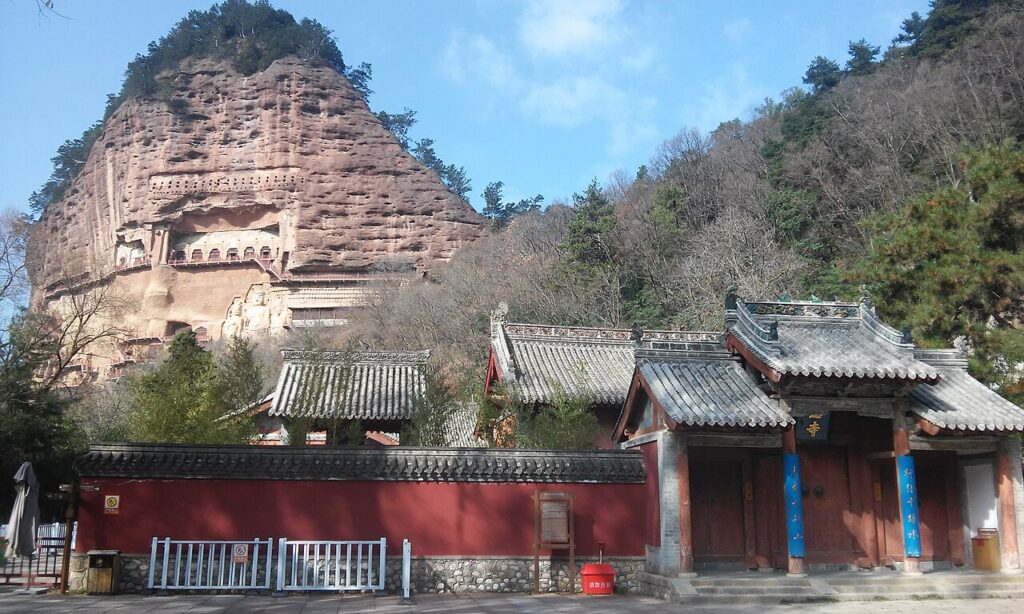
Gansu · Tianshui
Rising from a forested valley in southeastern Gansu like a giant stack of wheat — which is exactly what its name means — Maiji Mountain holds one of China’s great Buddhist treasures: nearly 200 caves carved into a sheer, 150-metre cliff face, filled with more than 7,000 clay sculptures and over 1,000 square metres of murals. Work began in the Later Qin dynasty (384–417 AD) and continued for more than a thousand years, through the Northern Wei, Tang, Song and Qing, so the figures change style as you climb — from solemn early Buddhas to warm, almost human portraits of bodhisattvas and monks. Unlike Dunhuang’s painted murals, Maijishan is a museum of clay sculpture, made possible by the soft local sandstone. The climb itself is part of the experience: steel walkways bolted to the rock wind past cave mouths high above the valley, with the 16-metre East Cliff Great Buddha as the centrepiece. Come in spring or autumn, when the air is clear and the hillsides turn gold and crimson.
Tips: Arrive on a weekday morning for the best light on the east-facing caves and the quietest walkways. Allow half a day, wear grippy shoes, and bring a light rain shell — the cliff paths are exposed and the mountain weather changes fast. The special caves cost extra but hold the finest sculpture. Pair the visit with Tianshui’s Fuxi Temple, or continue west along the Silk Road to Dunhuang.
Photo: Tgasrio / Wikimedia Commons (CC0)