
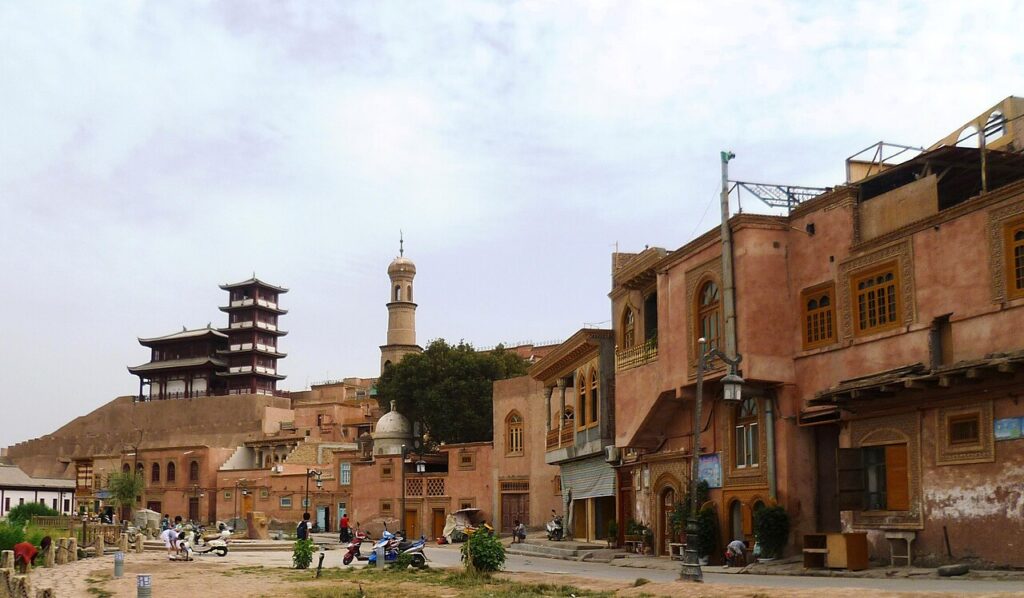
Xinjiang · Kashgar
At China’s far western edge, where the Taklamakan Desert meets the Pamirs, Kashgar’s Old City is one of the last great Silk Road towns still lived in, not staged. Its maze of ochre mud-brick lanes, carved wooden balconies and shaded courtyards has sheltered traders, craftsmen and pilgrims for some 2,000 years, and the workshops are still working: coppersmiths hammering teapots, hat-makers stitching embroidered doppa caps, bakers pulling nan bread from clay ovens. The yellow walls of Id Kah Mosque — China’s largest, founded in 1442 — anchor the main square, while the Sunday bazaar spills over with spices, pomegranates and handwoven carpets. Come in spring or autumn, when the desert air is mild and the fruit is at its sweetest, and give the old city at least half a day. The deeper experience is simply slowing down: linger over a pot of tea in the century-old teahouse, watch the light turn gold on the adobe walls at dusk, and let the alleys lead you.
Tips: Arrive early, when the lanes are quiet and the light is soft; spend the midday heat in a shaded teahouse. Time your visit for a Sunday to catch the famous livestock market and bazaar. Remember Kashgar runs about two hours behind Beijing time — locals start late and evenings stretch long. Dress modestly near mosques, ask before photographing people, and bring sunscreen: the desert sun is fierce even in autumn.
Photo: Radosław Botev / Wikimedia Commons (CC BY 3.0 pl)