
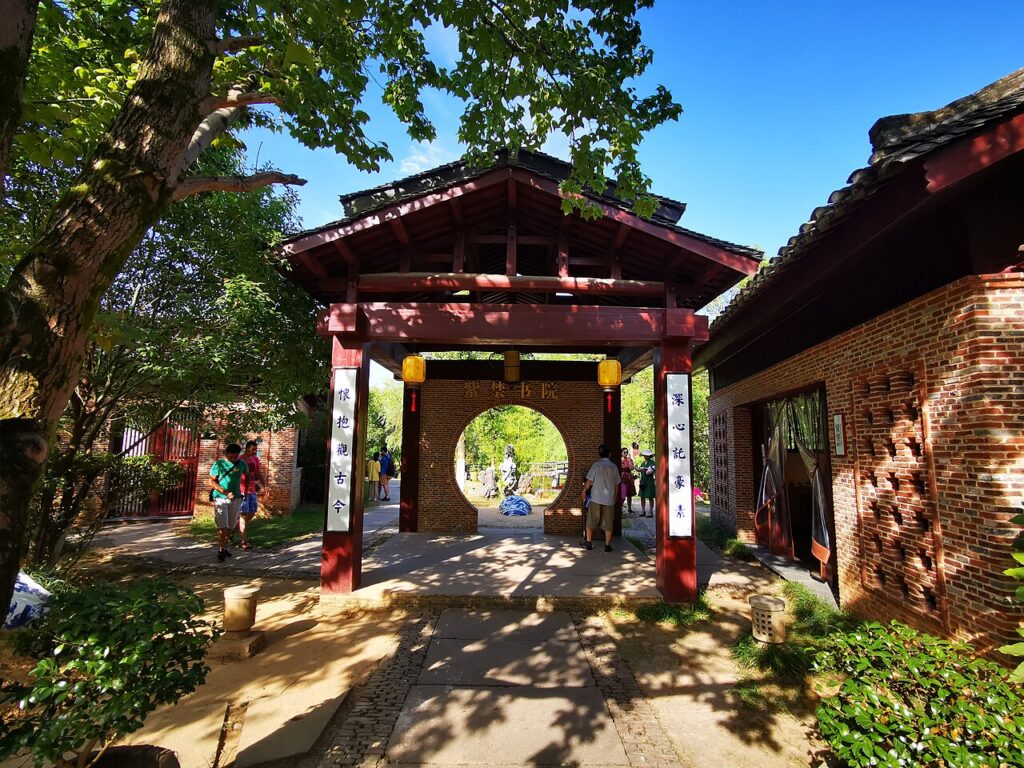
Jiangxi · Jingdezhen
For more than 1,700 years, Jingdezhen has made the porcelain the world wanted — and for over a thousand of them, it made it for the emperor alone. This unassuming city in northeastern Jiangxi supplied the imperial court from the Song to the Qing dynasties, and its kilns perfected the blue-and-white ware that became China’s most famous export. In July 2026, its historic porcelain industry sites joined UNESCO’s World Heritage List. The craft is still alive, not behind glass: at the Ancient Kiln Folk Culture Museum, master potters throw, glaze and paint by thousand-year-old methods, and the 45-metre Ming dragon kiln is fired on Saturday mornings. The Imperial Kiln Museum and the old workers’ lanes of Taoyangli show where the porcelain was born, while Taoxichuan Creative District and the artist village of Sanbao show where it is going. The deepest experience is the simplest — sit at a wheel for an hour and throw your own bowl, then paint it cobalt blue. Spring and autumn, March to May and September to November, are the best months to come.
Tips: Two days is ideal. Start at the China Ceramics Museum for the history, then visit the Ancient Kiln museum on a Saturday morning to see the dragon kiln fired. Book a wheel-throwing workshop in advance — studios around Taoxichuan and Sanbao fill up — and leave an evening for the Taoxichuan night market. High-speed rail reaches Shanghai in about three and a half hours.
Photo: Liuxingy / Wikimedia Commons (CC BY-SA 4.0)