
Hebei · Chengde
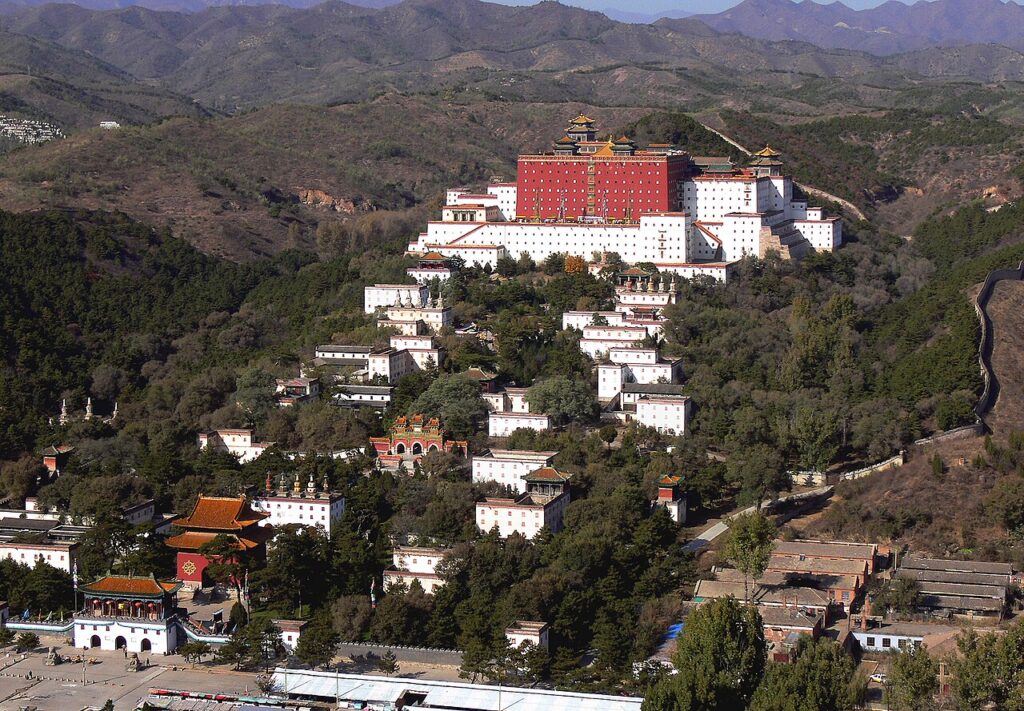
For nearly ninety years the Qing emperors escaped Beijing’s summer heat to Chengde, a mountain valley 250 kilometres north of the capital, where they built the largest imperial garden in China — 5.64 square kilometres of palace halls, linked lakes, open plains and forested hills, inscribed by UNESCO in 1994. This was never just a retreat: it was a second capital, where emperors received Mongol princes and Tibetan lamas on neutral ground, and where Lord Macartney’s 1793 embassy was famously rebuffed. Walk the emperors’ route from Lizheng Gate through the nanmu-wood audience halls to the lake district, where pavilions copy famous scenes from the south. Just outside the walls, the Eight Outer Temples complete the picture — above all Putuo Zongcheng, a 1767 copy of Lhasa’s Potala Palace built at two-thirds scale. Best in April–May or mid-October to early November, when the autumn colour peaks and the crowds thin. The quieter pleasure is the plain district, where the emperors pitched Mongol yurts for their guests — a reminder that this garden was built to hold an empire together, not merely to please the eye.
Tips: Entry is ¥130 in peak season (¥90 in winter) and the ticket allows one entry within two days — split the resort and the temples across an overnight stay. Enter at Lizhengmen, take the shuttle through the mountain district rather than walking it, and budget the temples separately. High-speed rail from Beijing takes about an hour.
Photo: Gisling / Wikimedia Commons (CC BY-SA 4.0)